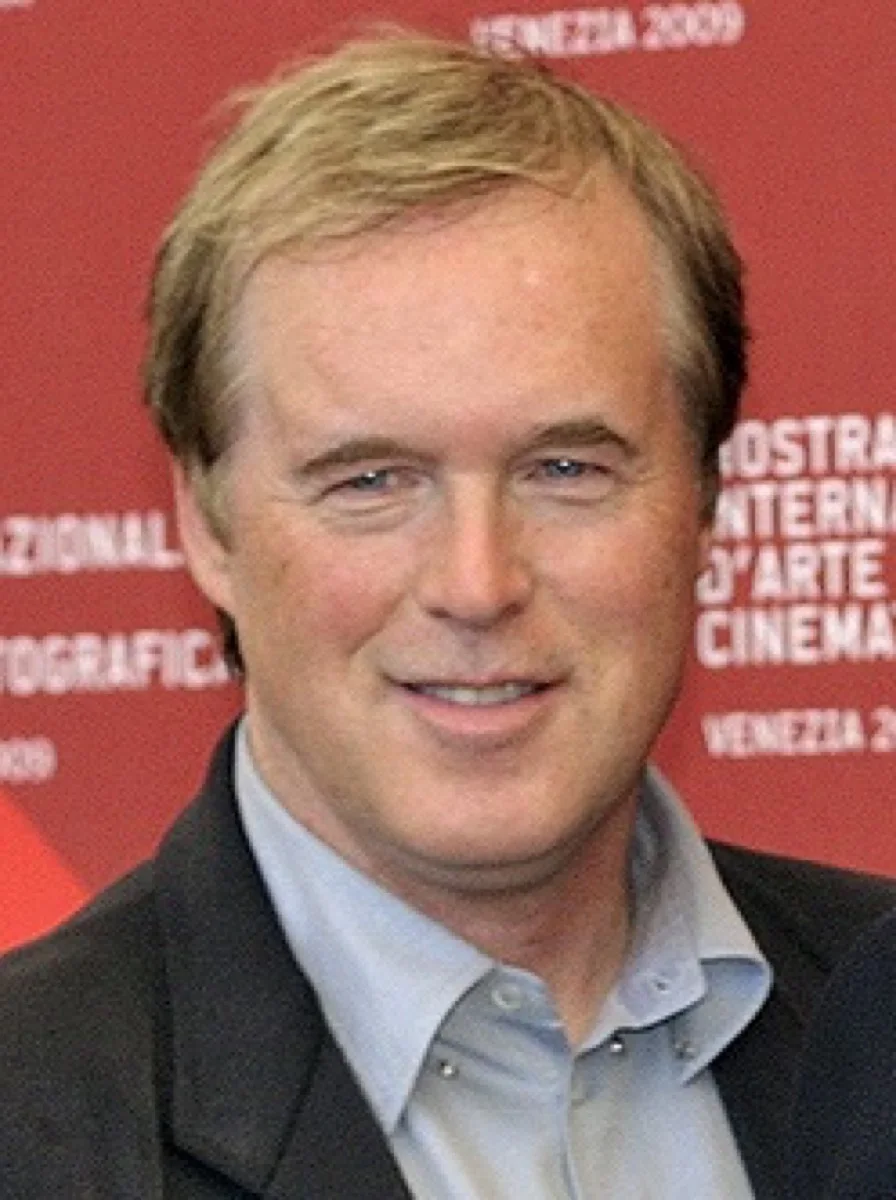
Brad Bird
Animation Director
Two-time Oscar-winning director of The Iron Giant, The Incredibles and Ratatouille. In 2026 he laid out an unusually precise position on AI: fine as an in-betweener that lets smaller crews take bigger risks, wrong the moment it replaces the artist.
Why this score
How the formula works →- 41%nuancedHolds a documented two-sided view
- 34%nuancedSupports AI only with conditions
- 17%pro2 pro-AI statements (measured)
- 8%anti1 anti-AI statement (mild)
Includes the ×1.25 multiplier for having a stake in an AI-impacted field. Evidence splits 17% pro, 8% anti, 75% direction-free → Nuanced
In his words
But the truth is that hacks will always be hacking! There will always be people that lean on it in order to replace their lack of effort.
Biography
Philip Bradley Bird (born 1957) is the American animator and director behind The Iron Giant (1999), The Incredibles (2004), Ratatouille (2007) and Incredibles 2 (2018), plus the live-action Mission: Impossible — Ghost Protocol and Tomorrowland. He won Best Animated Feature twice, apprenticed under Disney’s Nine Old Men as a teenager, and has spent four decades arguing a single heresy to studio executives: animation is a medium, not a genre, and adults are an untapped audience for it.
His long-gestating passion project, Ray Gunn, finally arrives on Netflix on December 18, 2026 — a retro-futurist noir he describes as “The Maltese Falcon meets Buck Rogers,” voiced by Sam Rockwell, Scarlett Johansson, John Ratzenberger and Tom Waits. Its hero is the last human private eye in a city of flying cars, aliens and artificial intelligence: a premise Bird pitched in the 1990s that has aged into accidental topicality.
Tool, not crutch
Bird volunteered his position in an Animation Magazine interview around Annecy in June 2026, when asked for his feelings about AI and new technologies impacting the business. Where many of his peers answer with a flat refusal, he answered with a boundary.
I think AI is OK as long it remains a tool rather than a crutch. I think that it ought to be about giving the artist what the artist needs and not replacing the artist. The idea that AI is going to create a world where artists don’t have to create any art is wrong.
The argument he built on top of it is economic, and it is the one animation almost never hears from a director of his stature: budgets, not technology, are what kill original work. “If it can shrink the size of crews a little and still leave artists in charge, it can be a good thing,” he said, “because when you have these large resources and bigger budgets, then the film has to make a lot of money to just break even. The pressure builds up so much that people don’t want to make things anymore.” He should know — he spent three decades being told Ray Gunn “sounds risky.”
A month later, promoting the film at San Diego Comic-Con, he gave CBR a longer and darker version of the same thought, reaching for the least comfortable analogy available.
I think that it’s totally cautionary, like any technological advance is. I mean, the atomic bomb is a horrible thing, and has in its own twisted way led to a longer period of peace between world wars. So here’s a very negative thing that has an upside. Is it worth it? I don’t know.
Then he got concrete about the one job he would hand a machine: in-betweening. The lead animator still draws the key poses by hand; the software guesses at the frames between them; a human corrects what it gets wrong.
Maybe there’s a way to have AI make some of those guesses, and then a human can come in and correct what it doesn’t have. And if that means that you could have slightly smaller crews of artists who are totally in control, not ceding control to AI, but if you had a smaller team that could do it more economically, then you could take riskier stories because right now if you pitch something that’s not familiar, no one wants to make it.
It is a genuinely two-sided position, and the second half of it will not comfort everyone. “Slightly smaller crews” is still smaller crews, and in-betweening is where a great many animators have historically learned the craft — a point The Animation Guild has pressed hard through two contract cycles. Bird’s hedge is that the artists who remain stay “totally in control,” and his warning is that the technology cannot manufacture effort: “hacks will always be hacking.”
Quote sources
- Animation Magazine, June 2026(animationmagazine.net)
- CBR at San Diego Comic-Con, July 2026(cbr.com)
Sources & further reading
Canonical record: https://battlelines.ai/topic/brad-bird