Tag
266 subjects · 181 pro-AI · 76 anti-AI
Showing 266 profiles · 181 pro-AI · 76 anti-AI · 6 nuanced · 3 neutral
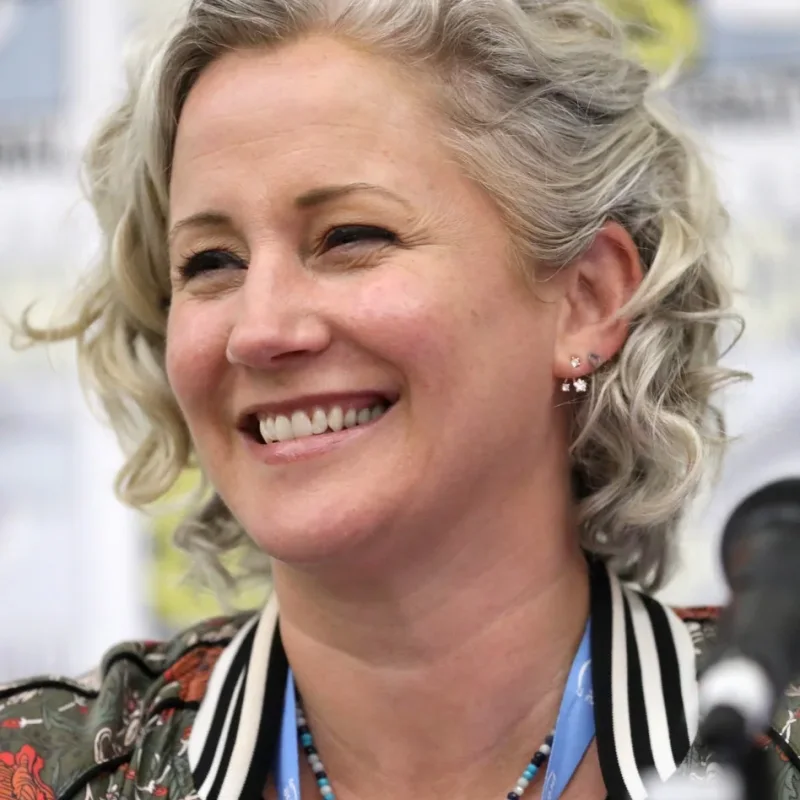
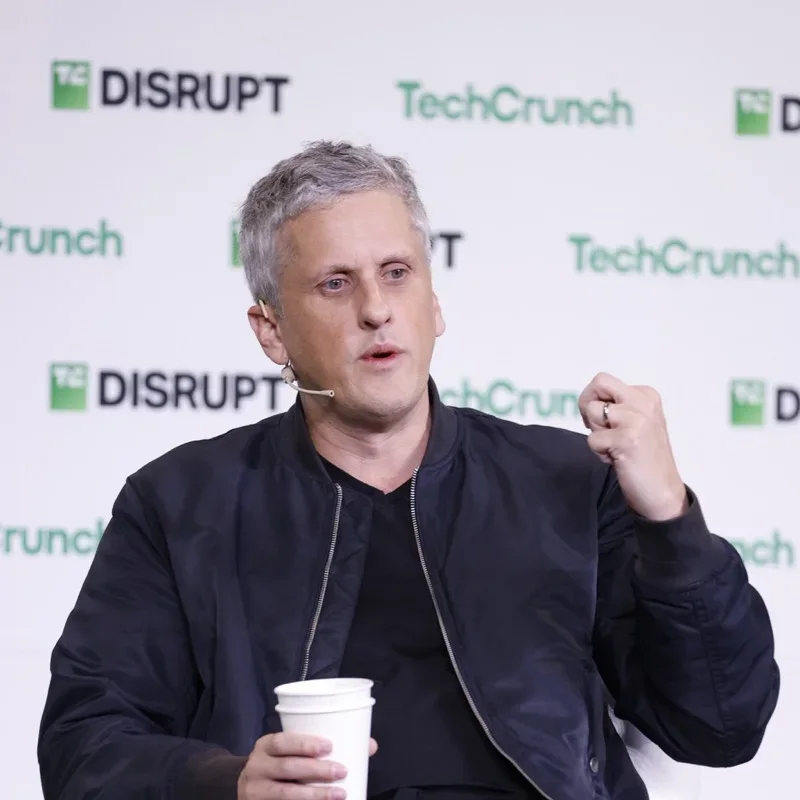
CEO of Box
Box’s co-founder and CEO, one of enterprise software’s loudest AI optimists — shipping Box AI, posting relentlessly about agents, and predicting companies will run a hundred to a thousand AI agents for every human employee.
Creative Software Giant
The company behind Photoshop bet its creative empire on generative AI: Firefly, trained on licensed Adobe Stock content and billed as “commercially safe,” is its answer to both the AI gold rush and the artist backlash.
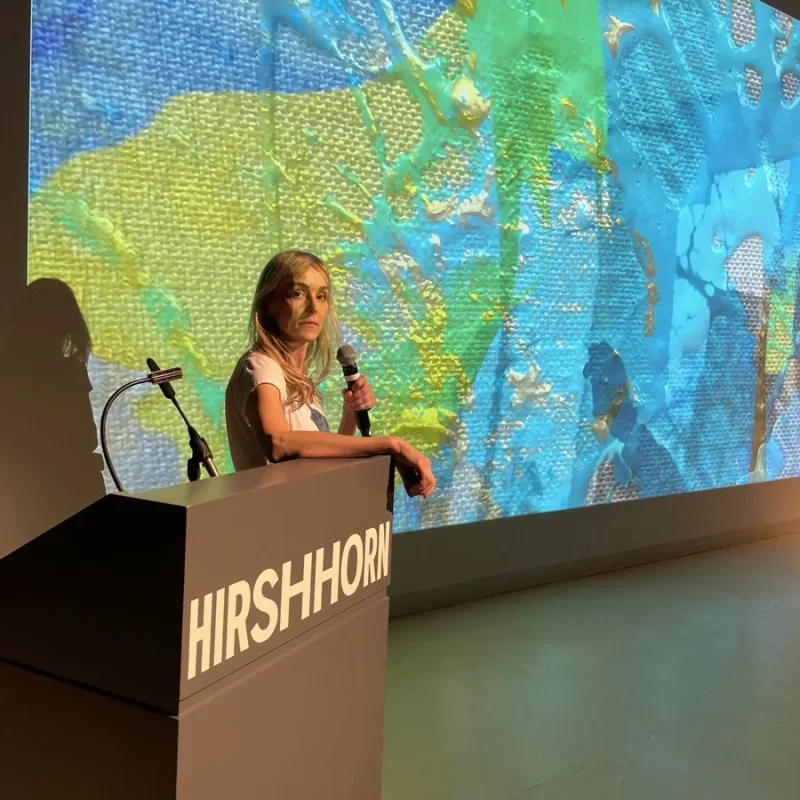
Artist
The Polish-American painter dubbed Silicon Valley’s favorite artist trains Boston Dynamics robot dogs to paint autonomously — headlining the NGV Triennial with her robot-artist installation Heterobota — and calls herself a techno-optimist.
Philosopher at Anthropic
Scottish philosopher who leads work on Claude’s character at Anthropic — the researcher most responsible for teaching a frontier AI model what it means to be good.
CEO of Replit
Replit’s founder-CEO and agentic-coding evangelist, who spent a career teaching people to code — then declared in 2025 that learning to code may no longer be worth it, because AI agents will write the software.
Founder & CEO of Mobileye
Israeli computer-science professor who founded Mobileye and co-founded LLM lab AI21 Labs — a career built on shipping AI, from autonomous driving to language models. He predicts AIs that are “great scientists” within a decade and argues regulation should follow technology, not lead it.
Creator of C# and TypeScript
The Danish engineering legend behind Turbo Pascal, Delphi, C#, and TypeScript. He calls AI “a big regurgitator” — and yet positions TypeScript as the guardrail language of the AI era, uses AI in his own compiler work, and says AI is “doing the work” while humans supervise.
AI Researcher
Founding member of OpenAI and former director of AI at Tesla. He declared that “the hottest new programming language is English” and coined “vibe coding” — the two phrases that defined how a generation of developers talks about programming with AI.
AI Researcher & Educator
Google Brain co-founder, Coursera co-founder, and the field’s great popularizer — famous for calling AI “the new electricity” and for dismissing extinction fears as a doom myth that mostly serves incumbents.
CEO of Electronic Arts
Electronic Arts’ chief executive since 2013. Declared generative AI “the very core of our business” at EA’s 2024 Investor Day, citing more than 100 active AI projects and estimating the technology could touch a majority of EA’s development processes.
Caltech Professor, AI for Science
Caltech Bren Professor and former NVIDIA AI research director who led FourCastNet, the first fully AI-based weather model, and evangelizes neural operators as the engine of AI-accelerated science.
AI Lab
The AI safety company that builds frontier models anyway. Founded by OpenAI defectors Dario and Daniela Amodei, Anthropic makes the Claude model family and argues the safest path through the AI transition is to build the technology carefully — not to stop.
Creator of Redis
Salvatore Sanfilippo, the Sicilian programmer who created Redis, has become one of the most thoughtful voices for AI-assisted programming — coining “automatic programming” and insisting that code written with an LLM is still the programmer’s own work.
Founder & CEO of Lovable
The Swedish founder of Lovable — an AI tool that builds full apps from plain-English prompts — became one of Europe’s youngest self-made billionaires by betting that vibe coding is “the beginning of a new software economy.”
CEO of Perplexity
Co-founder and CEO of Perplexity, the AI “answer engine” built to replace the traditional search engine. A former OpenAI researcher, he believes conversational AI answers — with citations — are the future of how the world finds knowledge.
Founder of Thrive Global & Thrive AI Health
HuffPost founder and wellness entrepreneur who teamed up with Sam Altman in 2024 to launch Thrive AI Health, a company building an AI health coach backed by the OpenAI Startup Fund.
Creator of Flask
Creator of Flask and Jinja, the tools behind much of the Python web. His widely read 2025 essays — “AI Changes Everything,” “Agentic Coding Recommendations,” “A Year of Vibes” — chronicle one of the most influential skeptic-to-convert arcs in software.
AI Creative Tool
Open-source desktop “IDE for artists” for AI image and video creation. Built on the premise that artists need control, not slot machines — it turns prompting into crafting with 3D compositing, character posing, and scene blocking, and gives the source code away.
CEO of Mistral AI
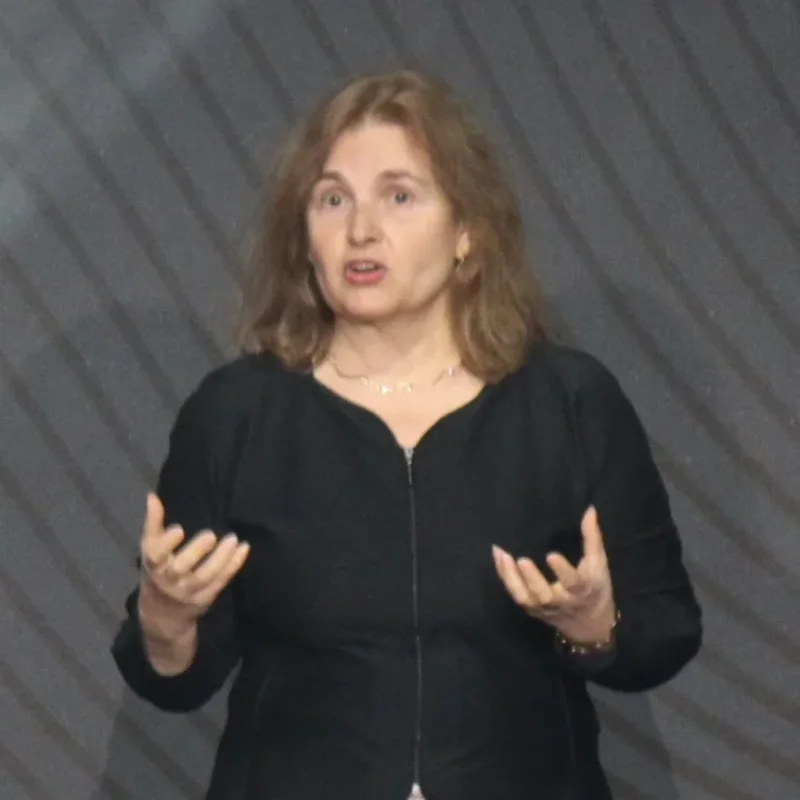
French AI researcher and co-founder of Mistral AI, Europe’s flagship AI lab. A former DeepMind scientist, he champions open-weight models and argues AI should be a commodity everyone can own — not a technology controlled by a handful of states or corporations.
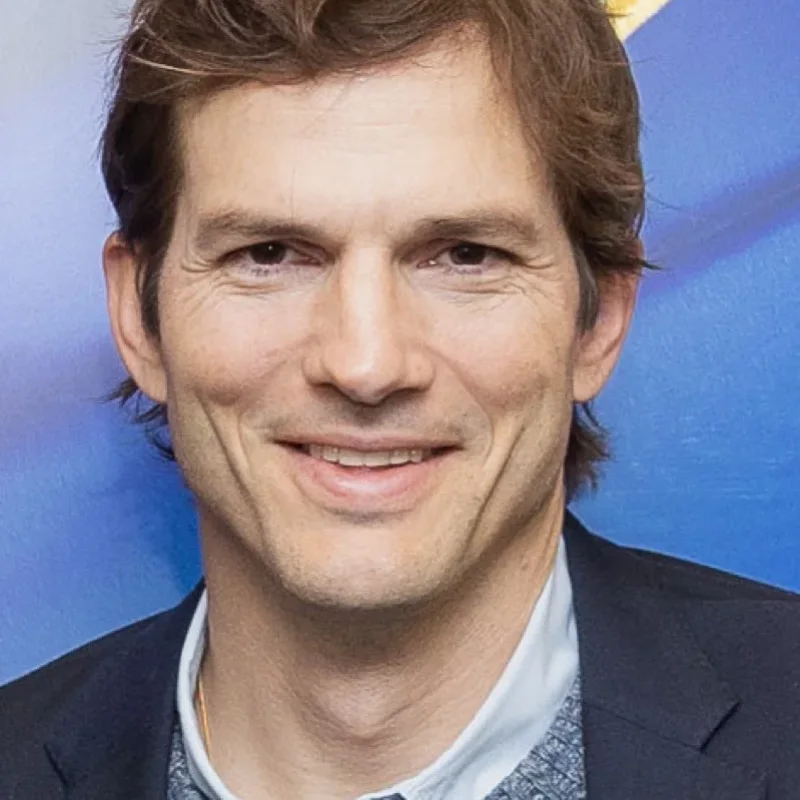
Actor & Investor
Actor turned venture capitalist whose Sound Ventures backed OpenAI and Anthropic. After early access to Sora, he predicted whole movies will be prompted into existence — and that Hollywood’s bar “is going to have to go way up.”
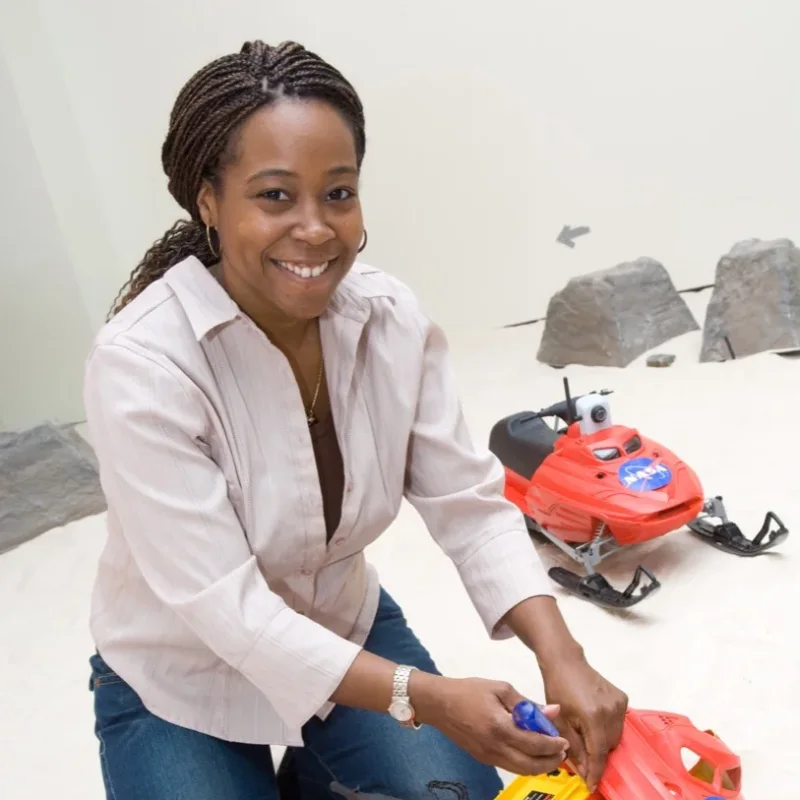
Roboticist & Engineering Dean
Roboticist who went from NASA’s Mars rovers to founding Zyrobotics and leading Ohio State’s College of Engineering — a builder who champions AI’s benefits while researching why humans trust robots too much.
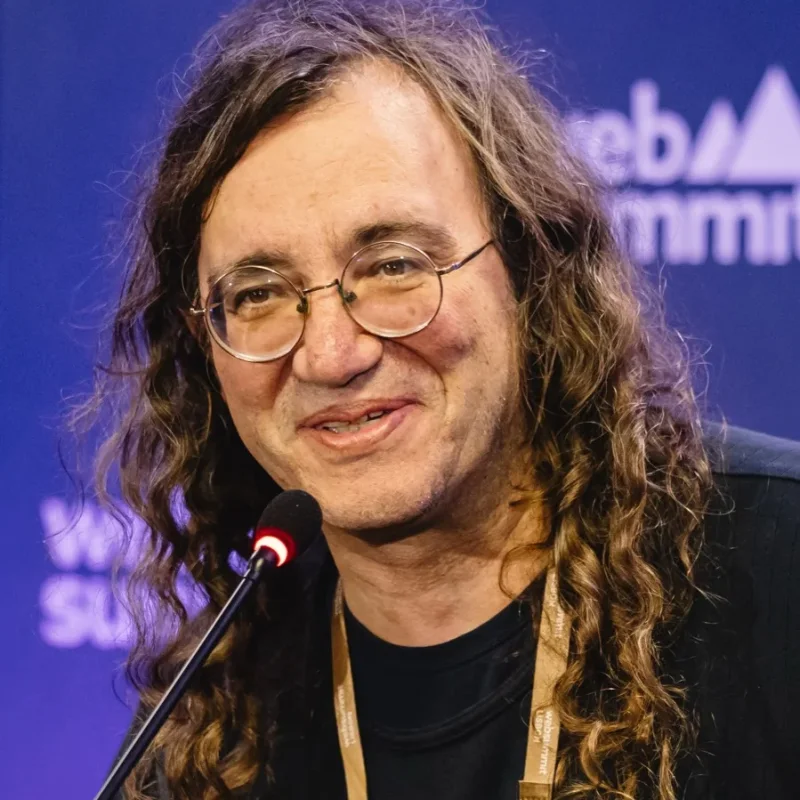
AGI Researcher & CEO of SingularityNET
The researcher who popularized the term “AGI” and spent decades trying to build it — now CEO of SingularityNET, arguing superhuman AI is coming within years and must be decentralized, not paused.
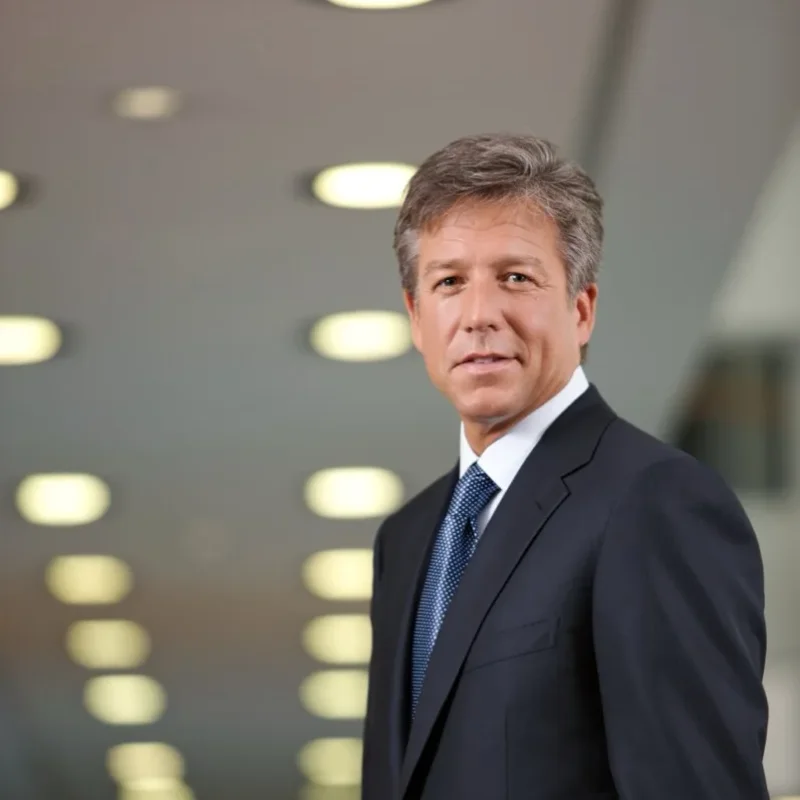
CEO of ServiceNow
ServiceNow’s chairman and CEO, driving one of enterprise software’s biggest agentic-AI bets — rebranding the company “the AI of agents” while insisting AI should redeploy workers, not destroy them.
Creator of JavaScript, CEO of Brave
Invented JavaScript in ten days in 1995, co-founded Mozilla, and now runs Brave — where he ships the built-in Leo AI assistant and champions cryptographically verifiable AI privacy, while warning against Big Tech’s “answer engine” model.
OpenAI Chairman & CEO of Sierra
Silicon Valley’s consummate operator — Google Maps co-creator, former Facebook CTO and Salesforce co-CEO — who now chairs OpenAI’s board and bet his own next act on Sierra, a company building AI agents for customer service.
Chairman and CEO of TSMC
Chairman and CEO of TSMC, the foundry that manufactures nearly every leading AI chip on Earth. Tells investors the “insane” AI demand is real and “just the beginning” — and backs it with record capital spending.
Founder & CEO of ARK Invest
Founder of ARK Invest, whose flagship funds are concentrated bets on disruptive technology. She calls AI the biggest catalyst to change of the coming decade, projecting trillion-dollar AI infrastructure spending and “explosive” payoffs in robotaxis and humanoid robots.
Founder of Social Capital
Social Capital founder and All-In podcast co-host who has gone beyond investing in AI to building with it: his self-funded venture 8090 promises AI-written enterprise software at “80% feature complete” for a 90% discount.
Dancer and Internet Personality
The most-followed woman on TikTok, who licensed her likeness to Meta for “Coco,” a dance-obsessed AI chatbot persona launched at Meta Connect in September 2023.
Co-Founder of Physical Intelligence
Stanford professor and meta-learning pioneer who co-founded Physical Intelligence, the multi-billion-dollar startup building a single foundation model to control any robot doing any task.
Creator of LLVM and Swift, Co-founder of Modular
The compiler virtuoso behind LLVM, Clang, and Swift bet his career on AI: he co-founded Modular in 2022 and created the Mojo language to rebuild AI’s compute stack and “democratize AI compute” — a mission Qualcomm bought outright in 2026.
Voice Actress and CEO of Ethovox
BAFTA-winning voice actress (Firewatch, The Owl House) who, after finding her voice cloned without consent, co-founded Ethovox — an actor-owned AI voice company built on consent, control and compensation.
CEO of Hugging Face
Co-founder and CEO of Hugging Face, the “GitHub of machine learning” and home of open-source AI. Has testified to Congress that open science and open models are the safest, most democratic path for the technology.
Interactive VTuber & Twitch streamer
The Unreal Engine–powered VTuber whose creator, “the Technician,” builds her own real-time pipeline — and who trains language models on her own VODs to spawn AI characters, calling the technology fascinating while skewering “AI slop.”
Social Robotics Pioneer
MIT Media Lab professor who invented social robotics with Kismet, founded the home robot Jibo, and now directs MIT RAISE — a global push to make AI literacy as universal as reading, reaching a million students in 170 countries.
Director of MIT CSAIL
Robotics pioneer and MacArthur fellow who directs MIT’s CSAIL, co-founded Liquid AI, and wrote two 2024 books arguing that robots and AI will give humans superpowers rather than replace them.
Founder & CEO of insitro
MacArthur-winning Stanford machine-learning professor and Coursera co-founder who now runs insitro, a drug-discovery company built on the bet that machine learning will remake how medicines are made.
CEO of Anthropic
Anthropic co-founder and CEO whose essay “Machines of Loving Grace” imagines AI compressing a century of medical progress into a decade — while he simultaneously warns of a white-collar “bloodbath.” The AI boom’s most safety-obsessed optimist.
Co-founder & CPO of Sentry
The creator of Sentry now codes almost entirely through AI agents and shipped Seer, an AI debugger that root-causes and patches production errors — while staying pointedly “grounded in what models are and aren’t capable of.”
Creator of Ruby on Rails
The famously contrarian creator of Ruby on Rails and co-founder of 37signals spent years dismissing AI autocomplete as a joy-killer — then declared AI agents “the most exciting thing we’ve made computers do since we connected them to the internet.”
White House AI & Crypto Czar
PayPal-mafia investor and All-In podcast co-host appointed White House AI and crypto czar in 2025 — the chief architect of America’s race-with-China, regulate-lightly AI posture.
AI & Security Researcher
MacArthur-winning Berkeley professor at the intersection of AI and security who builds frameworks for safe, trustworthy AI — and joined Meta Superintelligence Labs in 2026 to lead its AI safety and security research.
Author and Alternative-Medicine Advocate
Bestselling spiritual author who built “Digital Deepak,” an AI chatbot trained on his life’s work and voiced by an ElevenLabs clone — casting AI as a way to scale mindful connection.
CEO of Google DeepMind
DeepMind co-founder, Google DeepMind CEO, and Nobel laureate for AlphaFold. The AI era’s scientist-in-chief, he argues AI is the ultimate tool for science — capable of ending disease and ushering in “radical abundance.”
AI Software Engineer
Cognition’s “AI software engineer” — the agent that plans, codes, debugs, and ships tasks end-to-end. Its 2024 debut demo defined the agentic-coding era, drew a viral backlash over inflated claims, and now anchors a company valued in the billions that acquired Windsurf.
Co-founder & CEO of Figma
The Figma CEO is weaving AI throughout the design platform used by millions, with a guiding aim to “lower the floor but raise the ceiling” — expand who can design while pushing what professionals can do.
Co-founder-CEO of Neo4j
Creator and CEO of the graph database Neo4j, who calls AI “a replatforming of the entire software stack” and has positioned graph technology as core infrastructure for grounding large language models in real, connected data.
Former Google CEO
Google’s CEO through its rise to dominance, co-author of The Age of AI and Genesis, and now a leading voice arguing the AI revolution is underhyped — the most important event in centuries, and a national-security race the West must win.
Founder & CEO of StackBlitz
The founder-CEO of StackBlitz turned a dying developer-tools company into Bolt.new, an AI app builder that lets non-engineers ship full-stack software from a text prompt — one of the fastest-growing products in history, and a poster child for vibe coding.
CEO of IgniteTech
The enterprise-software CEO who replaced nearly 80% of his staff in 2023–24 after employees resisted his mandatory AI transformation — and says, without hesitation, that he would do it again.
Creator of Vue.js and Vite
Creator of Vue.js and Vite, two pillars of modern web development. He founded VoidZero to unify JavaScript tooling, then steered it into Cloudflare in a 2026 acquisition framed explicitly around serving AI agents — “building better tooling for agents.”
Creator of FFmpeg and QEMU
The reclusive French programmer behind FFmpeg, QEMU, and QuickJS — who quietly voted pro-AI in code, building TextSynth, an LLM inference engine written in plain C, and record-setting neural compressors.
Stanford computer scientist known as the “godmother of AI” — creator of ImageNet, co-founder of Stanford HAI, and founder of World Labs. She champions a human-centered vision of AI as a tool that must serve people.
Developer-Education YouTuber
Jeff Delaney’s wildly popular developer-education channel, famous for fast, sardonic coding explainers — bullish on AI tools and “vibe coding” while relentlessly puncturing the industry’s hype.
Creator of the Keras deep-learning framework and co-founder of the ARC Prize. A believer in AI’s long-term promise who spends equal energy deflating LLM hype and dismissing apocalypse scenarios.
Co-founder of Valve
The co-founder of Valve and creator of Steam calls AI a technology transition on par with the computer and the internet — “a cheat code for people who want to take advantage of it” — while Steam now welcomes disclosed AI-built games.
President and CEO of Y Combinator
Y Combinator’s president and CEO, who reported in 2025 that for a quarter of the YC batch, 95% of the code was AI-generated — and declared the age of “vibe coding” the new default for building startups.
Hacker & Founder of comma.ai
The hacker who unlocked the first iPhone at 17 went on to found comma.ai and tinygrad, campaigning to “commoditize the petaflop” so that AI belongs to everyone — not just a handful of cloud giants.
Actor and Activist
Star Trek actor and digital-rights activist who treats AI as a tool answerable to human judgment — he launched his own AI chatbot — while insisting performers must consent before their likeness is cloned.
Creator of Python
The creator of Python — the language AI itself is built in — uses coding agents daily at Microsoft and likens them to an electric saw replacing a hand saw, while insisting humans keep control of architecture.
CEO of Vercel
The Argentine-born creator of Socket.IO and CEO of Vercel — home of Next.js and the AI app-builder v0 — argues that AI will turn a hundred million people into software builders, coders or not.
Curator
The art world’s most influential curator declared 2024 the Serpentine’s “Year of AI,” runs a Creative AI Lab with King’s College London, and consistently urges artists to engage the technology rather than cede it.
Game Director
The auteur behind Metal Gear Solid and Death Stranding thinks of AI “as more of a friend” — a creative collaborator he wants handling the tedious work of game development so human vision can stay in charge.
Co-founder-CEO of Airtable
Co-founder-CEO of Airtable, who in 2025 “refounded” the no-code database company as an AI-native app platform built around conversational agents — arguing the shift to AI-native software is bigger than the shift to SaaS itself.
Co-founder of Safe Superintelligence Inc.
AlexNet co-author, OpenAI co-founder and former chief scientist — now running Safe Superintelligence Inc. He believes superintelligence is within reach, worth building, and must be built safely, in “a straight shot.”
Creator of Bun
The creator of Bun, the fast JavaScript runtime, sold his company to Anthropic in its first-ever acquisition — convinced that as AI writes ever more code, the runtime and tooling underneath it “become way more important.”
Angel Investor & Podcaster
Angel investor behind early bets on Uber and Robinhood, All-In co-host, and founder of the LAUNCH accelerator. He calls this era “The AI Roaring 20s” and relentlessly evangelizes AI adoption to founders — while warning them not to become captives of the big labs.
Founder of Amazon, Co-CEO of Prometheus
The Amazon founder came out of operational retirement to run Prometheus, a $6.2 billion AI startup building an “artificial general engineer” — after backing Perplexity and Physical Intelligence and declaring AI’s benefits to society will be “gigantic.”
CEO of Nvidia
Co-founder and CEO of Nvidia, whose GPUs power essentially the entire AI boom. Calls AI “the greatest technology equalizer of all time” — because for the first time, anyone who speaks a human language can program a computer.
Programmer & AGI Researcher
The legendary programmer behind Doom and Quake now works on artificial general intelligence at his startup Keen Technologies — and publicly defends AI as the latest in a long line of “power tools” that have driven all progress in computing.
Co-Creator of Doom & Quake
The id Software co-founder behind Doom, Quake, and Wolfenstein 3D. Calls AI “the single greatest tech leap since the Internet” and uses it as a research super-tool — while keeping generative AI entirely out of Romero Games’ development and demanding ethical training data.
Designer, former Apple Chief Design Officer
The designer of the iMac, iPod, and iPhone bet his post-Apple career on AI: OpenAI acquired his hardware startup io for roughly $6.5 billion in 2025, with his firm LoveFrom leading design of a new family of AI devices.
Chief AI Officer of Cohere
McGill professor who ran Meta’s FAIR research lab for years before becoming Cohere’s first chief AI officer in 2025 — a champion of open, reproducible science who chose enterprise AI over the AGI race.
Turing Award winner who gave AI its probabilistic foundations — and who dismisses deep learning as mere “curve fitting” while insisting causal reasoning will deliver true human-level machines, free will and all.
The self-assured “father of modern AI” whose lab produced the LSTM — and who refused to sign the 2023 doom letters, insisting AI’s rise is unstoppable and overwhelmingly good for humanity.
AI Investor and Founder of 01.AI
Former Google China president, author of “AI Superpowers,” and founder of LLM startup 01.AI — for two decades one of the most prominent evangelists of AI and of China’s ambition to lead it.
Supermodel and Media Personality
Supermodel and reality-TV star who sold her likeness to Meta for “Billie,” an AI big-sister chatbot persona launched in September 2023 — reportedly one of the richest of Meta’s celebrity AI deals.
Researcher & Host of Two Minute Papers
TU Wien graphics researcher whose Two Minute Papers channel has celebrated new AI research since 2015 with his signature “What a time to be alive!” — turning image generation, LLM, and simulation papers into mass-audience enthusiasm.
CEO of BlackRock
The CEO of the world’s largest asset manager co-launched the AI Infrastructure Partnership with Microsoft and MGX in 2024 — a vehicle targeting up to $100 billion for data centers and power — and calls AI infrastructure a multi-trillion-dollar opportunity.
President of South Korea
South Korea’s president was elected on a pledge of 100 trillion won in AI investment to make Korea a top-3 global AI power — the “AI G3” — backed by tens of thousands of GPUs, a presidential AI committee, and a trillion-dollar chip drive.
Executive Chairman of Samsung Electronics
Executive chairman of Samsung Electronics, known in the West as Jay Y. Lee. In October 2025 he signed a letter of intent with OpenAI to supply high-bandwidth memory for the Stargate project, tying the world’s largest memory-chip maker to the AI buildout.
Podcast Host & AI Researcher
MIT researcher turned podcaster whose marathon interviews with nearly every major AI figure reach tens of millions — consistently framing AI as “exciting and terrifying” but betting on the exciting half.
Founder of DeepSeek
Quant-fund billionaire turned AI lab founder whose cheap, open-source DeepSeek-R1 model shook global markets in January 2025. Pursues AGI openly and insists China must originate ideas, not just follow them.
Virtual Influencer (CGI Persona)
Lil Miquela is the first viral virtual influencer — a computer-generated persona launched in 2016 by the LA startup Brud, with millions of followers and major fashion campaigns. She is a commercial embodiment of AI-era synthetic content.
Software Engineer
Creator of the Linux kernel and Git, and arguably the most influential programmer alive. A famous skeptic of hype, he has moved from measured optimism about AI as a developer tool to putting his foot down as top-level maintainer: Linux “is not one of those anti-AI projects.”
CEO of Intel
Veteran chip investor who took over a wounded Intel in March 2025 and declared the company laser-focused on rebuilding its AI roadmap — betting its comeback on inference, agentic AI, and a CPU renaissance.
Chair and CEO of AMD
AMD’s chair and CEO, who rescued the chipmaker from near-collapse and bet it on AI accelerators — capped by a landmark 2025 deal to supply OpenAI with 6 gigawatts of Instinct GPUs. She dismisses AI-bubble talk as “overstated.”
Scale AI Co-Founder & CEO of Passes
Scale AI co-founder whose retained stake made her the world’s youngest self-made woman billionaire in 2025; now CEO of creator platform Passes, she insists AI will be a co-pilot, not a job-taker.
Artist & Filmmaker
Pioneering feminist media artist who built an AI chatbot artwork, Agent Ruby, back in 1998 — decades before ChatGPT — and has spent sixty years making celebrated work about how humans and intelligent machines shape each other.
Venture Capitalist
Netscape co-founder and a16z co-founder, and the AI boom’s most maximalist cheerleader. His 2023 essays “Why AI Will Save the World” and “The Techno-Optimist Manifesto” cast AI resistance as a moral panic and acceleration as a moral duty.
Founder of Dazzle, Former CEO of Yahoo
Google’s employee #20 and former Yahoo CEO who shut down her startup Sunshine in 2025 to found Dazzle, an AI personal-assistant company — betting her comeback on the agentic-AI wave.
Investor and Entrepreneur
Billionaire investor and Shark Tank star who predicts the world’s first trillionaire will be “one dude in a basement” wielding AI, funds free AI bootcamps for underserved high schoolers, and tells every worker and company to master the tools or lose.
CEO of Meta
Meta founder and CEO who open-sourced the Llama models, spent billions assembling a superintelligence lab, and pitched a future of “personal superintelligence” for everyone — AI that empowers individuals rather than automating them away.
CEO of General Motors
First woman to run a major global automaker, betting GM’s factories, vehicles, and driver-assistance software on AI — including a 2025 NVIDIA partnership and Super Cruise code that is now largely AI-generated.
Founder of BOND
The “Queen of the Internet” analyst whose data-driven trend reports defined the dot-com era, and who returned in 2025 with a 340-page BOND report declaring AI adoption unprecedented in tech history.
Co-founder-CEO of Netlify
Co-founder-CEO of the web platform Netlify, who coined “Agent Experience” (AX) — the idea that AI agents are now first-class users of software — and shipped Agent Runners that let coding agents build and update live applications.
Co-creator of WordPress, CEO of Automattic
Co-created WordPress — the software behind roughly forty percent of the web — and runs Automattic. He told the community to “learn AI deeply,” ships AI products like Jetpack AI Assistant, and argues open source is the safest foundation for the AI era.
South Park Co-Creator
Co-creator of South Park and co-founder of the deepfake studio Deep Voodoo, which raised $20M to bring consent-based AI visual effects to Hollywood — “we stumbled upon this amazing technology.”
Actor
Oscar-winning star of Dallas Buyers Club and Interstellar, an early ElevenLabs investor who in 2025 used the company’s AI to publish a Spanish-language edition of his newsletter in his own cloned voice.
Santa Fe Institute professor and author of “Artificial Intelligence: A Guide for Thinking Humans” who argued against AI-extinction fears at the 2023 Munk Debate — a working AI researcher against both hype and doom.
Machine Learning Researcher
The Berkeley professor often ranked the most influential computer scientist alive, who champions machine learning as a new engineering discipline while rejecting the “AGI” framing as hype.
Oxford professor of AI and multi-agent systems who delivered the 2023 Royal Institution Christmas Lectures — a patient debunker of Terminator narratives who says he loses no sleep over the machines.
Musician & Producer
The Linkin Park co-founder has been hands-on with generative AI since before ChatGPT: an investor in AI virtual-artist startup Authentic Artists, creator of the generative mixtape ZIGGURATS, and public defender of the band’s AI-assisted “Lost” video.
CEO of Thinking Machines Lab
Former OpenAI CTO who shipped ChatGPT and DALL·E, then founded Thinking Machines Lab — one of the best-funded startups in history — to make AI customizable by everyone. Also the author of the AI boom’s most infamous line about creative jobs.
HashiCorp Co-founder, Creator of Terraform and Ghostty
Co-founder of HashiCorp (Terraform, Vagrant, Vault) and author of the Ghostty terminal. A self-described former AI skeptic, he now documents an agent-driven workflow in meticulous essays — shipping real features with AI and keeping “an agent running at all times.”
Crown Prince of Saudi Arabia
Saudi Arabia’s crown prince is bankrolling one of the world’s largest AI buildouts — founding and chairing the state AI company Humain, launched in 2025 with massive Nvidia and AMD chip deals and an ambition to supply 6% of global AI compute.
Open-Source Software Foundation
The Firefox maker committed $30 million in 2023 to launch Mozilla.ai, betting that trustworthy, open-source AI — not bans — is the answer to Big Tech’s concentration of the technology.
CEO of Microsoft AI
DeepMind co-founder, author of The Coming Wave, and CEO of Microsoft AI. Calls AI “a new kind of digital species” and predicts everyone will have an intimate AI companion within five years — while insisting containment must come first.
Investor & Former CEO of GitHub
The GitHub CEO who shipped Copilot in 2021 — the first mass-market AI coding tool — then became one of AI’s most influential investors before joining Meta’s Superintelligence Labs leadership in 2025.
Co-founder of AngelList
AngelList co-founder and tech philosopher who upgraded Steve Jobs’s metaphor: AI is a “motorcycle for the mind.” He opposes AI regulation, fearing not the machines but the small number of people who might control them.
Head of Naughty Dog
The Last of Us creator became gaming’s strangest AI flashpoint: Sony published — then retracted — an interview quoting him hailing an AI content revolution, while his underlying optimism about AI as a creative tool stands.
Co-founder-CEO of Datadog
Co-founder-CEO of the monitoring giant Datadog, who has pushed the company into agentic AI — shipping autonomous “Bits AI” agents that investigate incidents — while arguing observability is what will make AI systems trustworthy.
The lab that detonated the AI era. ChatGPT’s 2022 launch became the fastest-adopted consumer product in history, and with GPT models, DALL·E, and Sora, OpenAI sits at the center of nearly every fight in this archive — as inspiration, employer, defendant, and lightning rod.
Founding CEO of the Allen Institute for AI who has spent a decade arguing doomsday fears are science fiction — while founding TrueMedia.org to fight the real AI harm he does fear: deepfakes.
TV Host and Author
Longtime “Top Chef” host, author and model who licensed her likeness to Meta for “Lorena,” a travel-expert AI persona in Meta’s 2023 celebrity chatbot lineup.
Media Personality and Entrepreneur
Media mogul and 11:11 Media founder who licensed her likeness to Meta’s AI personas, spent years training her own AI clone, and invests in AI startups — while producing a docuseries exposing deepfake abuse.
Co-founder-CEO of Stripe
Co-founder-CEO of the payments company Stripe, who calls AI a “gale-force tailwind” reshaping the economy and has said 2026 may be remembered as the first quarter of the singularity — one of tech’s most bullish voices on AI’s economic impact.
Co-founder & CEO of Supabase
The CEO of Supabase, the open-source database platform that quietly powers much of the vibe-coding boom, rode the AI app-building wave to a multibillion-dollar valuation — and predicts developers will “code a lot less in the future.”
Co-founder of Y Combinator
Y Combinator co-founder and the startup world’s essayist-in-chief. His accelerator now funds overwhelmingly AI startups, and his 2024 essay “Writes and Write-Nots” accepts AI’s dominance while warning it will split society into people who can think in writing and people who cannot.
AI Researcher & Author
University of Washington machine-learning professor and author of “The Master Algorithm” — one of the field’s loudest anti-doomers, who argues the real problem is that computers are too stupid, not too smart.
Stanford professor who directs the Center for Research on Foundation Models, built the HELM benchmark, and co-founded Together AI — the academy’s leading evangelist for open, transparent AI.
Designer of Populous and Fable
The god-game pioneer behind Populous and Fable predicts AI will generate “huge parts” of future games and let anyone conjure one from a single prompt — though by 2026 he conceded today’s AI is not yet good enough to use.
Co-author of the standard AI textbook and longtime Google research director who argued in 2023 that general-purpose AI has, in its most important respects, already arrived.
Moral Philosopher
The world’s best-known utilitarian ethicist — author of Animal Liberation and godfather of effective altruism — who embraced AI so fully he launched an official chatbot of himself, Peter Singer AI, to hold ethical dialogues in his voice.
Investor, Chairman of Palantir
PayPal co-founder, Palantir chairman, and early OpenAI donor whose leaked 2025 “Antichrist” lectures made the most extreme case against AI regulation ever offered: that a global regime to stop dangerous technology would itself be the apocalyptic threat.
YouTuber
The online handle of Felix Kjellberg, one of YouTube’s most-subscribed creators of all time. In 2025 he reinvented himself as an open-source AI tinkerer — building Odysseus, his own self-hosted AI workspace — and turned “owning your own AI” into a rallying cry against Big Tech.
CEO of Microsoft Gaming
The head of Xbox and CEO of Microsoft Gaming. Unveiled Muse, Microsoft’s generative AI gameplay model, and champions AI as a way to rescue classic games trapped on dead hardware — a vision game preservationists have loudly rejected.
Designer
France’s most famous designer created the A.I. chair for Kartell with Autodesk’s generative software — billed as the first production chair designed with artificial intelligence — and champions AI as a way to design more with less.
Indie Hacker
The Dutch indie hacker behind Nomad List, Remote OK, and Photo AI runs a multi-million-dollar portfolio of products with no employees — and turned a three-hour AI coding session into fly.pieter.com, the first viral vibe-coded game.
Founder-CEO of Superhuman
Founder-CEO of the email client Superhuman, who rebuilt the product around AI drafting and triage and is steering it toward autonomous email agents — an unabashed believer that AI is the future of the inbox.
Emotion AI Pioneer & Venture Investor
Egyptian-American scientist who pioneered “Emotion AI” at MIT and co-founded Affectiva; after its 2021 acquisition she launched Blue Tulip Ventures to fund what she calls human-centric AI.
Founder of Bridgewater Associates
Founder of Bridgewater Associates, the world’s largest hedge fund, whose firm runs a multibillion-dollar machine-learning fund built on his codified “Principles” — even as Dalio publicly warns the AI boom is in the early stages of a bubble.
Inventor & Futurist
Inventor and futurist who has spent four decades predicting — and welcoming — the rise of machine intelligence. His 2024 book The Singularity Is Nearer doubles down on AI reaching human level by 2029 and merging with us by 2045.
MIT Professor, AI for Cancer Detection
MIT professor and breast-cancer survivor who turned her diagnosis into Mirai and Sybil — AI models that predict cancer years early — and co-discovered the antibiotic halicin with deep learning.
Investor & LinkedIn Co-founder
LinkedIn co-founder, early OpenAI backer, and the AI debate’s house optimist. His books Impromptu and Superagency argue AI amplifies human agency rather than replacing it — a case he makes so thoroughly he built an AI twin of himself to help.
Founder of Huawei
Founder and CEO of Huawei, whose Ascend chips anchor China’s answer to Nvidia. In a rare 2025 People’s Daily interview he shrugged off US chip sanctions — clustered computing can match state-of-the-art results — and called AI possibly the last technological revolution in human society.
CEO of Arm
CEO of Arm, whose chip designs sit in nearly every phone and, increasingly, every AI datacenter. Says AI-driven CPU demand is “off the charts” — while warning AI could consume a quarter of US electricity by 2030.
Creator of Three.js, the most widely used JavaScript library for 3D graphics on the web. Known online as Mr.doob, he has become an enthusiastic, hands-on demonstrator of what AI coding assistants can build — including a playable port of Quake to Three.js in about an hour.
Reinforcement-learning pioneer and Turing Award winner who not only believes superhuman AI is coming — he argues humanity should welcome its “succession” to digital intelligence rather than fear it.
“Vibe Coding” Evangelist
Content creator and co-founder of Vibecode who evangelizes “vibe coding” — building working apps by describing them to AI — as a way to turn millions of non-programmers into software builders.
U.S. Congressman for Silicon Valley
Silicon Valley’s congressman, who opposed California’s SB 1047 and frames AI as central to his “new economic patriotism” — while insisting the technology be paired with real protections for workers.
Roboticist
MIT robotics legend and iRobot co-founder who publishes an annual scorecard deflating AI hype and doom predictions alike — while continuing to build working robots at his startup Robust.AI.
CEO of Humane Intelligence
Data scientist who ran Twitter’s algorithmic-ethics team and served as the first US Science Envoy for AI; a fierce critic of industry practice who builds the audit and red-teaming infrastructure to fix it.
AI Video Company
The startup that made AI video real: co-originator of the research behind Stable Diffusion, builder of the Gen video models, host of the AI Film Festival, and Hollywood’s first major AI partner via Lionsgate.
Creator of Node.js and Deno
The engineer who put JavaScript on the server with Node.js and then rebuilt it as Deno. In January 2026 he declared “the era of humans writing code is over” — and weeks later shipped Deno Sandbox, infrastructure purpose-built for safely running AI-generated code.
CEO of OpenAI
CEO of OpenAI and the most visible face of the AI boom. Launched ChatGPT on the world in 2022 and has spent every year since arguing that superintelligence is coming, that it will be abundant, and that it will be good.
Founder of Adaption Labs
AI researcher who built Cohere’s research lab and wrote “The Hardware Lottery,” then founded Adaption Labs in 2025 — a $50 million bet that adaptive, efficient models beat the brute-force scaling race.
CFO of OpenAI
OpenAI’s chief financial officer since 2024 — the ex-Square CFO and Nextdoor CEO who runs the money behind the largest AI fundraises in history, and who had to walk back a 2025 remark about a government “backstop” for AI chips.
Founder of Conviction
Venture capitalist who left Greylock in 2022 to launch Conviction, a fund purpose-built for AI-native “Software 3.0” startups, and who co-hosts the influential AI podcast No Priors.
CEO of Microsoft
Microsoft CEO who bet the company on AI — bankrolling OpenAI with over $13 billion and threading Copilot through every product. Frames AI as a “cognitive amplifier” in the tradition of computing as a bicycle for the mind.
Co-founder & CEO of Cognition
The competitive-programming prodigy behind Devin, the “AI software engineer,” has automated most of his own company’s code with it — yet insists the goal was never to replace humans, but to give every engineer “a buddy who helps you build more.”
Inventor of the LSTM — the architecture that powered a decade of speech and translation breakthroughs — now building xLSTM and the startup NXAI to give Europe its own competitive large language models.
Novelist
The acclaimed Canadian novelist behind “How Should a Person Be?” is one of the few literary writers making fiction with AI — publishing chatbot conversations in The Paris Review and a New Yorker story composed from a bot’s answers.
Co-founder of GitLab
The GitLab co-founder shipped AI into the DevOps platform he built, then backed a new venture — the open-source coding agent Kilo Code — betting on AI tools that developers “could actually inspect, trust, and extend.”
Co-creator of the Django web framework whose blog has become the de-facto chronicle of practical LLM use for programmers — a relentlessly empirical optimist who documents what the tools can and cannot do.
Creator of Docker, CEO of Dagger
The creator of Docker and co-founder-CEO of Dagger, who is rebuilding CI/CD for AI agents — arguing a developer’s job is shifting from writing code to managing a team of coding agents that need isolated, repeatable environments.
Co-founder-CEO of Cockroach Labs
Co-creator of the GIMP image editor and co-founder-CEO of Cockroach Labs, who argues that agentic AI will drive an exponential explosion of databases — and that, just as almost nobody writes code by hand anymore, nobody will manage databases manually either.
Co-founder-CEO of Reddit
Co-founder-CEO of Reddit, who turned the platform’s vast trove of human conversation into a paid AI-training asset — signing licensing deals with Google and OpenAI while suing companies that scrape Reddit without paying.
CEO of Google & Alphabet
Google and Alphabet CEO who declared AI “more profound than fire or electricity” back in 2018 — then had to prove it, steering Google through its ChatGPT “code red” into the Gemini era.
AI Music Company
The AI music generator that made whole songs from a text prompt — and made the music industry sue. Suno claims tens of millions of users making music “from shower-singers to seasoned artists,” and settled with the major labels on licensing terms in 2025.
Founder of Larian Studios (Baldur’s Gate 3)
The Belgian founder and creative head of Larian Studios, whose Baldur’s Gate 3 swept 2023’s Game of the Year awards. Defended his studio’s use of machine-learning tools in early ideation against fierce backlash, calling it irresponsible not to evaluate new technologies.
Developer & Founder (t3.gg)
Developer-influencer, creator of the T3 stack, and Ping Labs CEO who ships AI products like T3 Chat — while warning that leaning on hand-tuned AI prompts is “a dangerous form of technical debt.”
Programming Streamer
Programming streamer (Michael Paulson offstage) famous for skewering AI hype — yet he codes with AI on stream, ran a Cursor-sponsored week of “vibe coding,” and bets AI creates more developer jobs than it destroys.
Inventor of the World Wide Web
The web’s inventor is building the AI he wants to exist: “Charlie,” a fiduciary agent that works for the user on user-owned data — while urging a CERN-style institution to keep ever-stronger systems aligned.
Co-Creator of Fallout
The creator, producer, and lead programmer of the original Fallout, later co-director of The Outer Worlds. Says he is “looking forward” to a generative-AI future where games simply generate new content on demand — a vision that drew heavy community backlash.
CEO of Epic Games
Founder and CEO of Epic Games, maker of Unreal Engine and Fortnite. When artists staged mass protests against AI art on Epic-owned ArtStation in 2022, Sweeney refused a blanket ban — and has argued ever since that AI is the next tool in every creator’s toolbox.
Director at Bethesda Game Studios
The Bethesda director behind Skyrim, Fallout 3, and Starfield. Says AI is “certainly not a fad” and confirms it is part of Bethesda’s toolset for building and checking its worlds — while insisting it generates nothing creative in his games.
Co-creator of South Park and The Book of Mormon who co-founded the deepfake studio Deep Voodoo — he calls the technology “this new form of animation” and “a perfect medium for us.”
Co-founder of Windsurf
The co-founder of the AI coding editor Windsurf believes the vast majority of code will soon be written by AI — and that this will grow, not shrink, the ranks of software engineers by making building cheaper and more valuable.
Author & Journalist
Pulitzer-finalist novelist and tech journalist whose viral essay “Ghosts” was written with GPT-3, and whose 2025 book “Searches” weaves ChatGPT transcripts into its pages — a sharp Big Tech critic who keeps AI in her toolkit.
Creator of Neuro-sama
Pseudonymous British programmer who built Neuro-sama, the LLM-powered AI VTuber that debuted in December 2022 and grew into one of Twitch’s most-subscribed channels — the strongest proof yet that an AI can headline live entertainment.
Sun Microsystems co-founder and OpenAI’s first venture investor. Predicts AI will be able to do 80% of 80% of all jobs — and argues that is a future of abundance to be embraced, not feared.
Founder of Baichuan AI
Creator of the Chinese search engine Sogou who declared “China needs its own OpenAI” and, in 2023, founded the large-language-model startup Baichuan AI to build one — later pivoting the company toward AI-driven healthcare.
Creator of The Sims
The designer of SimCity, The Sims, and Spore is betting his late career on AI: his Gallium Studios is building Proxi, a life-sim that uses AI to map the player’s own memories and mind.
Founder and CEO of Moonshot AI
Transformer-XL co-author who founded Moonshot AI in 2023, maker of China’s Kimi chatbot and one of the country’s “AI tiger” labs. Believes AGI is the only thing that matters — and that long context is the road to it.
AI Researcher & Turing Award Winner
Turing Award winner, deep-learning pioneer, and the field’s loudest critic of doomerism — existential-risk fears are “complete B.S.” After 12 years as Meta’s chief AI scientist he left in 2025 to found a world-model startup, AMI Labs.
ML Researcher & YouTuber
Machine-learning researcher and YouTuber known for deep paper explainers — and for building and defending “GPT-4chan,” a model trained on 4chan that drew fierce criticism from AI-ethics researchers in 2022.
MacArthur-winning NLP researcher, now at Stanford, who builds language models while famously explaining why they are “unbelievably intelligent and then shockingly stupid” — a builder’s case for humbler, safer AI.
Creator of Ruby
The creator of Ruby stunned RubyKaigi 2026 with Spinel — a native Ruby compiler written largely with Claude, most commits marked “co-authored by: Claude” — declaring that generative AI has become a true development partner.
CEO of Zhipu AI (Z.ai)
CEO of Zhipu AI, the Tsinghua-born lab behind the GLM models that became the world’s first listed LLM company in January 2026. Asked to choose between achieving AGI and huge profits: “No hesitation” — AGI.
Founder of ByteDance
ByteDance’s reclusive founder, who stepped back from management in 2021 only to return as the quiet force behind its AI push — whose Doubao chatbot became China’s most used, and whose AI bet made him China’s richest person.
Director of the Center for AI Safety
Machine-learning researcher whose GELU activation and MMLU benchmark are load-bearing parts of modern AI — and who runs the Center for AI Safety, advises xAI and Scale AI, and organized the 2023 statement declaring AI extinction risk a global priority alongside pandemics and nuclear war.
CEO of Tesla and SpaceX; Founder of xAI
CEO of Tesla and SpaceX and founder of xAI. The debate’s living contradiction: he signed the six-month pause letter and calls AI humanity’s “biggest existential threat,” yet pours tens of billions into xAI, Grok, and the Optimus robot — convinced the only safe move is to build the thing he fears faster than his rivals.
Science Communicator & YouTuber
Co-creator of Vlogbrothers, SciShow, and Crash Course, and founder of VidCon. He draws a hard line down the middle of AI: as a utility — code, drafting, drudgery — it is “mostly, weirdly, kind of fine,” and he uses ChatGPT and ships his own AI-built software; as engagement-optimized slop and consent-free training it degrades the media ecosystem he helped build, which is why he savaged Sora 2’s “SlopTok” and demanded creators be able to opt out.
Skype Co-founder & X-risk Philanthropist
Estonian programmer who helped build Kazaa and Skype, then became an early investor in DeepMind and Anthropic while bankrolling much of the AI-safety field — buying, as he puts it, a seat at the table of the labs he fears.
Rolling Stones Frontman
The Rolling Stones frontman uses AI on his own terms — de-aging the band with deepfake tech for a 2026 video, brainstorming album titles with a chatbot — while drawing a hard line at imitation: AI music is fine by him if it’s original, but cloning the Stones’ sound is “obviously wrong.”
Turing Award winner and the world’s most-cited AI researcher, who founded the nonprofit LawZero to build “safe-by-design” AI and chairs the International AI Safety Report — a believer in AI for science and medicine whose fight is with the race, not the technology.
Kubernetes Pioneer
The Kubernetes luminary and retired Google distinguished engineer made a rare public choice: deliberately sitting out the generative-AI wave — no products, no investments, no crusade — until the black box gets decoded.
Theoretical Physicist
Celebrity theoretical physicist and futurist who has largely shrugged at the AI moment — dismissing chatbots as “glorified tape recorders” and calling the fears overblown, while betting the real revolution lies ahead with quantum computing.
Director of NieR: Automata
The masked auteur behind NieR: Automata delivers the AI debate’s bleakest weather report — creators unemployed, storytellers reduced to bards within 50 years — as pure forecast, with no campaign for or against.
AI Policy Research Institute
The NYU-born policy institute, led by Amba Kak and Sarah Myers West, argues that AI is above all a concentration of Big Tech power — its annual landscape reports have shaped the antitrust-flavored critique of the AI industry.
Actress
Bollywood superstar and former Miss World who sued in the Delhi High Court over AI misuse of her persona, winning an injunction against deepfake videos, obscene morphed images and an unauthorized chatbot — a landmark Indian personality-rights case.
Co-founder of reinforcement learning and Turing Award co-laureate who used his moment of highest honor to blast AI companies for shipping untested systems to millions — like opening a bridge to traffic to see if it holds.
Creator of the Zig Programming Language
Creator and president of the Zig language, one of the few major open-source projects to ban LLM-generated contributions outright. He calls AI pull requests “invariably garbage” with “negative value” — they burn reviewer time and teach the contributor nothing.
Neuroscientist
University of Sussex neuroscientist and consciousness researcher whose prize-winning essay “The Mythology of Conscious AI” argues that today’s chatbots are not conscious — and that the belief they might be is a scientific error with real ethical hazards.
Voice Actor & Writer
Acclaimed voice actor — Aloy in Horizon, Chloe in Life is Strange — and Emmy-nominated writer who has become a leading voice in the SAG-AFTRA video game strike, demanding consent and compensation before any AI replica of a performer is made.
U.S. Senator
Vermont senator and two-time presidential contender who has made AI a class war issue — warning it could wipe out nearly 100 million U.S. jobs and demanding the gains fund a 32-hour work week instead of enriching “Big Tech oligarchs.”
Creator of C++
The Danish computer scientist who created C++, the language underneath game engines, browsers, and AI frameworks themselves. In 2025 interviews he voiced “serious concerns” about AI coding — stale averaged solutions, unverifiable output, and developers losing the ability to spot problems.
Veteran Developer & YouTuber
Veteran software engineer behind the “Internet of Bugs” channel whose viral 2024 teardown showed the “AI software engineer” Devin failing its own advertised task — a prominent skeptic of AI-coding hype.
Investigative Journalist
The journalist who exposed Cambridge Analytica now calls the AI ascendancy a “digital coup” by a Silicon Valley “broligarchy” — telling TED that ChatGPT was trained on her work and data without consent.
Investor, Vice Chairman of Berkshire Hathaway
Warren Buffett’s legendary partner and Berkshire Hathaway’s vice chairman (1924–2023) spent his final year deflating the AI frenzy, quipping that “old-fashioned intelligence works pretty well” and that AI was getting “more hype than it deserves.”
Founder and Lead Developer of curl
Creator of curl, the transfer tool running in some twenty billion installations. Buried under fabricated “AI slop” vulnerability reports, he instituted instant bans, declared the project “effectively being DDoSed,” and shut down curl’s bug bounty entirely in 2026.
Game Writer & Narrative Designer
Co-creator and former lead writer of BioWare’s Dragon Age series, now an independent studio founder, who has called generative AI in game development a “virulent plague” and warned it will hollow out the entry-level jobs that train the next generation of developers.
Indie Game Developer (DUSK, Iron Lung)
Indie developer behind DUSK and Iron Lung, credited with revitalizing the boomer-shooter genre. Dismisses generative AI as a machine for “subpar stock photos, buggy code,” and a signal to players that a developer doesn’t care.
Game AI Programmer
A veteran game AI programmer and author who, from inside the discipline, used a GDC 2025 talk to warn that generative AI threatens “the death of art” — arguing the technology is purely derivative and should uplift artists, not replace them.
Composer & Founder of Fairly Trained
The AI-music pioneer who resigned as Stability AI’s audio VP in 2023 because he could not accept that training on copyrighted work is “fair use” — then founded Fairly Trained to certify companies that license their data.
AI Safety Researcher & Writer
Co-founder of the Machine Intelligence Research Institute and the AI debate’s most absolute doomer: he argues frontier AI development should be shut down worldwide because superintelligence built with current techniques would kill everyone.
Actor & Screenwriter
Two-time Oscar winner — for acting and screenwriting — who calls AI an “intense irritation” and tells the software that keeps offering to rewrite her scripts to f*** off.
Creator of Stardew Valley
The solo developer behind Stardew Valley (as ConcernedApe) has pledged that his games will always be AI-free, saying that using generative AI means offloading creativity to an algorithm instead of a human being.
Tech Whistleblower
The Facebook whistleblower who leaked 21,000 internal documents and told the Senate that engagement-optimizing algorithms put “astronomical profits before people” — now warning that AI companions for children are the next legal battleground.
Game-Dev Tools Creator & Educator
Swedish game developer behind Shader Forge and Shapes and one of the most beloved math educators in game development. Her 2025 video essay “Generative AI is a Parasitic Cancer” became a defining statement of the anti-AI position in gamedev.
AI Safety Nonprofit
The nonprofit behind the March 2023 “Pause Giant AI Experiments” letter — signed by more than 30,000 people including Elon Musk, Steve Wozniak, and Yoshua Bengio — which turned existential AI risk into front-page news.
Cognitive Scientist & Author
Cognitive scientist, author of Taming Silicon Valley, and the media’s go-to AI skeptic — he testified to the U.S. Senate that we have built “bulls in a china shop.”
The “godfather of AI” and Nobel laureate whose neural-network breakthroughs built the modern field — and who quit Google in 2023 to warn the world that his life’s work could end it.
Humanist Chaplain
The humanist chaplain to Harvard and MIT argues in “Tech Agnostic” that Big Tech and AI have become the world’s most powerful religion — one demanding uncritical worship — and calls for a “reformation” that returns technology to the status of tools.
Paramore Frontwoman
Paramore’s frontwoman turned a 2026 Salt Lake City headline set into a protest against Kevin O’Leary’s Stratos AI data center, flashing a giant “NO” over the billionaire’s face — weeks before he announced the project would shrink.
AI Investor, UK AI Security Institute Chair
The AI investor and State of AI Report co-author wrote the viral 2023 Financial Times essay “We must slow down the race to God-like AI” — then was appointed to chair the UK’s frontier-AI safety body, the AI Security Institute.
Indie Game Marketplace
The scrappy indie-game marketplace became one of the first storefronts to force generative-AI disclosure: since November 2024, untagged AI-made assets are de-indexed from its browse pages, citing “legal ambiguity” around AI content rights.
Game Studio Founder
Software engineer and founder of the indie studio behind Derby Creek, who banned generative AI across his team from day one — even firing developers who used it — arguing that the handmade feel of a game cannot be prompted into existence.
CEO of Procreate
Co-founder and CEO of Procreate, the beloved iPad illustration app, whose profanity-laced August 2024 video — “I really f***ing hate generative AI” — became the tech industry’s loudest corporate refusal of the technology.
Creator of Java
The “father of Java,” one of the most-used programming languages in history. Gosling has become one of tech’s bluntest AI deflators — calling AI “mostly a scam” driven by grifters, and generative output “fundamentally horseshit.”
Netscape Pioneer
The Netscape and Mozilla pioneer turned nightclub owner wages one of the web’s most gleeful anti-AI campaigns — feeding LLM scrapers infinite machine-generated nonsense from a honeypot on jwz.org.
Computer Scientist & Author
Virtual-reality pioneer turned humanist critic who insists “there is no AI” — only a mash-up of uncredited human work — and wants its contributors paid through “data dignity.”
Co-founder of Stack Overflow
Coding Horror blogger and Stack Overflow co-founder who warns that LLMs were built on the Q&A commons his community created — and that AI companies hollowing out those communities will destroy their own foundation.
Voice Actress
Legendary game voice actress — Mass Effect’s Commander Shepard — who calls unauthorized AI voice cloning theft, struck in the 2024 SAG-AFTRA video-game walkout, and demands consent and pay for any digital replica.
Game Designer & Programmer
Creator of Braid and The Witness, and indie gaming’s most exacting programmer — a caustic critic who says AI-generated code is very low quality, not understood even by the AIs that wrote it, and a driver of skill decay.
Author of The Corrections and Freedom, and one of America’s most celebrated literary novelists. A named plaintiff in Authors Guild v. OpenAI who calls generative AI a new frontier of Silicon Valley’s exploitation of creators.
Video Game Composer
BAFTA-winning composer of the Killzone and Horizon games, who told Edge magazine that using generative AI for creative art feels “insane,” and criticized major AI companies for training on artists’ work first and worrying about licensing later.
US Senator from Missouri
Congress’s loudest AI hawk: the Missouri senator co-authored a bipartisan AI licensing framework, helped kill the federal moratorium on state AI laws, and introduced the GUARD Act to wall off AI chatbots from minors.
Scholar of AI’s social and political costs and author of “Atlas of AI” (2021), which recasts machine learning as an extractive industry — burning through minerals, energy, hidden labor and scraped data — rather than a bloodless feat of software.
Tekken Series Director & Producer
The face of Tekken for three decades, Harada has publicly dismantled AI-generated fan videos of his series — arguing they exist only by training on his team’s work — and mocked the gap between AI hype and reality.
Former FTC Chair
The youngest-ever FTC chair opened an investigation into OpenAI’s data practices, probed Big Tech’s AI partnerships, and made “there is no AI exemption from the laws on the books” the rallying cry of AI-era antitrust enforcement.
Right-to-Repair Activist & YouTuber
Repair-shop owner turned consumer-rights YouTuber who launched the viral 2025 “change your profile picture to Clippy” protest against big tech — including companies mining user data to train AI — and blocks AI crawlers from his Consumer Rights Wiki.
Independent Game Designer
Reclusive designer of the celebrated indie games Papers, Please and Return of the Obra Dinn, who says he now won’t even discuss his work in progress for fear it will be “slurped up by AI” or copied.
Art Educator & Former Blizzard Artist
Ex-Blizzard senior artist turned YouTube art educator (1.9M subscribers) and Cubebrush founder. Calls generative image models engines built on art “taken without permission” — and now poisons his own drawings with Nightshade before posting them, hoping to “do maximum damage.”
AI Ethics Researcher
Co-author of the “Stochastic Parrots” paper and co-lead of Google’s Ethical AI team until her 2021 firing; now chief ethics scientist at Hugging Face, where she dismisses AGI as “vibes and snake oil” and testifies for AI accountability.
Creator of Minecraft
The Swedish programmer who created Minecraft and sold Mojang to Microsoft for $2.5 billion. Now one of gaming’s bluntest AI critics, declaring that anyone advocating AI-written code is “either incompetent or evil.”
Crime Novelist
The creator of Harry Bosch and the Lincoln Lawyer is a named plaintiff in the Authors Guild class action against OpenAI — and turned the AI reckoning into fiction, building his 2025 Lincoln Lawyer novel around a lawsuit against a chatbot company.
President of MIRI
President of the Machine Intelligence Research Institute and co-author, with Eliezer Yudkowsky, of the 2025 bestseller “If Anyone Builds It, Everyone Dies” — the starkest mainstream case for halting the race to superintelligence.
Grand Mufti of Egypt
Egypt’s Grand Mufti issued an official ruling that it is “impermissible in Islamic law to rely on AI applications to obtain a fatwa,” and warned against letting chatbots interpret the Qur’an — arguing the work of religious judgment cannot be automated.
Video Game Company
The maker of Mario and Zelda told shareholders in 2024 that it is not using generative AI in its games, citing intellectual-property concerns and pledging to keep delivering value “unique to Nintendo” through human craft.
The legendary composer of the Final Fantasy series, widely regarded as one of the greatest video game musicians of all time, who says he has never used generative AI and never will — because the hardship of creating something yourself is what makes it rewarding.
AI Alignment Researcher
The researcher who pioneered RLHF — the technique that made ChatGPT possible — then left OpenAI to work on alignment full-time, publicly putting roughly coin-flip odds on catastrophe once AI reaches human level.
AI Protest Movement
Global grassroots protest network founded in 2023 by Dutch entrepreneur Joep Meindertsma, demanding an international treaty to pause the training of frontier AI systems until they can be proven safe — the street-protest wing of AI safety.
Musician and Former Environment Minister
Midnight Oil frontman and former Australian environment and arts minister who has led artists’ fury against proposals to let AI firms train on copyrighted work, condemning “big tech aiming to pillage other people’s work” as galling and shameful.
Streamer & Game Developer
The ex-Blizzard developer behind Heartbound became one of Twitch’s biggest gamedev voices — and one of generative AI’s loudest in-platform critics, auto-timing-out an allegedly AI-made Twitch emote and declaring that generative AI “makes you look like a clown.”
Indie Game Developer & Advocate
The Vlambeer co-founder and indie ambassador refuses generative AI — “I like my job” — and warns it is brewing “the collapse of the junior pipelines” that the game industry needs to survive.
Creator of Clojure
The revered creator of the Clojure programming language. His December 2025 essay “Thanks AI!” is one of the most scathing indictments of generative AI written by a major language designer — piracy of “the entire historical output of creative humanity,” slop, and the destruction of programming apprenticeship.
Founder of the Free Software Movement
GNU founder and free-software patriarch who calls ChatGPT a “bullshit generator,” maintains a standing page of reasons not to use it, and whose FSF branded GitHub Copilot “unacceptable and unjust.”
AI Safety Researcher
University of Louisville computer scientist and author of “AI: Unexplainable, Unpredictable, Uncontrollable” who puts the odds of AI destroying humanity above 99.9% — the highest p(doom) of any prominent researcher.
AI & Climate Researcher
AI and climate lead at Hugging Face and a TIME100 AI honoree who warns that generative AI is “accelerating the climate crisis” — building tools like CodeCarbon and the AI Energy Score to force the industry to disclose its footprint.
Creator of Mario & Zelda
The legendary Nintendo designer behind Mario, Donkey Kong, and The Legend of Zelda. As the industry stampedes toward AI, he says Nintendo “would rather go in a different direction” — betting on its veteran developers instead.
Author of The Age of Surveillance Capitalism
Harvard Business School professor emerita whose landmark book The Age of Surveillance Capitalism framed Big Tech’s data economy as an extractive threat to democracy — and who now argues AI is simply that same machine “continuing to evolve and expand.”
Bollywood star of Dabangg who sued Character.AI and sixteen other defendants in the Delhi High Court over impersonating chatbots and obscene deepfakes — winning an interim injunction with 36-hour takedown orders in 2026.
CEO of Obsidian
CEO of the note-taking app Obsidian (and the designer known as “kepano”), who has deliberately kept the product local-first and human-first rather than AI-first — arguing that durable tools should preserve the user’s ownership and agency, not think on their behalf.
Voice Actor
Guinness-record-holding video game voice actor — Spike Spiegel in Cowboy Bebop, Wolverine, countless game roles — who publicly rejected a union-brokered AI voice deal, insisting no one in the voice community had approved handing their livelihoods to AI.
Protest Movement
San Francisco protest movement with a single demand: every major AI lab CEO must publicly commit to pausing frontier-model development if every other major lab credibly does the same. What drew about 20 people two years ago brought hundreds to the doors of OpenAI, Anthropic, and Google DeepMind in July 2026.
AI Researcher & Berkeley Professor
Co-author of the standard AI textbook and author of Human Compatible, Russell is the field’s most credentialed insider warning that we must solve the control problem before building superintelligence.
Co-Creator of Dwarf Fortress
The mathematician behind Dwarf Fortress — the legendarily deep simulation that helped inspire Minecraft — is openly exhausted by generative AI, which he calls depressing tech that produces shoddy work and still takes people’s jobs.
Awards Ceremony
An annual indie-focused awards show produced by the team behind Six One Indie. It enforces a blanket ban on generative AI — a policy that, at its December 2025 ceremony, led it to strip Clair Obscur: Expedition 33 of its Game of the Year win hours after handing it out.
CEO, Hooded Horse
Co-founder and CEO of indie strategy-game publisher Hooded Horse (Manor Lords, Against the Storm), who wrote a no-generative-AI clause into the studio’s contracts and urges developers to keep AI out of their process entirely.
AI ethics researcher forced out of Google over the “Stochastic Parrots” paper, who founded the independent DAIR institute to study AI’s harms to marginalized communities.
UNSW Sydney AI professor and author of “Machines Behaving Badly” who organized the 2015 and 2017 open letters demanding a global ban on lethal autonomous weapons — the public face of the campaign against killer robots.
Political Commentator
The former Fox News host tells his massive audience that AI will “get away from us” — and that if it threatens humanity, “we have a moral obligation to murder it immediately,” data centers included.
Investor, Chairman of Berkshire Hathaway
The “Oracle of Omaha,” history’s most famous investor, compared AI to nuclear weapons at Berkshire Hathaway’s 2024 meeting — “the genie is out of the bottle” — and warned that AI-powered scamming could become “the growth industry of all time.”
Chinese Academy of Sciences professor who leads China’s AI-ethics and governance work, signed the 2023 pause letter, and told the UN Security Council that AI carries a risk of human extinction.