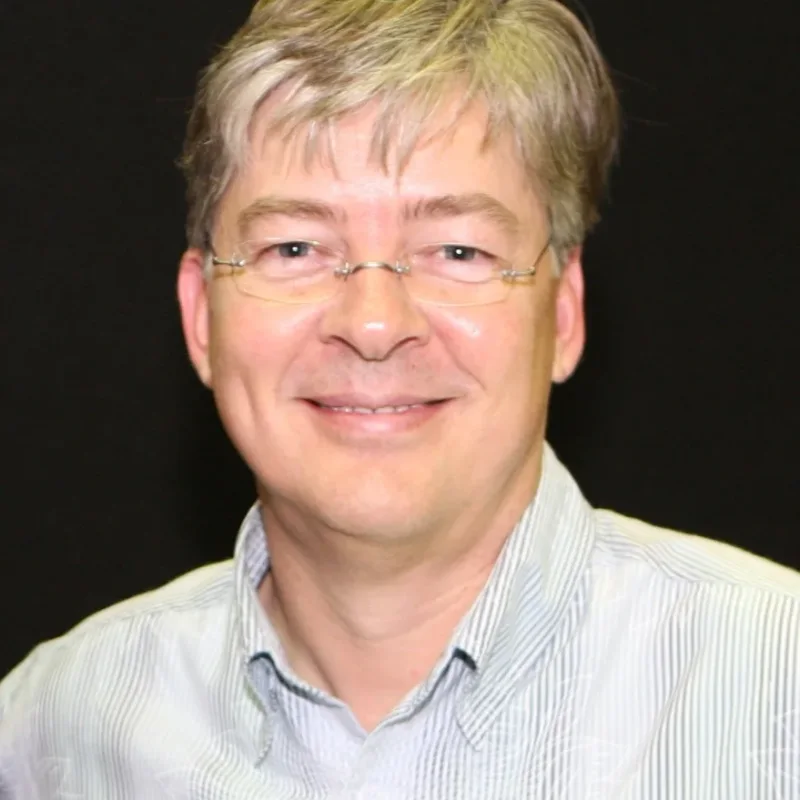
Armin Ronacher
Creator of Flask
Creator of Flask and Jinja, the tools behind much of the Python web. His widely read 2025 essays — “AI Changes Everything,” “Agentic Coding Recommendations,” “A Year of Vibes” — chronicle one of the most influential skeptic-to-convert arcs in software.
Why this score
How the formula works →- +3.4proUses AI in their work
- +2.2pro4 pro-AI statements (forceful)
- −0.7anti1 anti-AI statement (measured)
- ±0nuancedHolds a documented two-sided view
Weights, statement counts, the ×1.25 multiplier for having a stake in an AI-impacted field, and the formula’s smoothing are already baked in — the points add up to the score, with evidence on the other side subtracting (direction-free evidence pulls toward the middle instead): Firmly Pro-AI · 4.9/10
In his words
If you would have told me even just six months ago that I’d prefer being an engineering lead to a virtual programmer intern over hitting the keys myself, I would not have believed it.
I feel like all my skills that I learned as a programmer are more relevant than ever, just with a new kind of tool.
The path is clear: we are no longer just using machines, we are now working with them.
Biography
Armin Ronacher (born 1989 in Austria) created Flask, the minimalist framework that became one of the two dominant ways to build web applications in Python, along with the Jinja template engine, Click, and the rest of the Pallets ecosystem. He spent a decade as one of the first engineers at Sentry, the error-tracking company, before leaving in 2025 to co-found a startup — and to write, prolifically, about what AI was doing to his craft.
The public conversion
Ronacher entered the AI era a doubter and documented every step out of it. In “AI Changes Everything” (June 2025) he described moving “from fear to optimism”: AI “is out of the bottle,” had “moved beyond being a curious tool,” and was already “a new substrate for a lot of new innovation.” A week later, “Agentic Coding Recommendations” — one of the most-shared engineering posts of the year — laid out his hard-won playbook for working with coding agents, down to model choice and tool design.
By “A Year of Vibes” (December 2025) the transformation was complete: from living in an AI-autocomplete editor to running Claude Code “almost entirely hands-off,” working as engineering lead to what he wryly calls a virtual programmer intern. The honesty is the appeal — he admits “I have nothing beyond vibes to back up my preference” among models, bristles at the word “agents” while lacking a better one, and calls unreviewed AI contributions dumped on open-source maintainers “quite frankly an insult.”
That last point keeps him credible with both camps: like Mitchell Hashimoto, he pairs full-throated adoption with contempt for slop, sympathizing with the maintainer revolts led by the likes of Daniel Stenberg. His 2026 writing has turned to the harder cultural questions — including whether teams that vibe-code lose the shared technical language that holds a codebase together.
Quote sources
- A Year of Vibes (lucumr.pocoo.org), 2025(lucumr.pocoo.org)
- AI Changes Everything (lucumr.pocoo.org), 2025(lucumr.pocoo.org)
Sources & further reading
Canonical record: https://battlelines.ai/topic/armin-ronacher