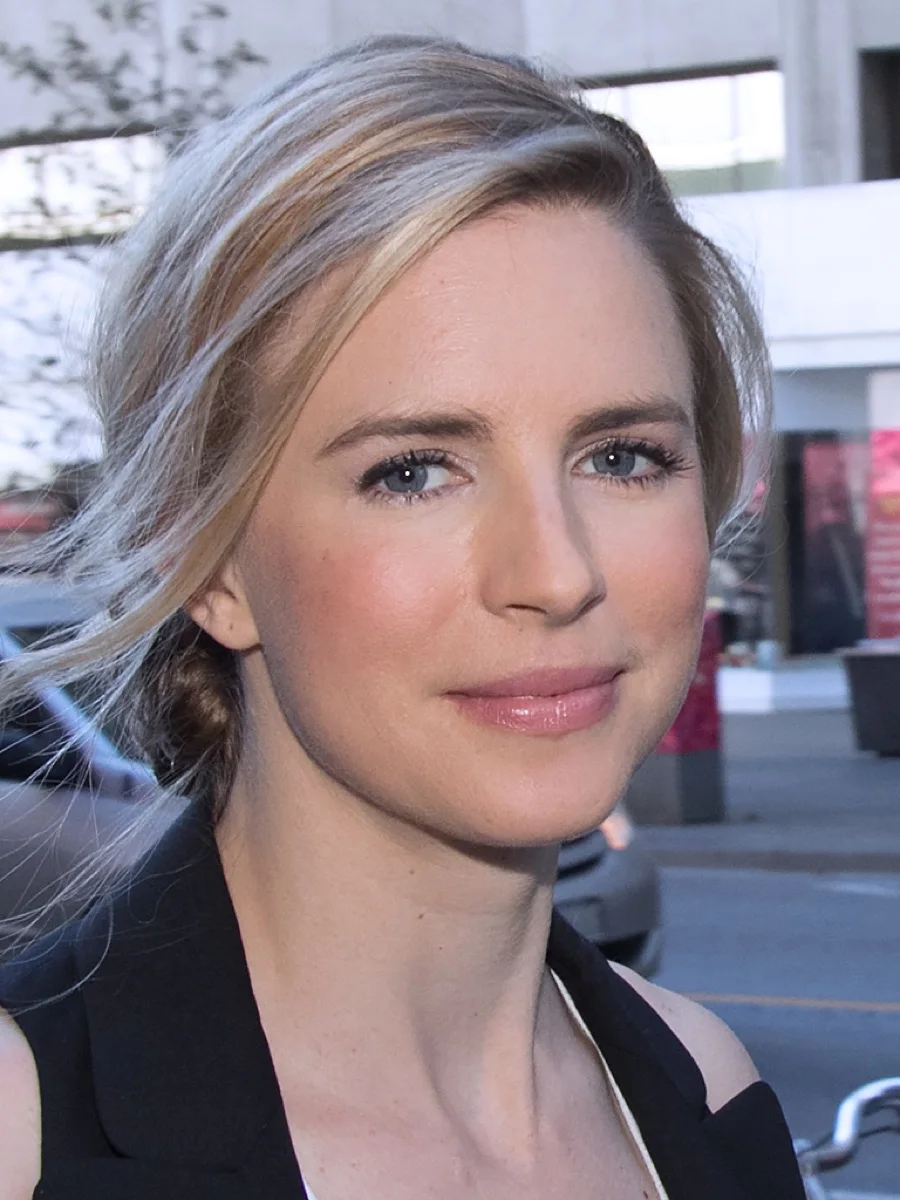
Brit Marling
Actress and Writer
Co-creator of “The OA” who is co-writing and co-starring in “Uncanny Valley,” Natasha Lyonne’s hybrid AI film built with Asteria and Moonvalley’s Marey — a generative video model trained only on licensed data.
Why this score
How the formula works →- +3.3proUses AI in their work
- +1.1pro2 pro-AI statements (measured)
- ±0nuancedHolds a documented two-sided view
- ±0nuancedSupports AI only with conditions
Weights, statement counts, the ×1.25 multiplier for having a stake in an AI-impacted field, and the formula’s smoothing are already baked in — the points add up to the score (direction-free evidence pulls toward the middle instead): Firmly Pro-AI · 4.4/10
In her words
With Asteria’s team, we hope to pioneer ways to use AI that allow filmmakers to tell high-concept stories on budgets that allow for real innovation.
Science fiction can be a powerful tool of resistance — imagining what could be instead of what is.
Biography
Brit Marling (born 1982) left a Goldman Sachs analyst track to write herself into independent film, breaking out at Sundance 2011 with “Another Earth” and “Sound of My Voice.” With Zal Batmanglij she co-created Netflix’s cult metaphysical series “The OA” and FX’s “A Murder at the End of the World,” a whodunnit steeped in AI and tech-billionaire unease. Her work has always treated technology as a storytelling problem rather than a prop.
Betting on ethical AI filmmaking
In April 2025, Marling signed on to co-write and co-star in “Uncanny Valley” with Natasha Lyonne, who directs her feature debut; virtual-reality pioneer Jaron Lanier advises the project. The film follows Mila, a teenager immersed in an augmented-reality game where physical and digital worlds blur — and it will be made partly with generative AI from Asteria, the artist-led studio Lyonne co-founded, using Moonvalley’s “Marey” video model.
The project’s explicit premise is that the tools matter as much as the story: Marey is marketed as “clean and ethical” because it was trained exclusively on licensed content, in contrast to models built on scraped, copyrighted work. The production drew backlash from AI skeptics anyway, and Lyonne publicly defended the hybrid approach; Marling framed the film itself as the argument — science fiction as “a powerful tool of resistance.”
For a writer whose series have dramatized both the promise and menace of intelligent machines, “Uncanny Valley” is a practical wager: that artists who engage AI on ethical terms — licensed data, human authorship, story first — will shape the technology’s place in cinema better than artists who boycott it.
Quote sources
- Variety, 2025(variety.com)
Sources & further reading
- Variety: Natasha Lyonne to direct feature “Uncanny Valley” combining “ethical” AI and traditional filmmaking techniques (2025)
- Rolling Stone: Natasha Lyonne, Brit Marling to debut AI sci-fi film “Uncanny Valley” (2025)
- The Hollywood Reporter: Natasha Lyonne to direct AI-based film “Uncanny Valley” (2025)
Canonical record: https://battlelines.ai/topic/brit-marling