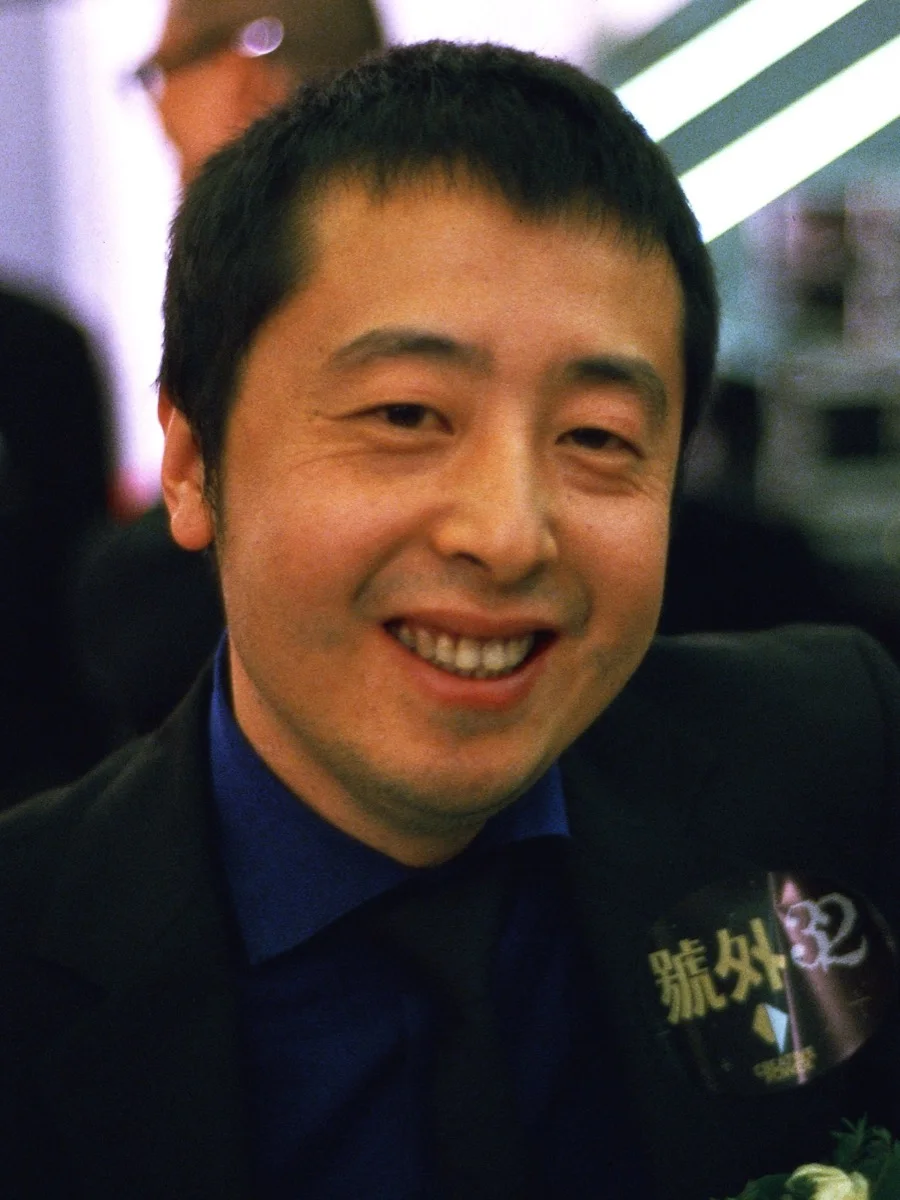
Jia Zhangke
Filmmaker
China’s leading arthouse auteur (Still Life, A Touch of Sin) urged filmmakers to embrace AI’s opportunities at Venice in 2025, then premiered his own AI-generated shorts in 2026 — insisting he uses new technology first in order to understand it.
Why this score
How the formula works →- +2.8proUses AI in their work
- +2.8proHas published AI-made work
- +1.3pro3 pro-AI statements (measured)
- ±0nuancedHolds a documented two-sided view
Weights, statement counts, the ×1.25 multiplier for having a stake in an AI-impacted field, and the formula’s smoothing are already baked in — the points add up to the score (direction-free evidence pulls toward the middle instead): Strongly Pro-AI · 6.9/10
In his words
I face new technology without making premature judgments. I use it first to understand it.
New media can present some spaces, ideas, and destinies that we couldn’t reach in the past.
Of course, there are many good and bad aspects. Don’t rush to protest, don’t rush to invest; there are definitely issues that we will address through legislation and laws.
Biography
Jia Zhangke (born 1970 in Fenyang, Shanxi) is the defining figure of Chinese independent cinema — the leading voice of the “Sixth Generation” whose patient, documentary-inflected features chronicle ordinary lives amid China’s breakneck transformation. Platform (2000), Still Life (winner of the Golden Lion at Venice in 2006), A Touch of Sin (2013), Ash Is Purest White (2018) and Caught by the Tides (2024) made him a fixture of the international festival circuit and one of the most acclaimed directors alive.
Use it first to understand it
At a Venice Film Festival masterclass in August 2025, Jia said embracing new technology is part of a filmmaker’s journey and revealed he had made a five-minute short with AI to experiment with it. He offered a characteristically precise metaphor: filming with AI is like playing chess at home in front of a computer, while traditional shooting is an outdoor activity — like climbing a mountain or going out to observe people. Filmmakers, he stressed, need not adopt every technology; what matters is how you want to tell the story.
He then went further than talk. At Hong Kong’s Filmart in March 2026, Jia presented two AI shorts — one made in three days with ByteDance’s Seedance 2.0 model, featuring two AI-generated versions of Jia himself, alongside “Wheat Harvest,” made with the Kling model. He told the audience he faces new technology “without making premature judgments,” using it first to understand it, and cautioned both camps of the AI debate: don’t rush to protest, and don’t rush to invest — real issues will be worked out through legislation.
Notably, when asked whether his next feature would use AI, his answer was a flat no: the shorts were an inquiry, not a career change. His experiments mirror a broader turn in Chinese cinema, where peers like Zhang Yimou have built AI teams directly into blockbuster productions.
Quote sources
- The Hollywood Reporter, 2026(hollywoodreporter.com)
Sources & further reading
- Deadline: Jia Zhangke embraces AI opportunities, says it’s “like playing chess” — Venice (2025)
- The Hollywood Reporter: Jia Zhangke talks AI tools in filmmaking at 2026 Filmart
- Variety: Jia Zhangke creates AI video with Seedance 2.0 (2026)
- Los Angeles Review of Books: Will the Real Jia Zhangke Please Stand Up? (2026)
Canonical record: https://battlelines.ai/topic/jia-zhangke