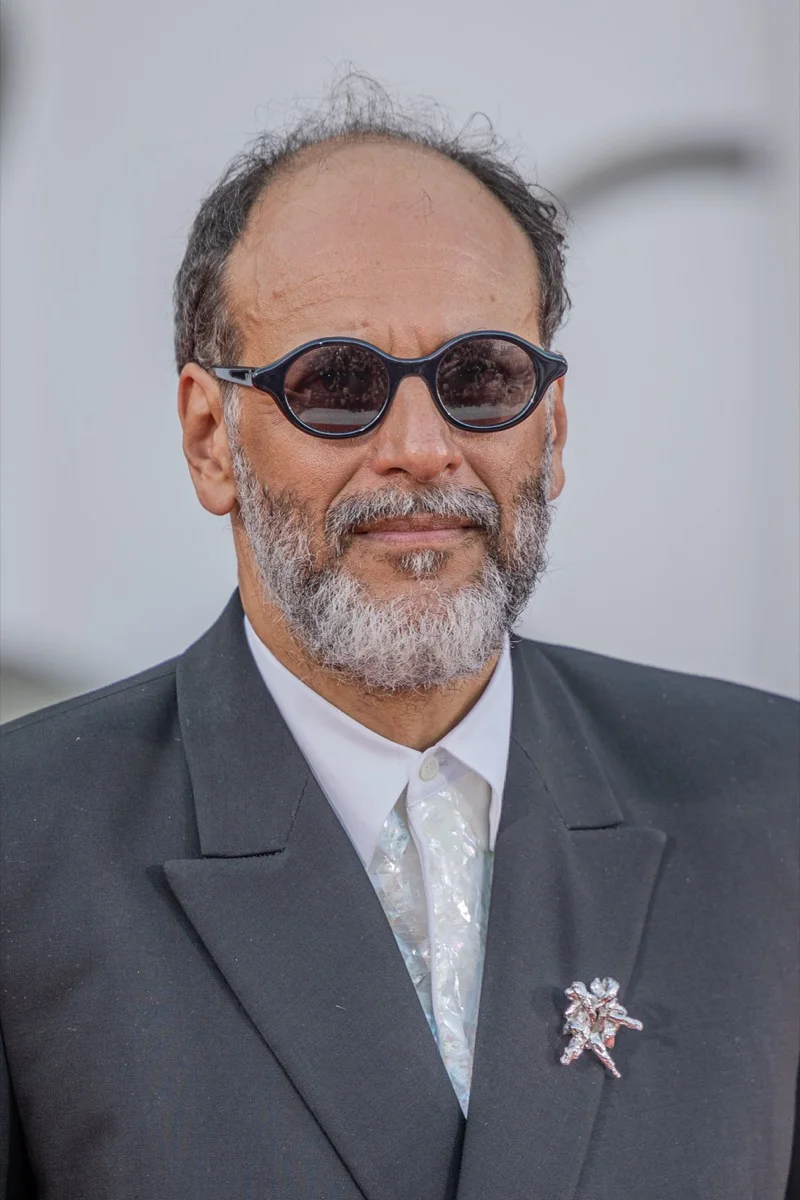
Luca Guadagnino
Filmmaker
Italian director of Call Me by Your Name, Suspiria, and Challengers. He made Artificial, a drama about Sam Altman and OpenAI — then watched Amazon MGM drop the nearly finished film months after investing in OpenAI. His quarrel, he says, is not with AI itself but with the tiny oligarchy that controls it.
Why this score
How the formula works →- 32%nuancedHolds a documented two-sided view
- 27%nuancedFears big tech will monopolize AI
- 26%antiCalls AI overhyped
- 15%anti2 anti-AI statements (forceful)
Includes the ×1.25 multiplier for having a stake in an AI-impacted field. Evidence splits 0% pro, 41% anti, 59% direction-free → Nuanced
In his words
What matters most to me is how people are completely changing the face, not just of society — in terms of consumption habits and how we interact with these tools — but the very face of the identity of a place like the United States and the entire world.
Biography
Luca Guadagnino (born 10 August 1971 in Palermo) is an Italian director whose films — I Am Love, A Bigger Splash, Call Me by Your Name, Suspiria, Bones and All, Challengers, Queer, After the Hunt — are known for sensuality, texture, and a refusal to sit still stylistically. He has been nominated for an Academy Award and won a Silver Lion at Venice.
Artificial
In 2025 Guadagnino began shooting Artificial for Amazon MGM Studios, a roughly $40 million drama about the five days in November 2023 when OpenAI’s board fired and rehired Sam Altman, with Andrew Garfield as Sam Altman, Yura Borisov as Ilya Sutskever, and Ike Barinholtz as Elon Musk. Damon Albarn was announced to score it. On 19 June 2026 — months after Amazon committed a reported $50 billion to an OpenAI cloud partnership — the studio abruptly dropped the nearly finished film. Netflix, A24, and Focus Features all subsequently passed before it found a buyer.
Guadagnino broke his silence a week later, on 26 June 2026, on the Italian talk show Otto e Mezzo. Asked why the subject of artificial intelligence had become dangerous in America, he said he could not say much “because we are right in the middle of this situation” — then pivoted to the wider argument. (His remarks were given in Italian; the wording here follows Variety’s English rendering.)
To me, the issue isn’t artificial intelligence itself. I mean the application — or whatever we want to call it — the tool used to generate “products of knowledge” or creative works, such as a research paper, a video, or an image. From one perspective, it’s a technological gadget — and not a particularly sophisticated one, at that — full of flaws, though it will likely improve over time.
What does worry him is concentration of power. Central to Artificial, he said, is a “small oligarchy” exercising “truly radical control” over the identity of places — and he offered the image he shot in San Francisco as the film’s thesis in a single frame.
We shot part of the film in San Francisco… a place of great beauty but also great despair, with so many homeless people, so many people living under the influence of fentanyl, while these wonderful, silent, self-driving cars glided past them. That, to me, is the perfect image to illustrate the theme.
He also allowed himself some optimism about the film surfacing eventually, citing CBS cancelling a Reagan miniseries in 2003 under Republican pressure only for it to air on a smaller channel. Notably, Guadagnino has not called for AI to be stopped, has not signed an anti-AI letter, and does not claim the tool is illegitimate — his position is that it is an unimpressive gadget with an alarming ownership structure, a stance closer to anti-monopoly politics than to the artist-refusal camp of Guillermo del Toro.
Quote sources
- Variety, 2026(variety.com)
Sources & further reading
- Variety: Luca Guadagnino Says He Can’t Discuss Amazon Dropping ‘Artificial’… But AI Is ‘Changing the Identity of the World’ (2026)
- TheWrap: Luca Guadagnino Speaks Out on ‘Artificial’ Fallout, Says Tech Oligarchy ‘Exercises Truly Radical Control’ (2026)
- IndieWire: A24 Will Survive the AI Backlash, but Some Are Convinced the Company Has ‘Sold Its Soul’ (2026)
Canonical record: https://battlelines.ai/topic/luca-guadagnino