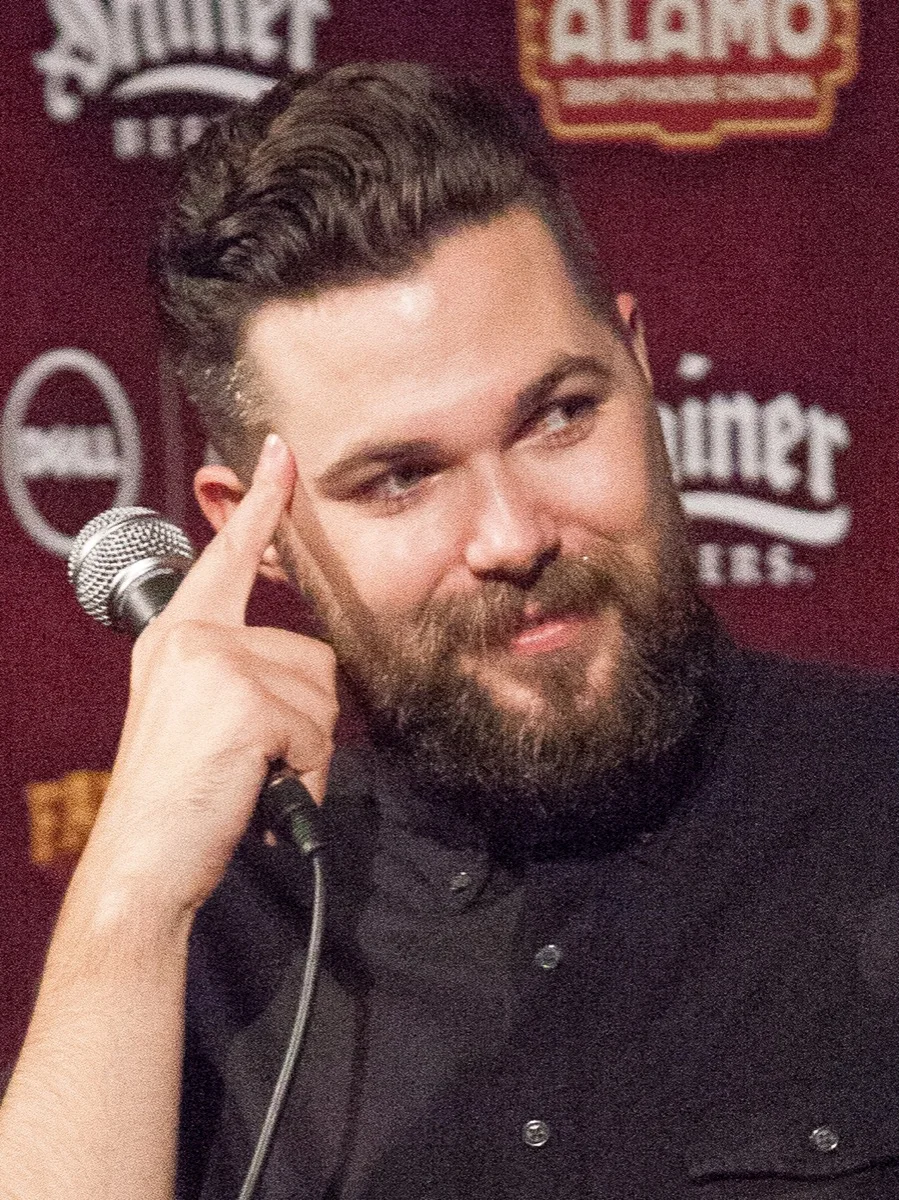
Robert Eggers
Director
Writer-director of The Witch, The Lighthouse, The Northman and Nosferatu, obsessive about period authenticity and practical effects. Asked about AI, he endorsed Guillermo del Toro’s “semi-compelling screensavers” verdict and said its best use is inspiring humans to do more human things.
Why this score
How the formula works →- +3.2antiCalls AI overhyped
- +0.9anti1 anti-AI statement (measured)
- ±0nuancedHolds a documented two-sided view
Weights, statement counts, the ×1.25 multiplier for having a stake in an AI-impacted field, and the formula’s smoothing are already baked in — the points add up to the score (direction-free evidence pulls toward the middle instead): Firmly Anti-AI · 4.1/10
Biography
Robert Eggers (born 1983 in New York City and raised in Lee, New Hampshire) came to film from theatre design and direction, and it shows: every film he has made — The Witch (2015), The Lighthouse (2019), The Northman (2022) and Nosferatu (2024) — is set before the 20th century and built on exhausting period research, from dialect reconstruction to hand-forged props. He is widely regarded as one of the most distinctive auteurs of his generation, and his method is the closest thing contemporary studio filmmaking has to an argument for doing things the hard way.
“All I have to say about that”
Eggers has said very little publicly about artificial intelligence, and what he has said came almost in passing. Interviewed by WIRED in December 2024 around the release of Nosferatu, he was asked what he made of the constant talk that AI could do what filmmakers do. He answered by borrowing someone else’s line — Guillermo del Toro’s verdict that AI’s greatest achievement so far is the semi-compelling screensaver — agreeing it was fair, then offering the one use he would defend, and closing the subject.
Guillermo del Toro’s statement that AI’s greatest achievement is to make “semi-compelling screensavers” is fair. AI, I think, is best used to inspire humans to do more human stuff. So that’s all I have to say about that.
The rest of his position has to be read off his practice rather than his statements. In the same interview he described the Nosferatu approach to effects: there are, he said, plenty of CG effects in the film, but the big set pieces that would normally be generated were staged for real, so that the digital work could be spent extending and fixing rather than fabricating — the sleight of hand works because the thing an audience is looking for is not fake. That is a craft argument about where synthetic imagery belongs in a pipeline, and it is consistent with the one sentence he has given on AI.
It is worth being clear about the size of the record. Eggers has not signed the open letters, has not sued anyone, and has not made AI a cause; he has never vowed never to use it either. His single on-record remark is a dismissal of AI as an author paired with a narrow endorsement of it as a prompt for human work.
Quote sources
- WIRED, 2024(wired.com)
Sources & further reading
Canonical record: https://battlelines.ai/topic/robert-eggers