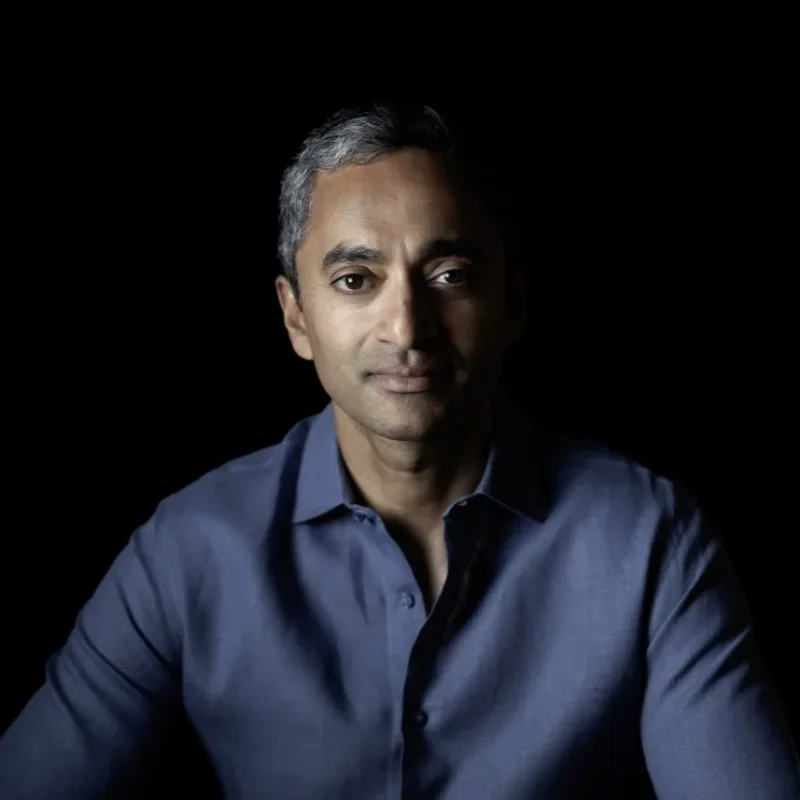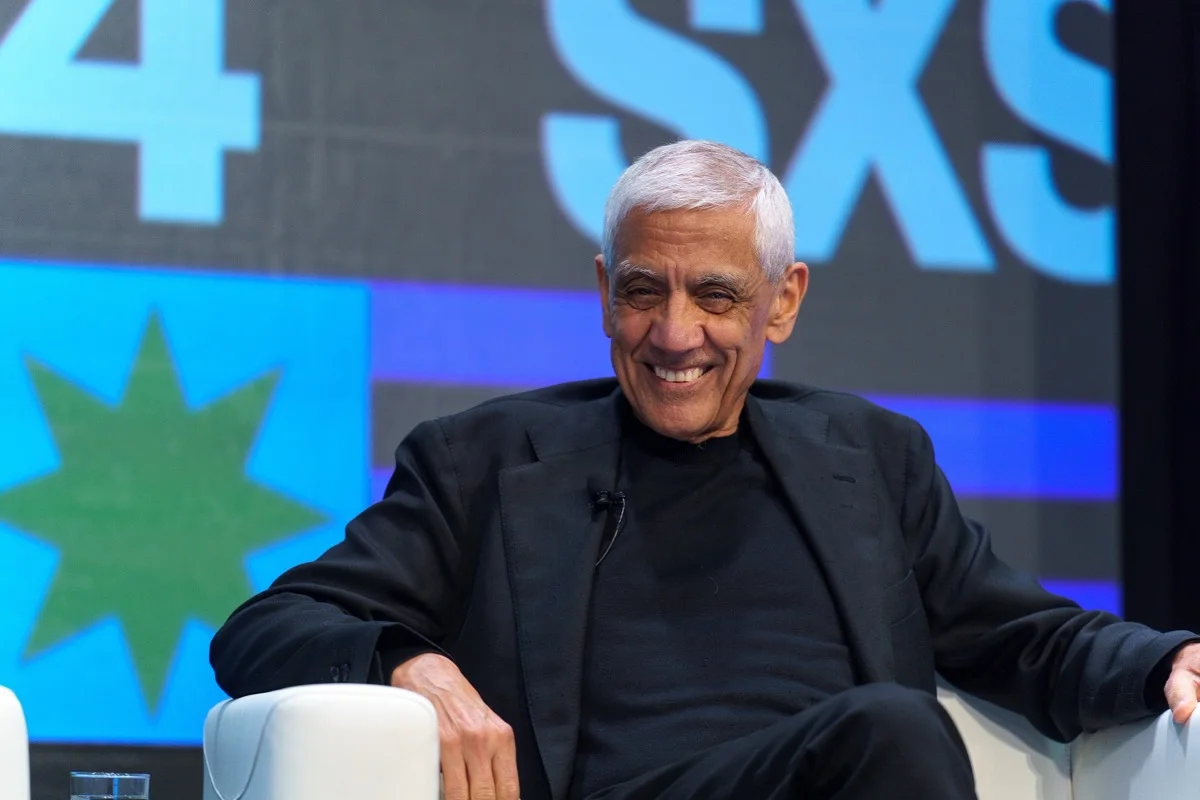
Vinod Khosla
Venture Capitalist
Sun Microsystems co-founder and OpenAI’s first venture investor. Predicts AI will be able to do 80% of 80% of all jobs — and argues that is a future of abundance to be embraced, not feared.
Why this score
How the formula works →- +3.5proPredicts an AI utopia
- +3.4proInvests in AI companies
- +1.2pro2 pro-AI statements (fervent)
Weights, statement counts, and the formula’s smoothing are already baked in — the points add up to the score: Strongly Pro-AI · 8.1/10
In his words
By 2040, the need to work will go away. People will work on things because they want to, not because they need to pay their mortgage.
I estimate that over the next 25 years, possibly 80% of 80% of all jobs, can be done by an AI, be it primary care doctors, psychiatrists, sales people, oncologists, farm workers or assembly line workers, structural engineers, chip designers, you name it.
Biography
Vinod Khosla (born 1955) is an Indian-American venture capitalist who co-founded Sun Microsystems in 1982, became a legendary partner at Kleiner Perkins, and founded Khosla Ventures in 2004. In 2019 his firm put $50 million into OpenAI — its first venture backing — a bet he has called one of the most consequential of his career.
The 80% of 80% thesis
Khosla is Silicon Valley’s bluntest forecaster of AI-driven labor disruption. In his 2024 essay “AI: Dystopia or Utopia?” he estimated that AI can do 80% of the work in 80% of all jobs — primary-care doctors, salespeople, oncologists, structural engineers, chip designers alike. In interviews through 2025 and 2026 he sharpened the timeline: within five years AI would be able to do 80% of any economically valuable human job, and by around 2030 most jobs would be automatable, dissolving trillions in labor economics and much of the Fortune 500 with it.
Where critics hear dystopia, Khosla insists on utopia — a world where near-free expertise makes medicine and education abundant, and where by 2040 work becomes optional, something people do by choice rather than to pay a mortgage. He couples this with support for redistribution of AI-created wealth, arguing society, not scarcity, will be the binding constraint. Skeptics respond that the people living through the transition are not consoled by the destination, and that his firm profits from the disruption he forecasts; Khosla counters that pretending the shift is not coming helps no one prepare for it.
Quote sources
- AI: Dystopia or Utopia? (Khosla Ventures), 2024(khoslaventures.com)
- Fortune, 2025(finance.yahoo.com)
Sources & further reading
Canonical record: https://battlelines.ai/topic/vinod-khosla