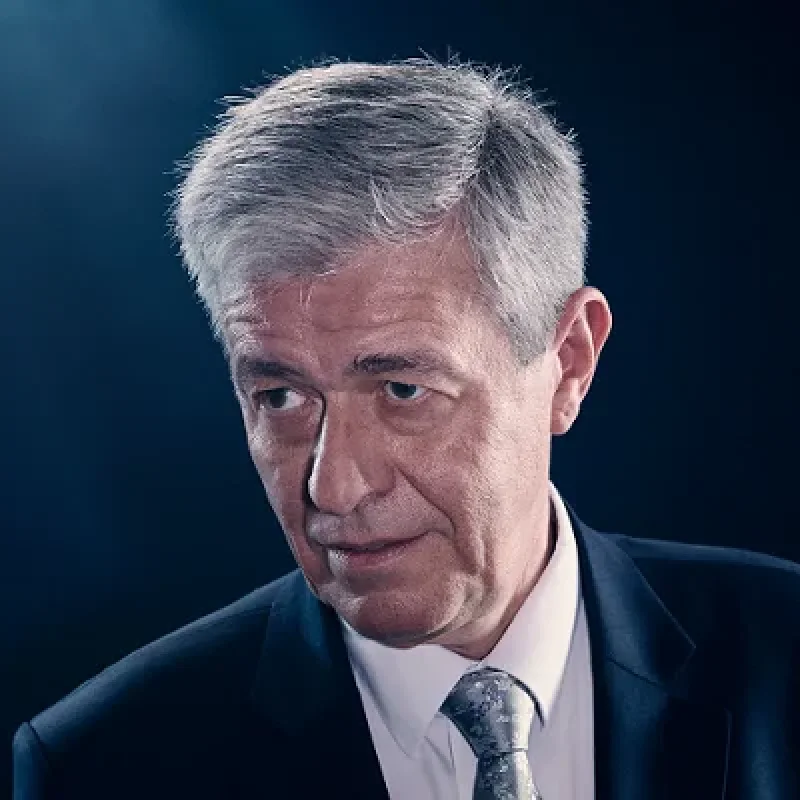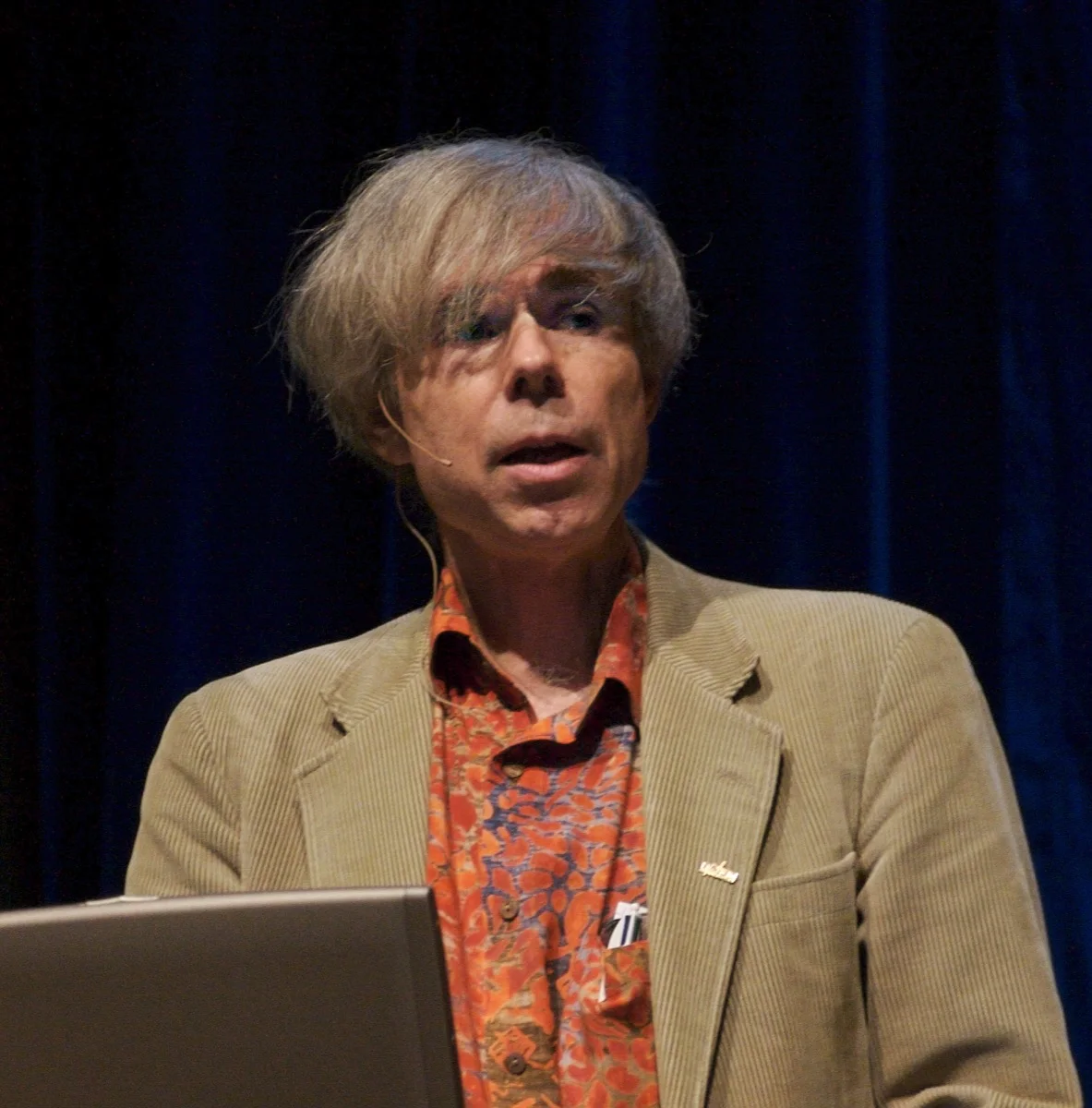
Douglas Hofstadter
Cognitive Scientist & Author of Gödel, Escher, Bach
The Pulitzer-winning author of Gödel, Escher, Bach spent decades arguing minds were deeper than computation — then said modern AI terrifies and demoralizes him, as if his “whole intellectual edifice” were collapsing.
Why this score
How the formula works →- +5.1antiPredicts AI catastrophe
- +2.6anti4 anti-AI statements (fervent)
Weights, statement counts, the ×1.25 multiplier for having a stake in an AI-impacted field, and the formula’s smoothing are already baked in — the points add up to the score: Strongly Anti-AI · 7.7/10
In his words
It felt as if not only are my belief systems collapsing, but it feels as if the entire human race is going to be eclipsed and left in the dust soon.
If that mistake is repeated sufficiently often and comes to be widely accepted, it will undermine the very nature of truth on which our society is based.
Biography
Douglas Hofstadter (born 1945) is a cognitive scientist at Indiana University whose 1979 book Gödel, Escher, Bach: An Eternal Golden Braid won the Pulitzer Prize and inspired generations of programmers and AI researchers to think about how consciousness might emerge from symbols — strange loops looping back on themselves. For decades he was also deep learning’s most elegant skeptic, dismissing earlier statistical models as shallow mimicry that had nothing to do with real minds.
The edifice collapses
GPT-4 broke that confidence. In a June 2023 interview he confessed that progress in AI had induced a kind of intellectual vertigo: “a very traumatic experience when some of your most core beliefs about the world start collapsing,” an “oncoming tsunami that is going to catch all humanity off guard.” He said the systems made him feel like “a very imperfect, flawed structure” next to them, that the prospect overwhelmed and depressed him, and — in the line that ricocheted around the AI world — that humanity might soon be eclipsed and left in the dust. Coming from the man who taught the field to dream about machine minds, the despair landed harder than any activist’s warning.
I frankly am baffled by the allure, for so many unquestionably insightful people, of letting opaque computational systems perform intellectual tasks for them.
In a July 2023 Atlantic essay responding to an experiment in which GPT-4 imitated his own prose, he called trusting systems that have never had a single real-world experience “a deep mistake” that could corrode society’s relationship with truth. Unlike the policy campaigners, Hofstadter proposes no ban; his opposition is a philosopher’s grief — that minds he considers hollow are outperforming the sacred, and that something precious about human depth is being cheapened in the process.
Quote sources
- Game Thinking TV interview, 2023(the-decoder.com)
- The Atlantic, 2023(theatlantic.com)
Sources & further reading
Canonical record: https://battlelines.ai/topic/douglas-hofstadter