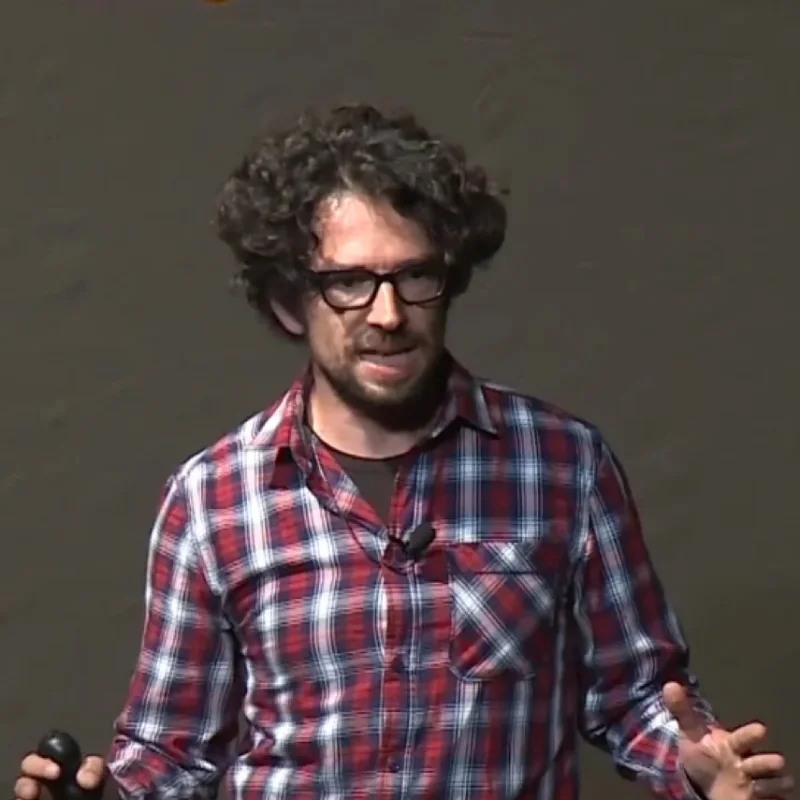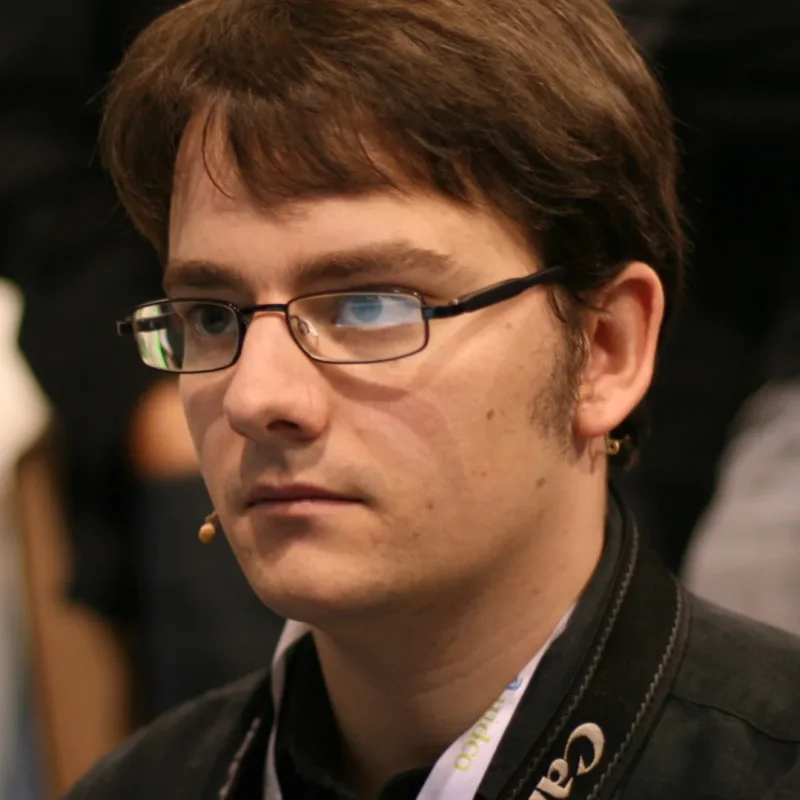
Fabrice Bellard
Creator of FFmpeg and QEMU
The reclusive French programmer behind FFmpeg, QEMU, and QuickJS — who quietly voted pro-AI in code, building TextSynth, an LLM inference engine written in plain C, and record-setting neural compressors.
Why this score
How the formula works →- +4.4proBuilds AI professionally
- +2.6proUses AI in their work
- +1.7proRecognized for AI work
Weights, statement counts, the ×1.25 multiplier for having a stake in an AI-impacted field, and the formula’s smoothing are already baked in — the points add up to the score: Strongly Pro-AI · 8.7/10
In his words
ts_server is a web server proposing a REST API to large language models. … All is included in a single binary. Very few external dependencies (Python is not needed).
Biography
Fabrice Bellard (born 1972) is arguably the most consequential programmer most people have never heard of. He created FFmpeg, the media engine behind essentially every video played on the internet; QEMU, the emulator underpinning modern cloud virtualization; the Tiny C Compiler; QuickJS; and, for good measure, once held the world record for computing digits of pi on a desktop PC. He almost never gives interviews — his work speaks entirely through shipped code.
The quiet pro-AI vote
So when Bellard turned to AI, no manifesto appeared — just software. Starting in 2019 with GPT-2, he built TextSynth, a commercial LLM and image-generation inference server written in plain C on his own LibNC library: one binary, no Python, custom 8-, 4-, and 3-bit quantization, sold under commercial license and running the textsynth.com playground. His NNCP neural compressor took first place on the Large Text Compression Benchmark, and 2023’s ts_zip used an LLM to squeeze text beyond what conventional compressors can reach.
That body of work makes Bellard a distinctive data point in the debate: a systems purist of the old school — the kind of figure John Carmack has called almost certainly a better overall programmer than himself — who examined large language models and judged them worth a decade of his scarce, legendary attention. Where others argue about whether the technology is real, Bellard reimplemented it from scratch, alone, in C.
Quote sources
- Bellard.org, 2024(bellard.org)
Sources & further reading
Canonical record: https://battlelines.ai/topic/fabrice-bellard