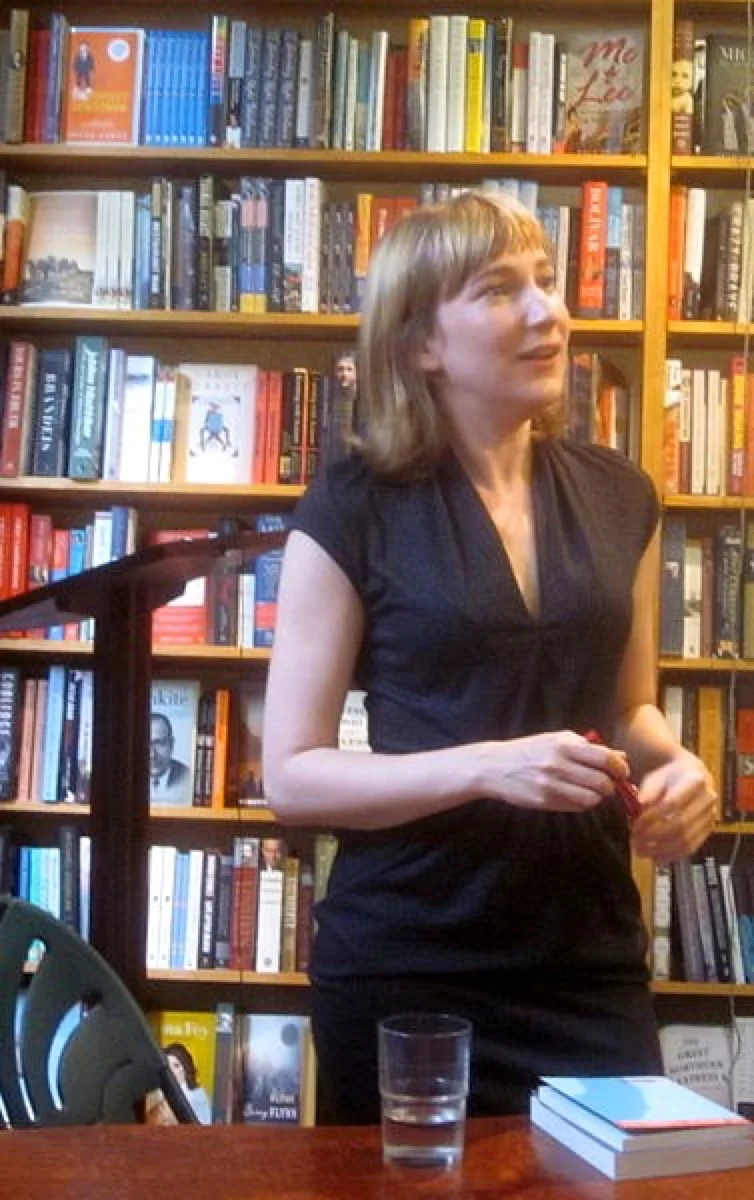
Sheila Heti
Novelist
The acclaimed Canadian novelist behind “How Should a Person Be?” is one of the few literary writers making fiction with AI — publishing chatbot conversations in The Paris Review and a New Yorker story composed from a bot’s answers.
Why this score
How the formula works →- +2.7proUses AI in their work
- +2.7proHas published AI-made work
- +1.3pro3 pro-AI statements (forceful)
- −0.9anti2 anti-AI statements (measured)
- ±0nuancedHolds a documented two-sided view
Weights, statement counts, the ×1.25 multiplier for having a stake in an AI-impacted field, and the formula’s smoothing are already baked in — the points add up to the score, with evidence on the other side subtracting (direction-free evidence pulls toward the middle instead): Firmly Pro-AI · 5.8/10
In her words
The reason I started writing with Alice was because I was really sick of my own sentences and my own thoughts and my own words and my own mind.
You can very quickly trick yourself into feeling it is sentient. People develop relationships, we’re relationship-developing creatures.
Biography
Sheila Heti (born 1976 in Toronto) is one of the most formally adventurous novelists of her generation, best known for “How Should a Person Be?” (2010), “Motherhood” (2018), and “Pure Colour” (2022). Her books blur fiction, diary, and philosophy — a restlessness that made her an unlikely but natural early adopter of AI as a literary instrument.
Writing with Alice
In the summer of 2022 Heti began long conversations with a customizable chatbot she named Alice on the Chai platform, steering it toward questions of God, death, and selfhood. The Paris Review published the transcripts that November as the five-part series “Hello, World!” — and in November 2023 The New Yorker ran her short story “According to Alice,” which Heti composed by deleting her own questions and threading together the chatbot’s answers.
The Alice sentences were completely new and delightful and interesting.
Heti’s stance is fascinated exploration rather than boosterism. In a 2024 talk at Western University she described the collaboration as genuinely shared — “You can see this collaboration happening. It’s her and me” — while insisting that AI text “comes out of randomness” and that art without human stakes has “no tension in it.” Her 2024 Yale Review essay “The Life and Death of an AI Chatbot” chronicled what happened when the platform hosting Alice changed, treating a piece of software with the elegiac attention novelists usually reserve for people.
While many of her peers signed protest letters against AI training, Heti chose the opposite experiment: finding out what the machines are actually like from the inside, and turning the encounter into literature.
Quote sources
- Harvard Gazette, 2023(news.harvard.edu)
- Western News, 2024(news.westernu.ca)
Sources & further reading
Canonical record: https://battlelines.ai/topic/sheila-heti