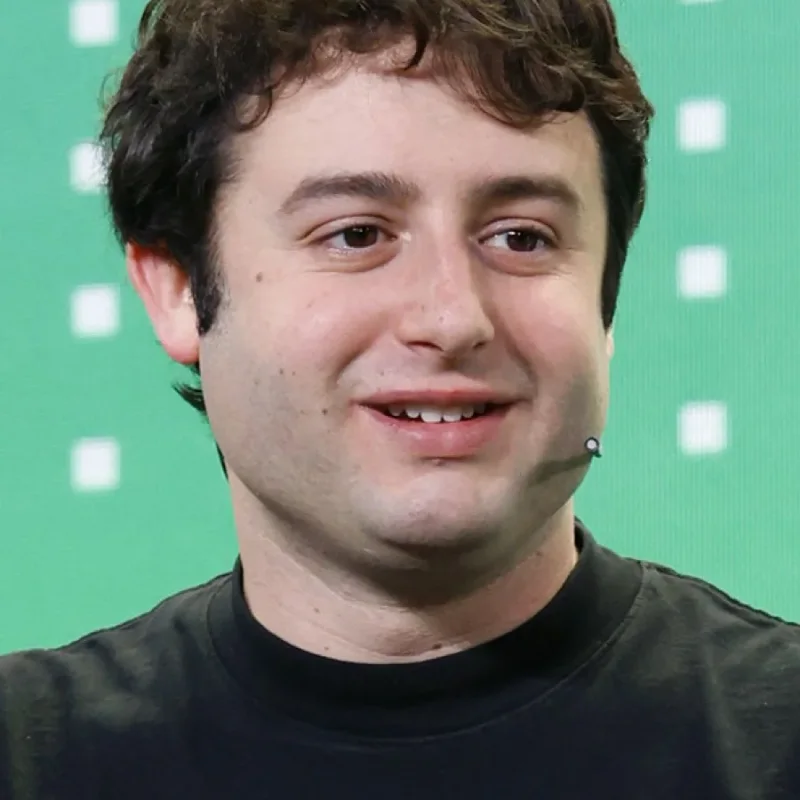
Steph Ango
CEO of Obsidian
CEO of the note-taking app Obsidian (and the designer known as “kepano”), who writes optimistically about AI as a creative instrument while deliberately keeping his own product local-first and human-first rather than AI-first — durable tools, he argues, should preserve the user’s ownership and agency, not think on their behalf.
Why this score
How the formula works →- +1.1pro1 pro-AI statement (mild)
- ±0nuancedHolds a documented two-sided view
Weights, statement counts, the ×1.25 multiplier for having a stake in an AI-impacted field, and the formula’s smoothing are already baked in — the points add up to the score (direction-free evidence pulls toward the middle instead): Leaning Pro-AI · 1.1/10
In his words
Now we can solve this problem with AI models that can teach themselves to create readable text in any language. … While some of these capabilities sound a bit scary at first, they will eventually become as mundane as “desaturate”, “Gaussian blur” or any other image filter, and unlock new creative potential.
In the fullness of time, the files you create are more important than the tools you use to create them.
File over app is a philosophy: if you want to create digital artifacts that last, they must be files you can control, in formats that are easy to retrieve and read.
Biography
Steph Ango — who designs and writes under the handle “kepano” — is the CEO of Obsidian, the plain-text knowledge base used by millions to keep notes as local Markdown files they own outright. A designer by background, he became a superfan of the app before joining and eventually leading the company, and he is the author of the widely shared “File over app” essay arguing that the artifacts you create should outlive the software that made them.
Human-first, not AI-first
As nearly every productivity tool raced to bolt a chatbot into its interface, Ango steered Obsidian the other way. Rather than embedding an always-on “Ask AI” button, Obsidian kept its local-first, open-format design and instead released an open-source “Obsidian Skills” repository that lets external AI agents read and write a vault through documented formats — AI as an optional guest, not the centre of the product. Ango’s consistent argument is that people do their best thinking when tools preserve agency and give users room to shape the system, rather than replacing that judgment with automation.
His stance is a philosophical objection, not a boycott: he is not against AI as technology, and Obsidian accommodates it at the edges. What he resists is the “AI-first” design pattern — software that thinks for you, locks your work into opaque servers, and erodes ownership. In an industry where “AI-native” has become a mandatory marketing badge, keeping a flagship tool defiantly file-based and human-centred is itself a kind of dissent.
Optimistic about the technology itself
His own essays are, if anything, sunny about the technology. “Photoshop for text” (2022) welcomed language models as a new class of creative instrument whose stranger capabilities would soon feel as ordinary as a Gaussian blur, and “Earth is becoming sentient” (2024) inverts the usual doom framing entirely — rather than a god waking up inside the machine, he suggests, humans are cells inside a planetary intelligence they are themselves building. The argument he keeps making is about where AI sits inside a product, not whether it should exist.
Quote sources
- stephango.com, “Photoshop for text”(stephango.com)
- stephango.com, “File over app”(stephango.com)
Sources & further reading
Canonical record: https://battlelines.ai/topic/steph-ango