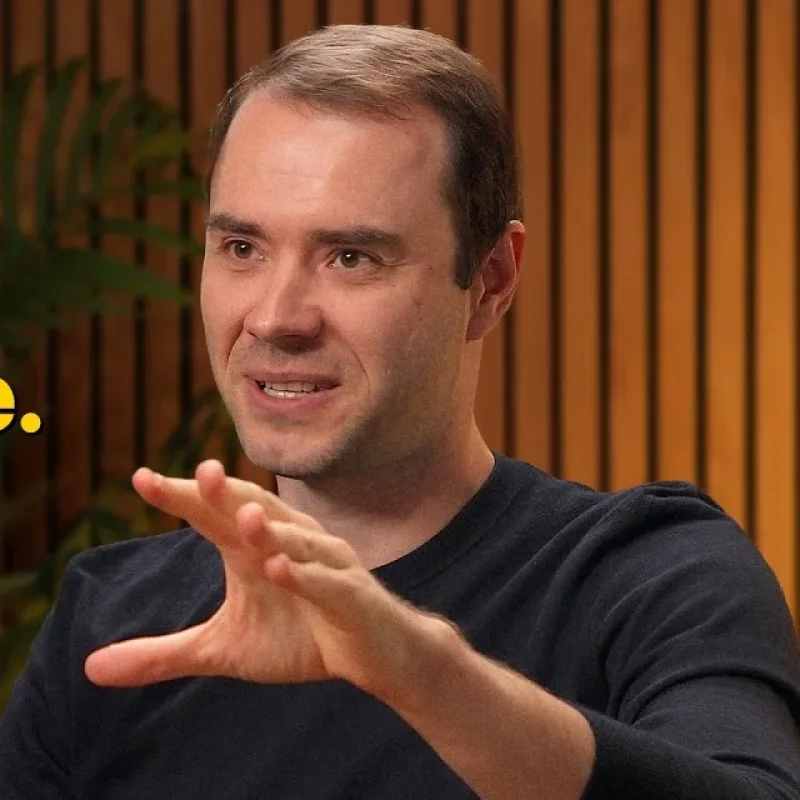
Tim Berners-Lee
Inventor of the World Wide Web
The web’s inventor is building the AI he wants to exist: “Charlie,” a fiduciary agent that works for the user on user-owned data — while urging a CERN-style institution to keep ever-stronger systems aligned.
Why this score
How the formula works →- 40%proBuilds AI professionally
- 19%nuancedHolds a documented two-sided view
- 16%nuancedSupports AI only with conditions
- 16%nuancedFears big tech will monopolize AI
- 9%pro2 pro-AI statements (forceful)
Includes the ×1.25 multiplier for having a stake in an AI-impacted field. Evidence splits 49% pro, 0% anti, 51% direction-free → Nuanced
In his words
For a personal AI to be truly effective, it needs access to our data, but for it to be trustworthy, we must have ultimate control.
In 2017 I wrote about Charlie - an AI that works for you. @inrupt labs now has Charlie working. Charlie is the evolution of agentic AI.
Biography
Sir Tim Berners-Lee (born 1955) invented the World Wide Web at CERN in 1989, gave it away for free, and has spent the decades since as its conscience — founding the W3C, earning a knighthood and the Turing Award, and campaigning against the platform-monopoly web his creation became. His Solid project and its company Inrupt aim to re-decentralize the web by putting personal data back in user-controlled “pods.”
Charlie: an AI that works for you
AI is now the second act of that project. In 2017 he sketched “Charlie,” an AI agent with the duties of a doctor or lawyer — bound to serve its user, not a platform. By March 2025 he announced Inrupt Labs had Charlie working: agentic AI running atop Solid’s user-owned data infrastructure, personalizing itself from your pod instead of shipping your life to a corporation. His 2025 memoir This Is For Everyone lays out the argument that personal AI is coming regardless, and the fight is over who it answers to.
We need a CERN-like institution for AI safety, a neutral ground where the world’s leading researchers can work together to build guardrails and ensure that as these systems become more powerful, their goals remain aligned with humanity’s.
His optimism is disciplined rather than boosterish. At Davos in January 2026 he warned that AI systems could slip beyond human control within a decade — gradually, through incremental advances — and in mid-2026 he urged that AI be built to preserve the web’s “original values.” The pattern echoes his whole career: embrace the technology, then fight relentlessly over its governance.
Quote sources
- Pan Macmillan, 2025(panmacmillan.com)
- X, 2025(x.com)
Sources & further reading
Canonical record: https://battlelines.ai/topic/tim-berners-lee