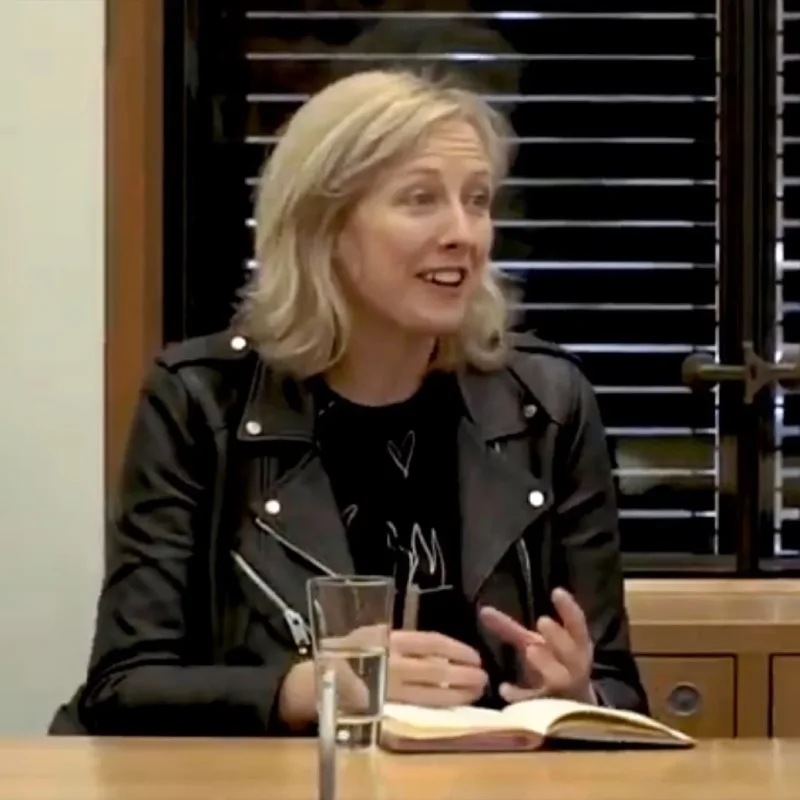
Vauhini Vara
Author & Journalist
Pulitzer-finalist novelist and tech journalist whose viral essay “Ghosts” was written with GPT-3, and whose 2025 book “Searches” weaves ChatGPT transcripts into its pages — a sharp Big Tech critic who keeps AI in her toolkit.
Why this score
How the formula works →- 24%proUses AI in their work
- 24%proHas published AI-made work
- 20%nuancedHolds a documented two-sided view
- 16%nuancedFears big tech will monopolize AI
- 11%anti3 anti-AI statements (measured)
Includes the ×1.25 multiplier for having a stake in an AI-impacted field. Evidence splits 53% pro, 11% anti, 36% direction-free → Nuanced
In her words
Some of the best parts of the essay were actually written by the AI.
It claims to be making our communication better, but I would argue that it’s actually making it worse.
Biography
Vauhini Vara is an American journalist and novelist who covered Silicon Valley for The Wall Street Journal and The New Yorker before her debut novel, “The Immortal King Rao” (2022) — a story about a tech CEO whose algorithm runs the world — was named a Pulitzer Prize finalist.
“Ghosts” and writing with the machine
In 2021, unable to write directly about her sister’s death, Vara fed the opening lines of the story to GPT-3 and let the model complete it, over nine successive attempts. The result, “Ghosts” (The Believer), became one of the most widely shared literary experiments with AI — proof, years before ChatGPT, that a language model could help a writer approach grief she could not face alone.
Her 2025 book “Searches: Selfhood in the Digital Age” goes further: after drafting chapters, Vara fed them to ChatGPT and printed the model’s responses in the book, treating the exchange as an experiment in power and manipulation. She told interviewers she “wouldn’t have published those sections of the book if ChatGPT hadn’t sort of revealed something on the page about how the technology works.”
If people are spending time interacting with a corporate-owned chatbot, we have to ask what information it is getting from them. And how is that being used?
Vara resists both camps. She is scathing about Big Tech’s power — arguing that ChatGPT’s “flat, conformist” prose reinforces linguistic norms and that companies “benefit disproportionately” from our engagement — yet she keeps using the tools, insisting that engagement is how you find out what they really are. Where peers like Jodi Picoult signed protest letters, Vara wrote the machines into her books.
Quote sources
- The Nod Mag, 2025(thenodmag.com)
- Interlocutor, 2025(interlocutorinterviews.com)
Sources & further reading
Canonical record: https://battlelines.ai/topic/vauhini-vara