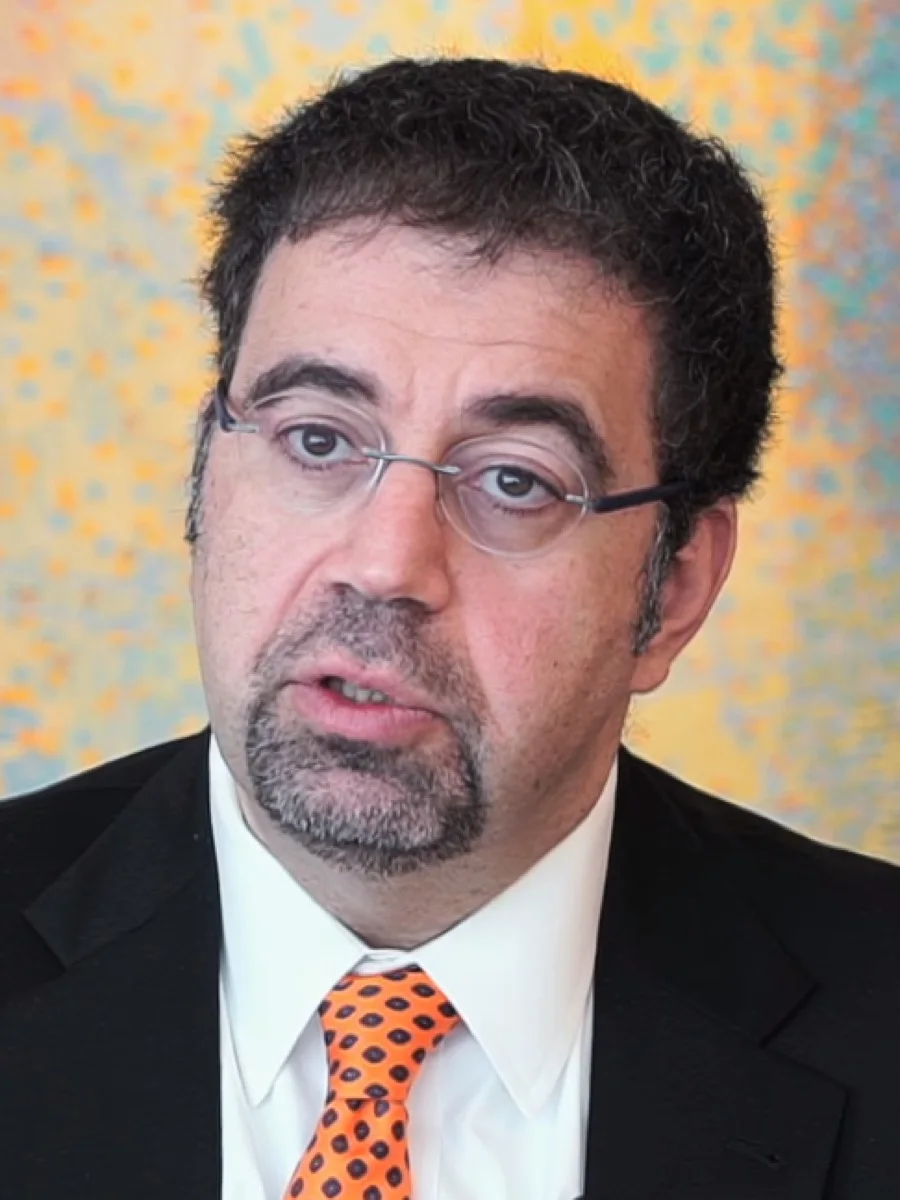
Daron Acemoglu
Economist & Nobel Laureate
MIT economist and 2024 Nobel laureate who argues AI’s productivity gains are wildly oversold — roughly half a percent over a decade — while its harms to workers and democracy are undersold.
Why this score
How the formula works →- 34%nuancedHolds a documented two-sided view
- 28%nuancedFears big tech will monopolize AI
- 22%antiCalls AI overhyped
- 16%anti3 anti-AI statements (forceful)
Evidence splits 0% pro, 38% anti, 62% direction-free → Nuanced
In his words
I don’t think we should belittle 0.5% in 10 years. That’s better than zero. But it’s just disappointing relative to the promises that people in the industry and in tech journalism are making.
The reason why we’re going so fast is the hype from venture capitalists and other investors, because they think we’re going to be closer to artificial general intelligence. I think that hype is making us invest badly.
Biography
Daron Acemoglu (born 1967) is an Institute Professor of economics at MIT, co-author of Why Nations Fail, and one of the most cited economists alive. In 2024 he shared the Nobel Memorial Prize in Economic Sciences with Simon Johnson and James Robinson for work on how institutions shape prosperity — credentials that make his AI skepticism unusually hard to wave away.
The case against the hype
His 2023 book Power and Progress, written with Johnson, argues that a thousand years of technological history show productivity gains flow to workers only when society forces the issue — and that AI, as currently deployed, is “so-so automation” that displaces labor without delivering transformative output gains. His 2024 paper “The Simple Macroeconomics of AI” put numbers on the skepticism: because only a sliver of tasks can be profitably automated within a decade, he estimates AI will add a nontrivial but modest boost of roughly 0.5–0.7% to productivity and about 1% to GDP over ten years — a fraction of the Goldman Sachs and McKinsey forecasts driving the investment boom.
He is equally caustic about the discourse itself, telling Fortune in 2026 that he finds only about a fifth of AI commentary intellectually serious. He warns that hype-driven capital allocation, an obsession with full automation over worker-augmenting tools, and the concentration of the technology in a handful of firms could repeat the mistakes of past technology transitions — enriching the few while degrading work for the many.
Notably, Acemoglu does not predict AI catastrophe or dismiss the technology outright — he expects real but modest gains, and wants policy to steer AI toward creating new tasks for workers rather than merely replacing them. Boosters retort that his estimates mechanically extrapolate from early, pre-agentic models and will age badly; he retorts that Wall Street’s numbers are faith, not economics.
Quote sources
- MIT News, 2024(techxplore.com)
Sources & further reading
Canonical record: https://battlelines.ai/topic/daron-acemoglu