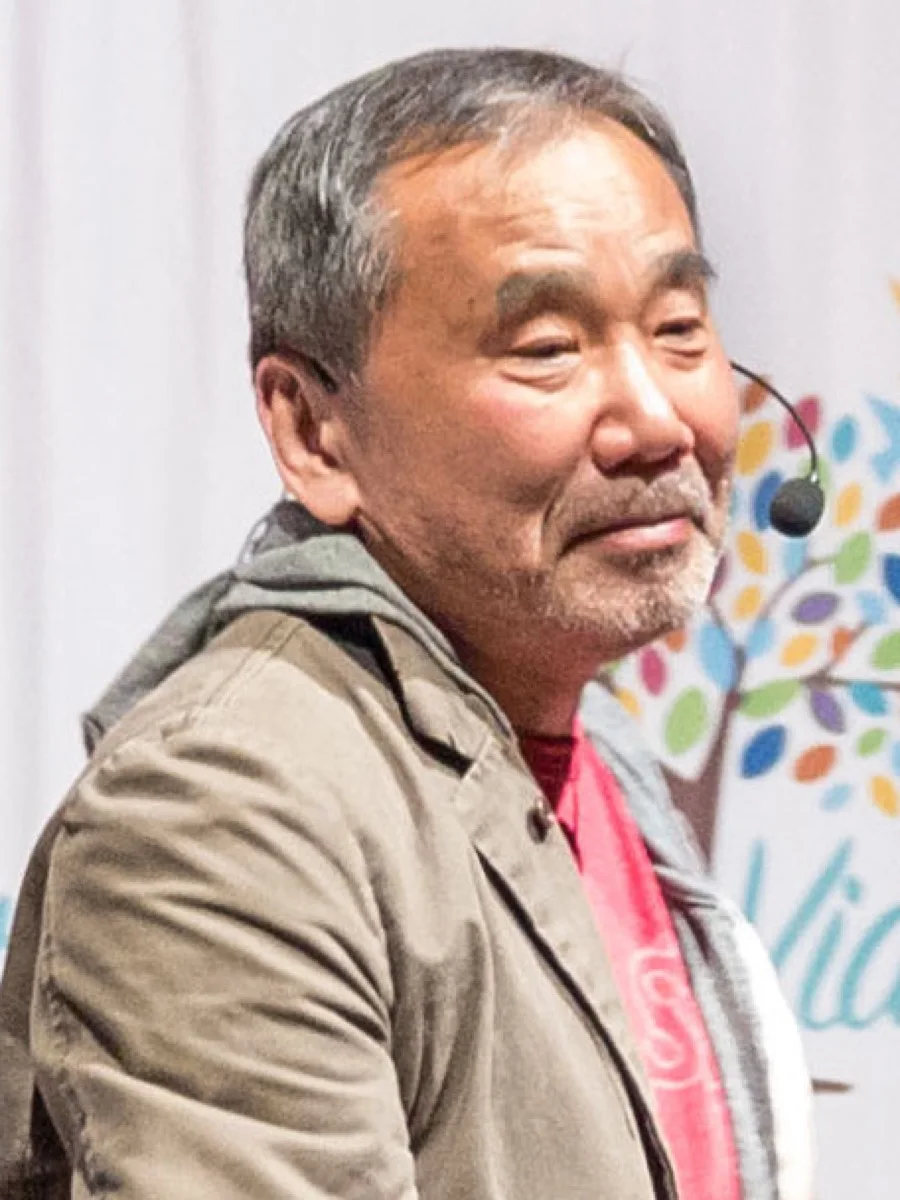
Haruki Murakami
Novelist
Japan’s most famous living novelist, perennially tipped for the Nobel. Asked about AI literature, he simply says his way of writing is “completely different” from what machines do — and has joined none of the protests, letters, or lawsuits roiling the literary world.
Why this score
How the formula works →No scoreable evidence on file — too little engagement to place, which reads as Neutral.
In his words
AI takes into account everything that has happened so far and draws analogies. But the process of how I write novels is something completely different.
When I’m writing a novel, my head is filled with bugs, but I still write novels using the brain. If a computer was filled with as many bugs as I have, I think it would break down.
Biography
Haruki Murakami (born 1949 in Kyoto) is the most widely read Japanese novelist in the world — the author of Norwegian Wood, The Wind-Up Bird Chronicle, Kafka on the Shore, and 1Q84, translated into more than fifty languages and a perennial favorite for the Nobel Prize in Literature. A former Tokyo jazz-bar owner who famously decided to write his first novel while watching a baseball game, he has built one of contemporary fiction’s most distinctive voices out of surrealism, pop music, and loneliness.
A shrug at the machine
Murakami has been asked about AI repeatedly and has never treated it as a threat. Accepting Spain’s Princess of Asturias prize in October 2023, he told the Associated Press that his own head is “filled with bugs” when writing — and that a computer with as many bugs would simply break down. The bugs, in his telling, are the point: fiction comes from a productively malfunctioning mind, not from clean computation.
He returned to the theme in July 2026, when his first novel in three years — The Tale of Kaho, his first full-length book with a female protagonist — went on sale in Japan. AI, he told Kyodo News, “takes into account everything that has happened so far and draws analogies,” while a novelist’s job is to drag in something new that suddenly flashes into the mind. Characters show up unbidden when he is deep in a story; “that’s not something that comes out from analogy. AI probably can’t do that.”
And that is the whole of his engagement. While peers like Kazuo Ishiguro and thousands of Western authors signed protest letters and the The Authors Guild went to court, Murakami has joined no campaign, signed nothing, and sued no one. He answers the AI question when journalists ask it, states that what he does is different, and goes back to work.
Quote sources
- Kyodo News, 2026(thestar.com.my)
- Associated Press, 2023(abcnews.go.com)
Sources & further reading
Canonical record: https://battlelines.ai/topic/haruki-murakami