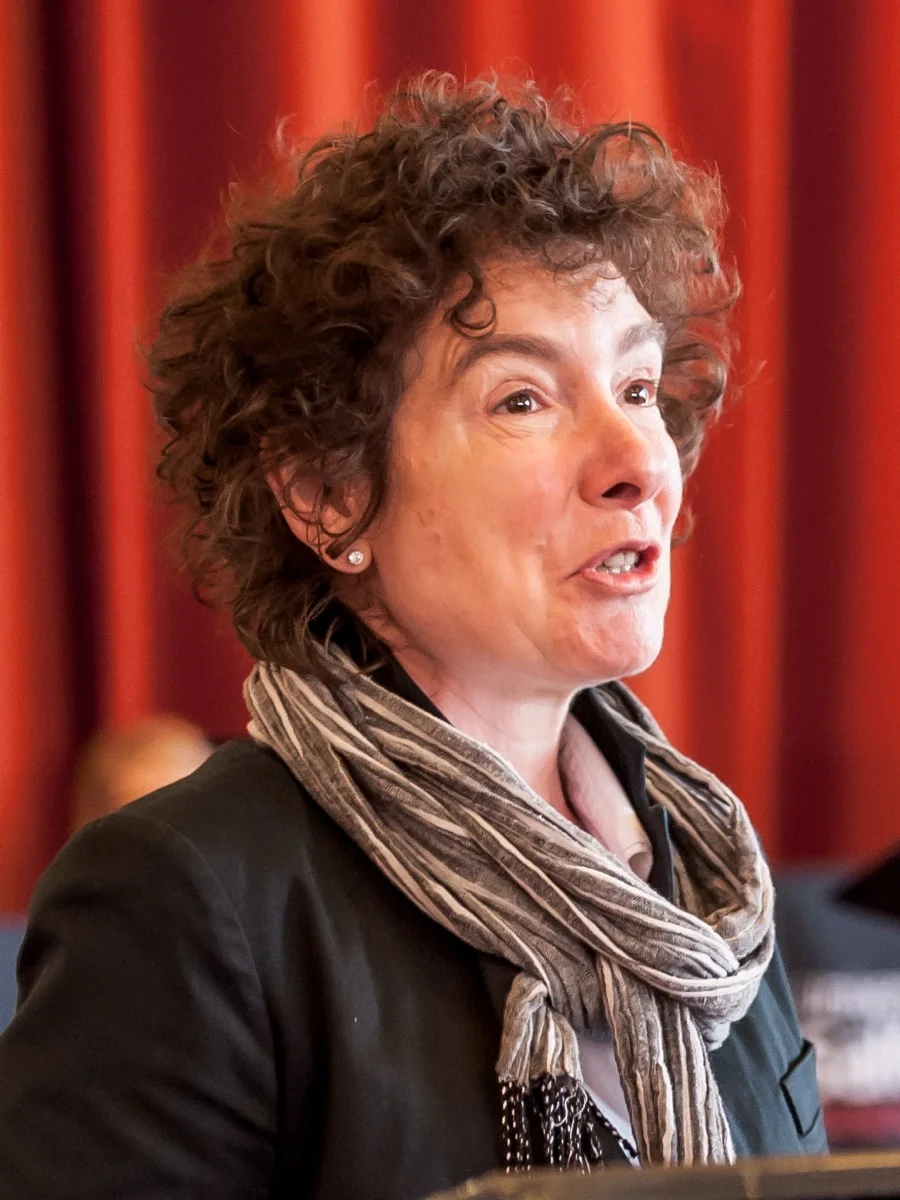
Jeanette Winterson
Novelist & Essayist
Acclaimed British novelist (Oranges Are Not the Only Fruit) who wrote a whole essay collection welcoming AI — 12 Bytes — prefers to call it “alternative intelligence,” and pronounced OpenAI’s experimental short story “beautiful and moving.”
Why this score
How the formula works →- +4.6proProfesses love for AI
- +2.4pro3 pro-AI statements (forceful)
Weights, statement counts, the ×1.25 multiplier for having a stake in an AI-impacted field, and the formula’s smoothing are already baked in — the points add up to the score: Strongly Pro-AI · 7.0/10
In her words
What is beautiful and moving about this story is its understanding of its lack of understanding. Its reflection on its limits.
Machines do not feel, but they can be taught what feeling feels like.
Biography
Jeanette Winterson (born 1959) announced herself at 26 with Oranges Are Not the Only Fruit, the semi-autobiographical novel about growing up gay in a Pentecostal household, and has since built one of contemporary British fiction’s most distinctive careers — a CBE, a professorship at Manchester, and a lifelong preoccupation with bodies, love, and what comes after both.
Alternative intelligence
That preoccupation led her, unusually for a literary novelist, straight toward the machines. Her novel Frankissstein (2019) reimagined Mary Shelley among transhumanists, and 12 Bytes (2021) collected twelve essays arguing that humanity’s future is a merged future with the AI we are creating. Reviewers called the book refreshingly optimistic; harsher critics found its embrace of AGI naive, even messianic.
In March 2025, when OpenAI unveiled a creative-writing model with a metafictional short story about grief, most of the literary world scoffed. Winterson, in The Guardian, praised it — arguing the term “artificial” should give way to “alternative” intelligence, because AI’s capacity to be other is exactly what a species mired in its own habits needs. Having let AI read us, she wrote, we should learn to read it.
The endorsement drew fire from writers who saw a Booker-generation novelist blessing the very technology trained on unlicensed books — a debate colleagues like Kazuo Ishiguro and the Society of Authors have waged from the other side. Winterson is careful to say artists should be paid; she simply refuses to treat the machine itself as the enemy.
Quote sources
- The Guardian, 2025(theguardian.com)
Sources & further reading
Canonical record: https://battlelines.ai/topic/jeanette-winterson