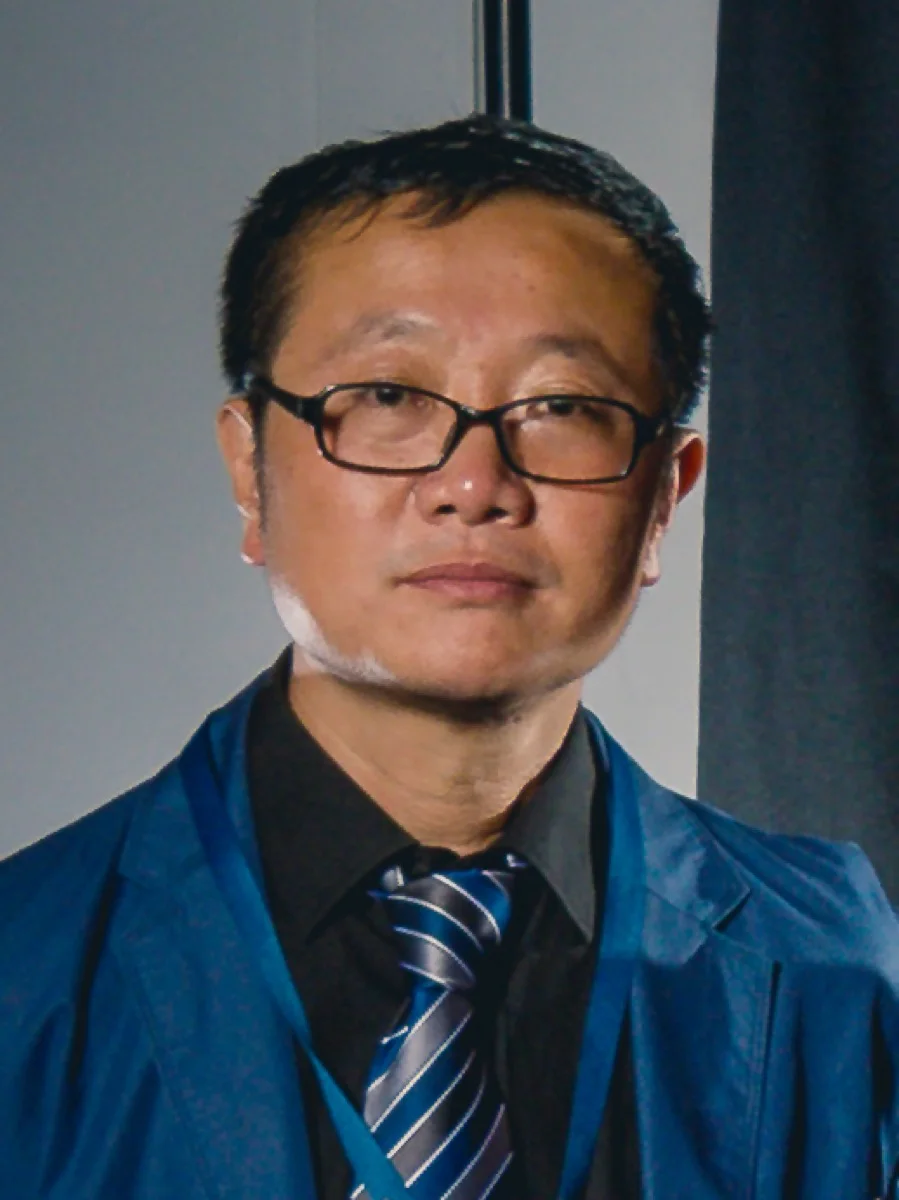
Liu Cixin
Science-Fiction Author
The author of The Three-Body Problem is a self-described “rational optimist” about AI — he drafts with ChatGPT and DeepSeek, admits the machine’s prose can be “smoother” than his own, and says he would be happy if AI surpassed humanity.
Why this score
How the formula works →- +4.1proUses AI in their work
- +3.2pro5 pro-AI statements (fervent)
Weights, statement counts, the ×1.25 multiplier for having a stake in an AI-impacted field, and the formula’s smoothing are already baked in — the points add up to the score: Strongly Pro-AI · 7.3/10
In his words
If one day AI truly surpassed humanity, I would be happy. Humans have constraints intellectually and physically… Maybe AI could pierce that veil.
I have input some of my own story ideas into models like DeepSeek and, honestly, the writing it produced was smoother and more fluent than mine.
The difference between the human brain and a large language model is not as vast as we would like to believe… I think it is entirely possible for AI to surpass us.
Biography
Liu Cixin (born 1963) wrote The Three-Body Problem while working as a computer engineer at a power plant in Shanxi province; in 2015 it made him the first Asian writer to win the Hugo Award for Best Novel. His Remembrance of Earth’s Past trilogy became a global phenomenon — adapted as Netflix’s 3 Body Problem, with a Chinese film version in the hands of director Zhang Yimou — and made him the face of Chinese science fiction worldwide.
The rational optimist
Liu embraced the tools early. In a May 2023 live-streamed interview he revealed he had used ChatGPT to help compose a public speech — “I was running out of time… and it did very well” — while waving off dystopian framing: “ChatGPT, of course, will make an impact on human existence and society, but its influence won’t result in AI-ruled humans like what happens in science fiction.”
Accepting an honorary doctorate at Hong Kong University of Science and Technology in late 2025, he went further than almost any working novelist: having fed his own story ideas into DeepSeek, he judged its prose more fluent than his — a startling admission from a Hugo winner, and one consistent with his view that the human brain holds no special magic a large language model cannot eventually match.
I would call myself an optimist, but a rational optimist. I generally have faith in humanity and in the civilisation’s future, but that future still depends on the critical choices we make along the way.
His equanimity extends to the endgame itself: if AI one day surpasses humanity completely, he has said, “the only thing left for us to do is to accept its existence and try to survive” — the cosmic fatalism of the Dark Forest, applied to the technology in his own study.
Quote sources
- South China Morning Post, 2025(scmp.com)
Sources & further reading
Canonical record: https://battlelines.ai/topic/liu-cixin