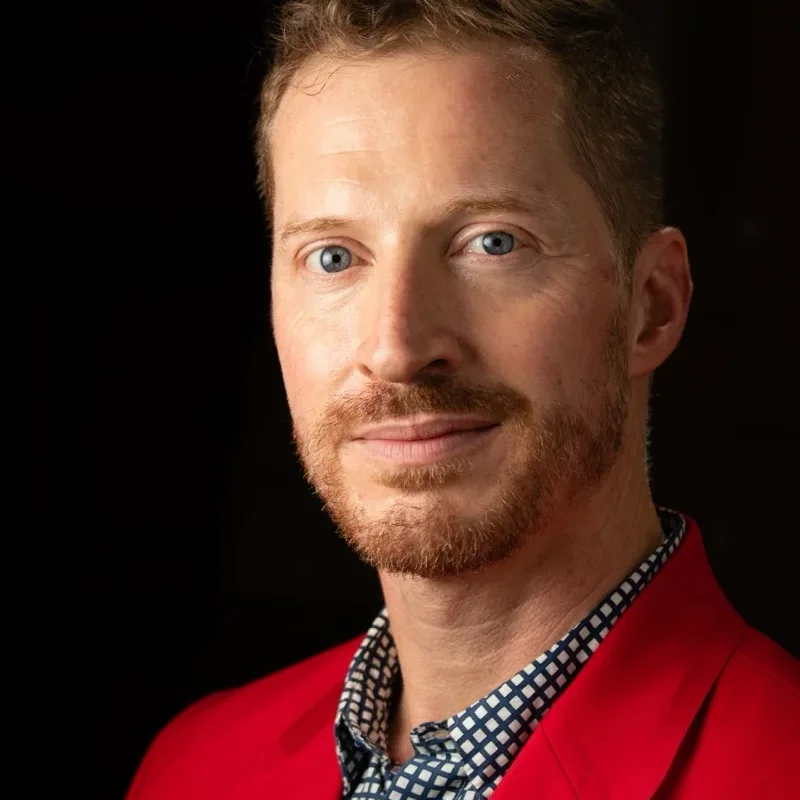
Robin Sloan
Novelist
Author of “Mr. Penumbra’s 24-Hour Bookstore” who was writing fiction with homebrew language models back in 2016 — and whose essays on whether AI training is ethically “okay” are among the most nuanced from any working novelist.
Why this score
How the formula works →- 31%proUses AI in their work
- 24%nuancedHolds a documented two-sided view
- 20%nuancedSupports AI only with conditions
- 15%pro3 pro-AI statements (forceful)
- 10%anti2 anti-AI statements (measured)
Includes the ×1.25 multiplier for having a stake in an AI-impacted field. Evidence splits 46% pro, 10% anti, 44% direction-free → Nuanced
In his words
It’s like writing with a deranged but very well-read parrot on your shoulder.
The goal is not to make writing “easier”; it’s to make it harder. The goal is not to make the resulting text “better”; it’s to make it different — weirder, with effects maybe not available by other means.
If an AI application delivers some profound public good, or even if it might, it’s probably okay that its value is rooted in this unprecedented operationalization of the commons.
Biography
Robin Sloan (born 1979) is an American novelist whose debut, “Mr. Penumbra’s 24-Hour Bookstore” (2012), became a New York Times bestseller by treating Google-age technology and old books as co-conspirators rather than enemies. He followed it with “Sourdough” (2017) and “Moonbound” (2024), and writes an influential newsletter and lab blog from California.
Writing with the machine
Sloan started experimenting with neural-network prose in 2016 — years before ChatGPT — training recurrent networks and later GPT-2 on corpora of science fiction and invoking them mid-sentence in his text editor for suggested continuations. In his essay “Writing with the machine” he was explicit that he wanted augmentation, not automation: “I am absolutely 100% not talking about an editor that ‘writes for you’… The world doesn’t need any more dead-eyed robo-text.”
He has been equally clear that human novelists are not endangered, telling Publishers Weekly there is no shortage of good novels by humans and that readers would rather read something written by a person about a person’s existence in the world.
His February 2025 essay “Is it okay?” tackled the training-data question head-on, concluding that models trained on humanity’s common inheritance are “probably okay” when they deliver profound public goods — reasoning, science, code — and “probably not okay” when they simply replicate the creative work they consumed. He applied the test to specific products, judging frontier chat models and AI coding tools acceptable while dismissing image generators: “They don’t do anything except make more images. They pee in the pool.” Unlike blanket opponents such as the The Authors Guild, he is willing to accept disruption as part of the bargain: “Fine, wreck the arts as we know them. We’ll invent new ones.”
Quote sources
- robinsloan.com, 2016(robinsloan.com)
- robinsloan.com, 2025(robinsloan.com)
Sources & further reading
Canonical record: https://battlelines.ai/topic/robin-sloan