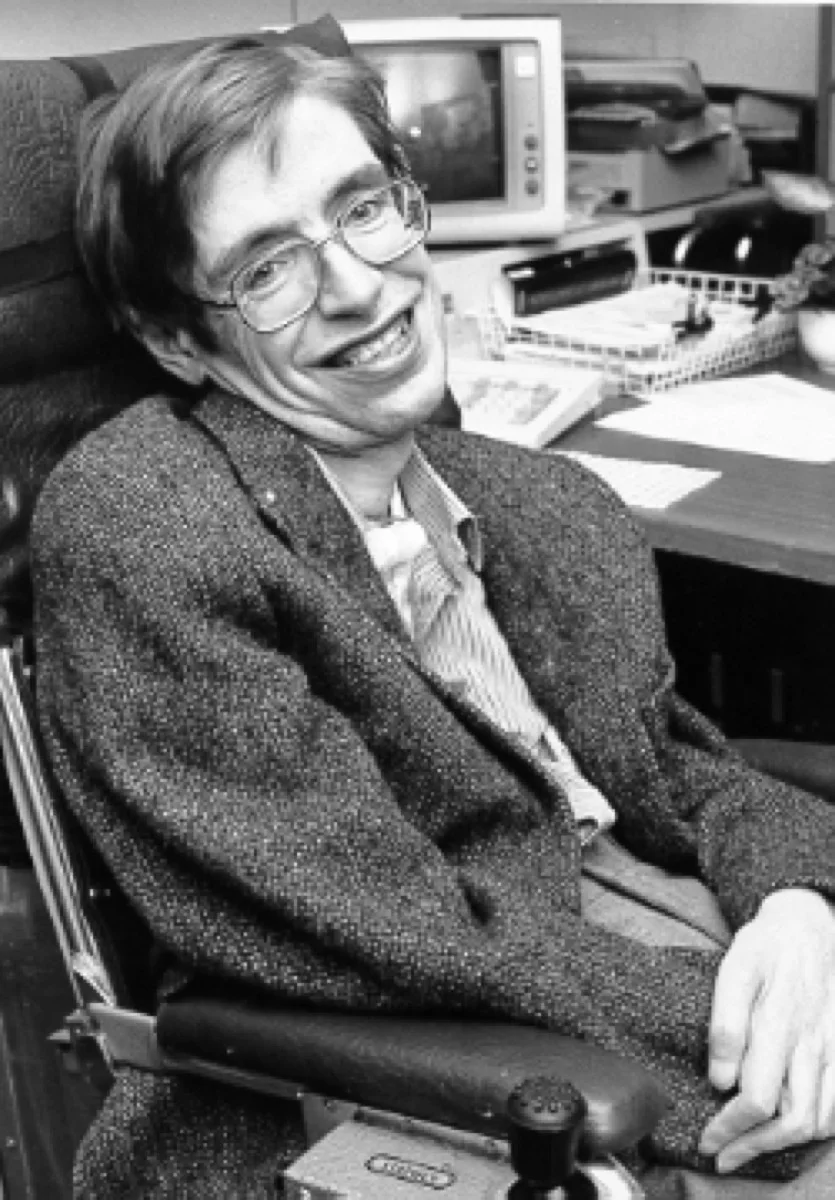
Stephen Hawking
Theoretical Physicist
The world’s most famous physicist, who warned that full artificial intelligence “could spell the end of the human race” — yet called it potentially “the best” thing ever to happen to us, launched a Cambridge centre to study it, and lived every day inside AI-assisted speech technology.
Why this score
How the formula works →- 21%antiPredicts AI catastrophe
- 15%proUses AI in their work
- 15%nuancedHolds a documented two-sided view
- 13%antiSigned an anti-AI letter
- 13%nuancedCampaigns for AI safety rules
Evidence splits 18% pro, 41% anti, 41% direction-free → Nuanced
In his words
The rise of powerful AI will be either the best, or the worst thing, ever to happen to humanity.
The development of full artificial intelligence could spell the end of the human race.
Biography
Stephen Hawking (1942–2018) was a British theoretical physicist and cosmologist whose work on black holes and the origins of the universe, together with the best-selling “A Brief History of Time,” made him the most recognizable scientist of his era. Diagnosed with motor neurone disease at 21 and given a few years to live, he worked for more than five decades and communicated through a computerized speech synthesizer that itself relied on predictive text.
The warning on AI
In a December 2014 BBC interview — prompted, fittingly, by a question about his AI-assisted speech system — Hawking delivered one of the most quoted warnings of the AI age. He argued that a fully autonomous AI “would take off on its own and re-design itself at an ever increasing rate,” and that humans, “limited by slow biological evolution, couldn’t compete, and would be superseded.”
Humans, who are limited by slow biological evolution, couldn’t compete, and would be superseded.
Hawking’s position was not simple technophobia. In 2016 he helped launch Cambridge’s Leverhulme Centre for the Future of Intelligence, calling AI potentially “either the best, or the worst” thing to happen to humanity, and he co-signed open letters urging safety research and a ban on autonomous weapons. He wanted the field to proceed — carefully, and with the risks studied before they arrived.
Quote sources
- BBC, 2014(bbc.com)
- University of Cambridge, 2016(cam.ac.uk)
Sources & further reading
Canonical record: https://battlelines.ai/topic/stephen-hawking