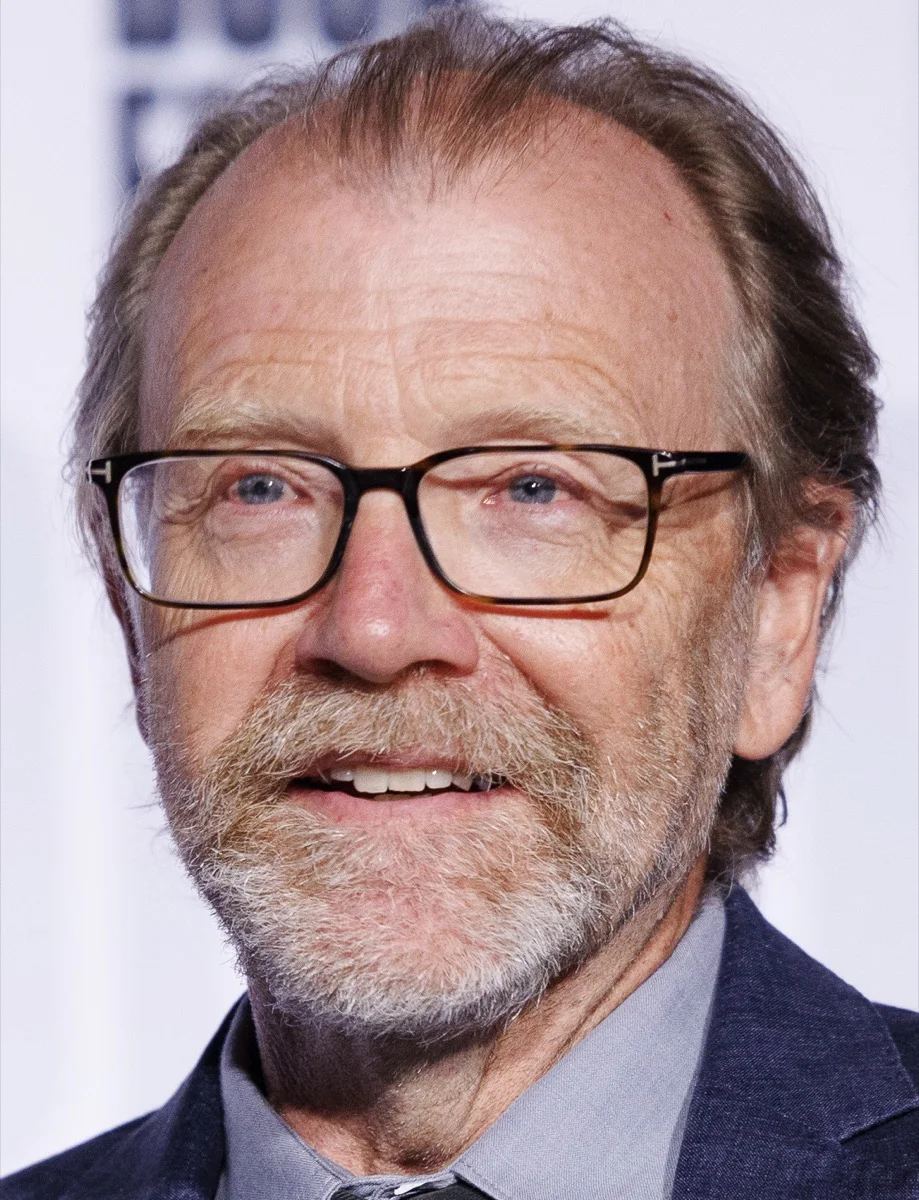
George Saunders
Writer
Booker Prize–winning author of Lincoln in the Bardo and master of the American short story. An Authors Guild v. OpenAI plaintiff who argues machine text can imitate storytelling but can never do what fiction is for: one mind knowing another.
Why this score
How the formula works →- +5.2antiSued AI companies
- +1.5anti3 anti-AI statements (forceful)
- ±0nuancedSupports AI only with conditions
Weights, statement counts, the ×1.25 multiplier for having a stake in an AI-impacted field, and the formula’s smoothing are already baked in — the points add up to the score (direction-free evidence pulls toward the middle instead): Strongly Anti-AI · 6.7/10
In his words
AI can’t do that, by definition — it can serve up a good imitation of other people who have done it, but until AI can walk down a dusty street, feeling a certain way because of the overhanging trees, and then realise it’s late for a job interview and show up with dust on its pants, and slightly out-of-breath — I’m not sure what it can teach me.
I’m very happy to be part of this effort to nudge the tech world to make good on its frequent declarations that it is on the side of creativity. Writers should be fairly compensated for their work.
Biography
George Saunders (born 1958) is an American writer widely regarded as the finest short-story author of his generation. A MacArthur “genius” fellow, he won the 2017 Booker Prize for his first novel, Lincoln in the Bardo, and his collection Tenth of December and craft book A Swim in a Pond in the Rain are modern touchstones. He taught creative writing at Syracuse University for decades and now runs the popular Story Club newsletter.
The machine is not you
Saunders joined the Authors Guild’s September 2023 class action against OpenAI as a named plaintiff, alongside Jodi Picoult and Jonathan Franzen, over the use of pirated books to train ChatGPT. His public statement was characteristically genial — he framed the suit as a nudge, not a war cry — but his underlying critique of machine writing runs deep.
In talks and essays — including a 2025 Story Club piece titled “I Doubt the Machine Because the Machine is Not You” — Saunders has argued that fiction’s value lies in thousands of micro-decisions soaked in a particular person’s lived experience, and that reading is an act of contact between two specific minds. In early 2024 he warned that a diet of AI-generated prose could dull readers’ ability to recognize the difference — the real question, he said, is whether we can remain good enough readers to tell.
Notably, Saunders does not predict AI’s failure so much as question its point: even a flawless imitation of human storytelling would still be an imitation, missing the communion between author and reader that he considers the entire reason fiction exists.
Quote sources
- Business Standard, 2024(business-standard.com)
- Authors Guild press release, 2023(authorsguild.org)
Sources & further reading
Canonical record: https://battlelines.ai/topic/george-saunders