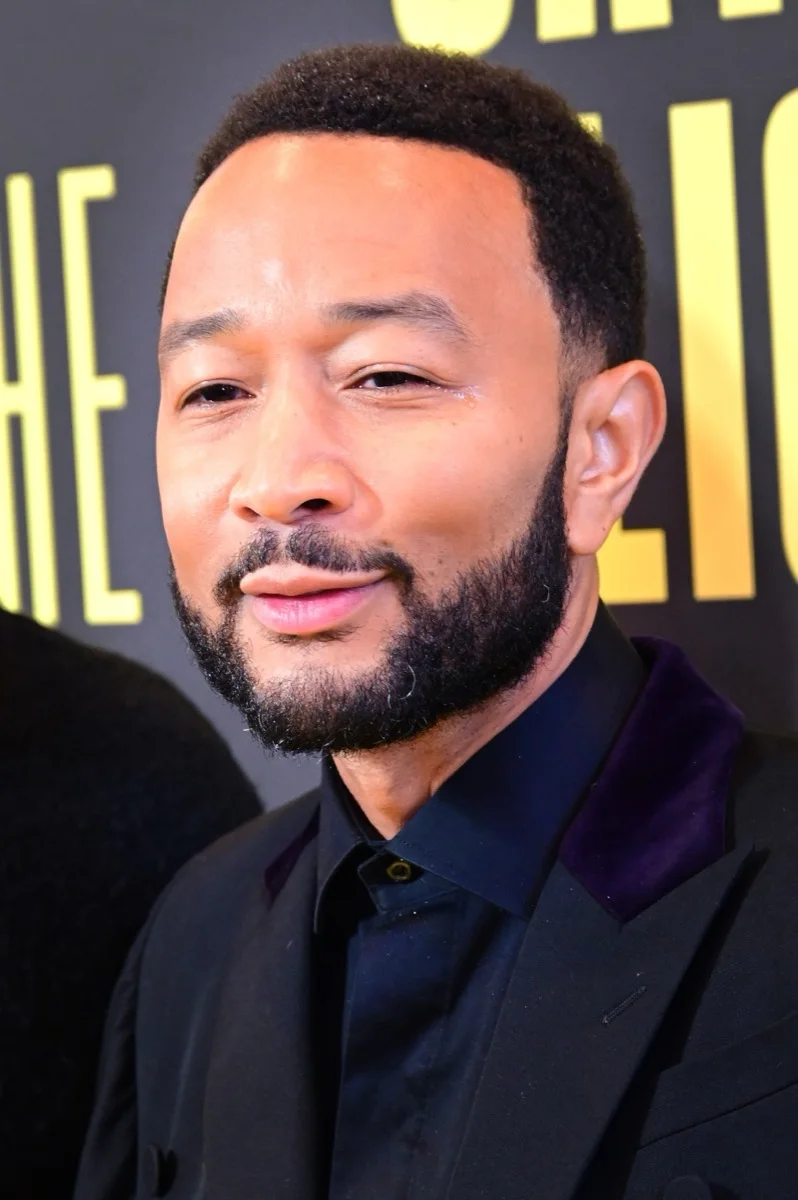
John Legend
Musician
EGOT-winning singer-songwriter behind “All of Me” who licensed his voice to YouTube’s Dream Track AI experiment — and to Google Assistant before that — while calling for consent rules and regulation.
Why this score
How the formula works →- +2.6proUses AI in their work
- +2.6proLicenses their data for AI training
- +0.5pro1 pro-AI statement (measured)
- ±0nuancedHolds a documented two-sided view
- ±0nuancedSupports AI only with conditions
Weights, statement counts, the ×1.25 multiplier for having a stake in an AI-impacted field, and the formula’s smoothing are already baked in — the points add up to the score (direction-free evidence pulls toward the middle instead): Firmly Pro-AI · 5.7/10
In his words
Being a part of YouTube’s Dream Track experiment is an opportunity to help shape possibilities for the future. As an artist, I am happy to have a seat at the table and I look forward to seeing what the creators dream up during this period.
I believe that our voices are our voices, and we should have control on how our voices are used out in the world.
Biography
John Legend (born John Roger Stephens, 1978) is the singer-songwriter behind “All of Me” and “Ordinary People,” a longtime coach on The Voice, and in 2018 became the first Black man to complete the EGOT — an Emmy, Grammy, Oscar, and Tony. Few mainstream artists have put their own voice into AI systems as literally as he has.
Lending his voice to the machines
Legend’s AI collaborations started early: in April 2019 Google shipped a limited-time John Legend “cameo voice” for Google Assistant, built with DeepMind’s WaveNet text-to-speech so the model could answer everyday queries in his voice from a relatively short recording session. In November 2023 he went further, becoming one of nine artists — alongside Charlie Puth, Sia, and T-Pain — who licensed AI clones of their singing voices to Dream Track, YouTube’s experiment powered by Google DeepMind’s Lyria model that let creators generate 30-second songs in a chosen artist’s voice for Shorts.
Being a part of YouTube’s Dream Track experiment is an opportunity to help shape possibilities for the future.
His embrace comes with conditions. Speaking at the TIME100 Summit in April 2023 — days after an anonymous AI-generated “Drake and The Weeknd” track went viral — Legend said there “needs to be some regulation when it comes to how this works,” and voiced hope that regulators would “catch up with the technology” to protect artists’ intellectual property and likeness rights. His position is consistent: consented, licensed voice AI is an opportunity; unconsented cloning is theft. In 2024 he continued engaging with the debate, appearing at the UN’s AI for Good summit to discuss AI and music.
Quote sources
- YouTube Official Blog, 2023(blog.youtube)
- TIME100 Summit via Fox Business, 2023(foxbusiness.com)
Sources & further reading
- YouTube Blog: Meet the artists collaborating with YouTube’s Dream Track & Music AI (2023)
- Music Business Worldwide: AI-generated vocal clones of superstars now available on YouTube Shorts (2023)
- Fox Business: John Legend calls for regulation on AI-generated music (2023)
- Variety: Google Assistant gets John Legend voice, with a little help from A.I. (2019)
Canonical record: https://battlelines.ai/topic/john-legend