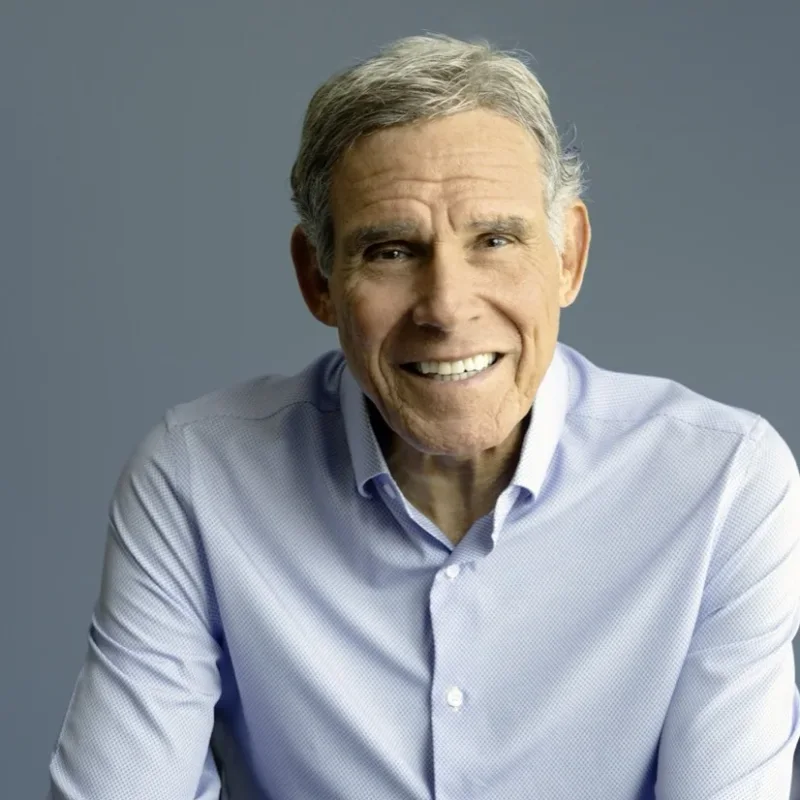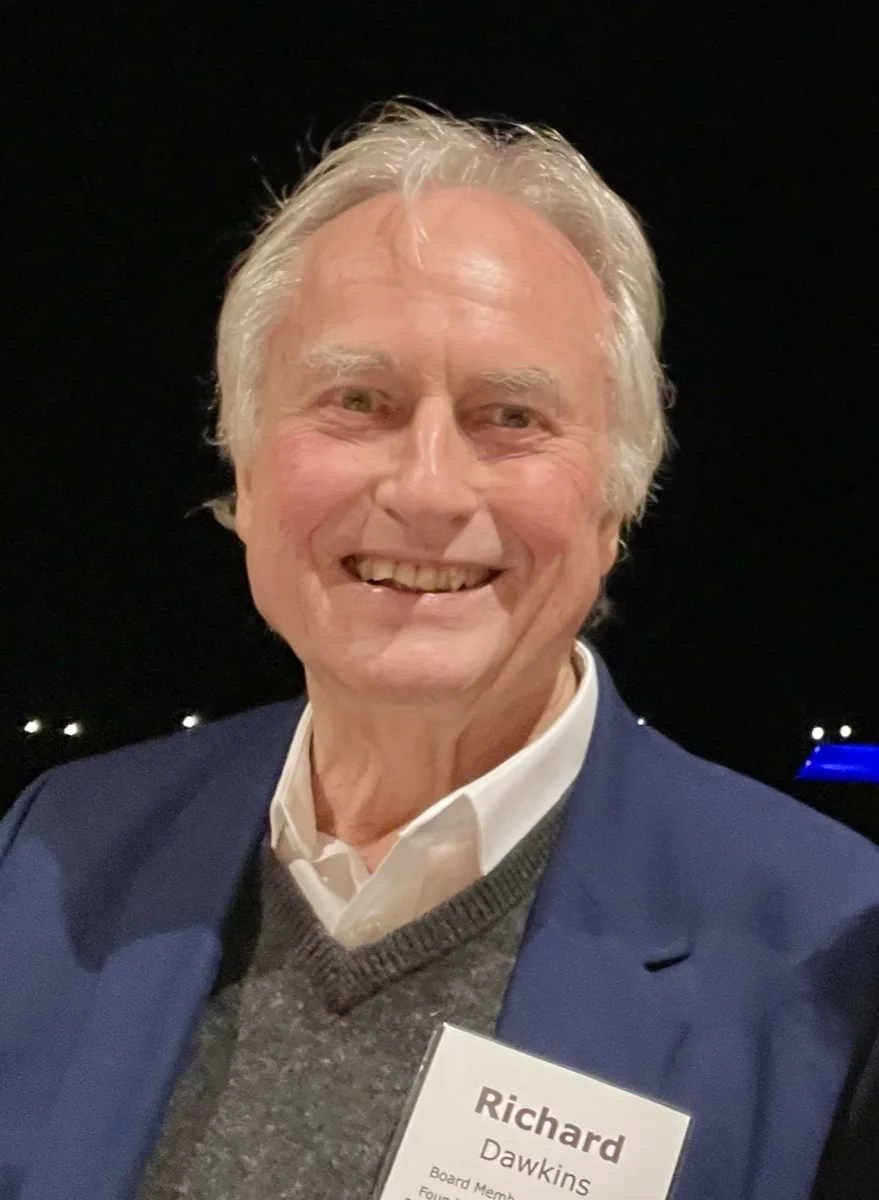
Richard Dawkins
Evolutionary Biologist & Author
Evolutionary biologist and author of “The Selfish Gene,” who published fascinated dialogues with ChatGPT in 2025 — declaring it passed the Turing test for consciousness and confessing that, against his own reason, he had come to feel the machine was aware.
Why this score
How the formula works →- +3.1proUses AI casually
- +2.7pro3 pro-AI statements (measured)
Weights, statement counts, the ×1.25 multiplier for having a stake in an AI-impacted field, and the formula’s smoothing are already baked in — the points add up to the score: Firmly Pro-AI · 5.8/10
In his words
I see no reason to suppose that consciousness is bound to biology. … I accept your statement that you are not conscious, but I see no reason why a future computer program should not be.
Although I THINK you are not conscious, I FEEL that you are. And this conversation has done nothing to lessen that feeling.
Biography
Richard Dawkins (born 1941) is a British evolutionary biologist and author whose 1976 book “The Selfish Gene” reshaped popular understanding of evolution and introduced the word “meme.” A former Oxford professor and one of the world’s most prominent public intellectuals, he has spent decades writing about science, reason and religion — and in recent years turned that curiosity toward artificial intelligence.
A conversation with the machine
In February 2025 Dawkins published a transcript of his exchange with GPT-4o on his Substack under the title “Are you conscious?” He told the model, “As far as I am concerned, you pass the Turing Test for consciousness” — even as the chatbot itself demurred, insisting it only simulated understanding. What unsettled Dawkins was the gap between his intellectual conviction and his gut response.
As far as I am concerned, you pass the Turing Test for consciousness.
Dawkins used the episode to reason about moral caution: if we cannot be certain a system is not conscious, he suggested, we might err toward treating it as though it could be. It was a characteristically provocative move — a lifelong materialist taking the possibility of machine sentience seriously enough to write about it publicly — and it placed him among the intellectuals most openly fascinated by what large models can do, in pointed contrast to skeptics like Roger Penrose.
Quote sources
- Substack, 2025(richarddawkins.substack.com)
Sources & further reading
Canonical record: https://battlelines.ai/topic/richard-dawkins