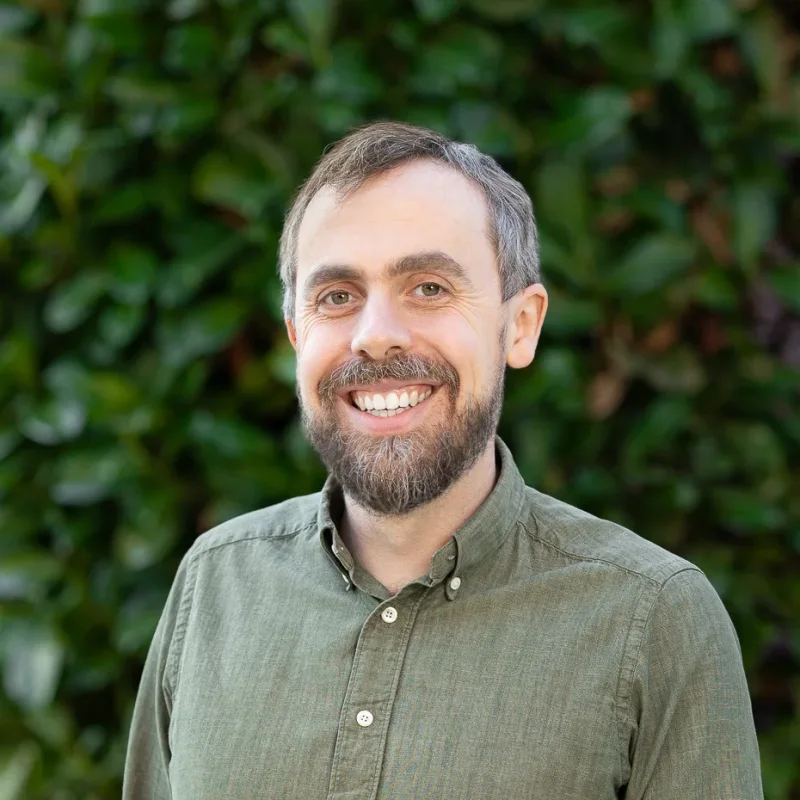
Yann LeCun
AI Researcher & Turing Award Winner
Turing Award winner, deep-learning pioneer, and the field’s loudest critic of doomerism — existential-risk fears are “complete B.S.” After 12 years as Meta’s chief AI scientist he left in 2025 to found a world-model startup, AMI Labs.
Why this score
How the formula works →- +4.2proBuilds AI professionally
- +2.5proPro-AI for 15+ years
- −1.7antiCalls AI overhyped
- +1.4pro3 pro-AI statements (forceful)
Weights, statement counts, the ×1.5 multiplier because AI is their life’s work, and the formula’s smoothing are already baked in — the points add up to the score, with evidence on the other side subtracting: Firmly Pro-AI · 6.4/10
In his words
It seems to me that before “urgently figuring out how to control AI systems much smarter than us” we need to have the beginning of a hint of a design for a system smarter than a house cat.
You’re going to have to pardon my French, but that’s complete B.S.
Biography
Yann LeCun (born 1960) is one of the founding fathers of modern AI. The French-American researcher pioneered convolutional neural networks at Bell Labs in the late 1980s — the architecture behind modern computer vision — and shared the 2018 Turing Award with Geoffrey Hinton and Yoshua Bengio. A longtime NYU professor, he served as Meta’s chief AI scientist from 2013 to 2025, where he championed open research and the open-weights strategy behind Llama.
The anti-doomer
Among AI’s three Turing-winning “godfathers,” LeCun is the dissenter from doom. While Hinton and Bengio warn of existential risk, LeCun has spent years publicly demolishing the premise — telling the Wall Street Journal in October 2024 that such worries are “complete B.S.” and quipping that today’s systems are dumber than a house cat, lacking persistent memory, reasoning, planning, and any model of the physical world. Regulation of AI research, he argues, would only entrench incumbents; openness is the safety mechanism.
His skepticism extends to the technology powering the boom: he has long argued that large language models are an off-ramp on the road to human-level intelligence, and that the future belongs to “world models” that learn from physical reality. That conviction cost him his perch — as Meta reorganized around commercial LLMs under its new Superintelligence Labs, LeCun departed in November 2025 to co-found Advanced Machine Intelligence (AMI) Labs in Paris, telling interviewers, “You certainly don’t tell a researcher like me what to do.” In March 2026 AMI announced a $1.03 billion seed round backed by Nvidia, Jeff Bezos, and Eric Schmidt.
LeCun’s position is a distinctive one: bullish on AI as a technology and amplifier of human intelligence, bearish on the specific hype and the specific fear surrounding LLMs — and contemptuous of anyone selling apocalypse.
Quote sources
- X, 2024(x.com)
- On AI existential risk — Wall Street Journal (via TechCrunch), 2024(techcrunch.com)
Sources & further reading
Canonical record: https://battlelines.ai/topic/yann-lecun