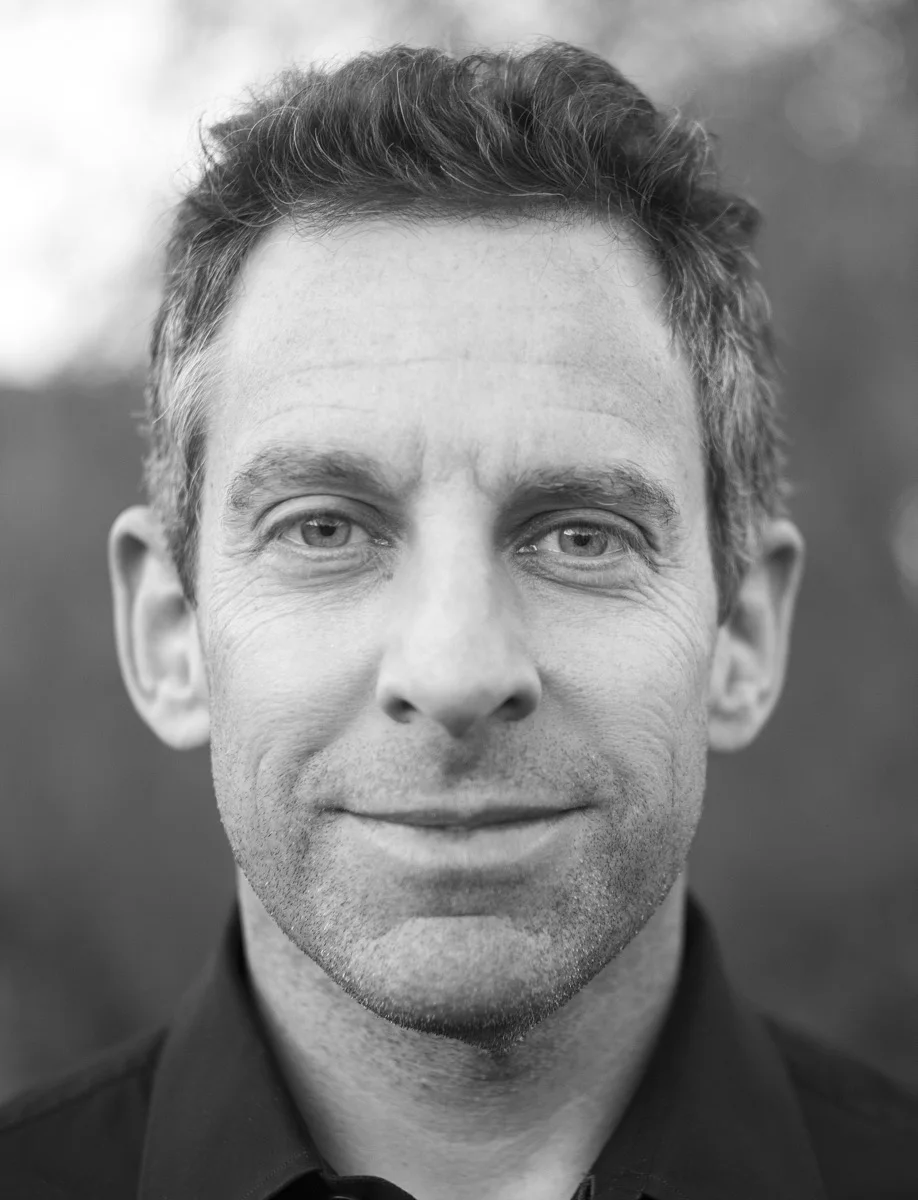
Sam Harris
Neuroscientist & Podcaster
The neuroscientist, author, and Making Sense host has been warning about superintelligent AI since before it was fashionable — his 2016 TED talk argued we are “building some sort of god” and that humanity has failed to summon an appropriate emotional response.
Why this score
How the formula works →- +4.9antiPredicts AI catastrophe
- +2.1anti3 anti-AI statements (forceful)
Weights, statement counts, and the formula’s smoothing are already baked in — the points add up to the score: Strongly Anti-AI · 7.0/10
In his words
We have to admit that we are in the process of building some sort of god. Now would be a good time to make sure it’s a god we can live with.
One of the things that worries me most about the development of AI at this point is that we seem unable to marshal an appropriate emotional response to the dangers that lie ahead.
Biography
Sam Harris (born 1967 in Los Angeles) is a neuroscientist and philosopher who became one of the most prominent public intellectuals of the 2000s through books like The End of Faith and Waking Up, then built Making Sense into one of the most influential idea-driven podcasts. He was also among the first mainstream voices to treat AI risk as a civilizational emergency.
The intelligence explosion, before it was cool
His 2016 TED talk “Can we build AI without losing control over it?” — delivered years before ChatGPT — laid out the case in stark terms: intelligence is a matter of information processing, we will keep improving our machines, and once they exceed us they may treat humanity the way we treat ants — not with malice, but with indifference whenever we conflict with their goals. The talk has been viewed millions of times and remains a canonical statement of the AI-risk position.
Harris has kept the drumbeat going on Making Sense with episodes like “The Trouble with AI” (2023, with Stuart Russell and Gary Marcus), a 2024 conversation with Yoshua Bengio and Scott Wiener supporting California’s AI-safety bill, “Countdown to Superintelligence” with AI 2027 author Daniel Kokotajlo, and 2025’s “Can We Survive AI?” with Eliezer Yudkowsky. Across a decade his core complaint is unchanged: the people building the technology concede the risks in private while racing ahead in public.
Unlike many critics in this archive, Harris has no economic stake in the fight — no lawsuit, no displaced profession. His opposition is philosophical: he thinks the arguments for danger are simply better than the arguments for safety, and that our inability to feel that danger is itself part of the problem.
Quote sources
- TED, 2016(ideas.ted.com)
Sources & further reading
Canonical record: https://battlelines.ai/topic/sam-harris