Tag
56 subjects · 20 pro-AI · 34 anti-AI
Showing 56 profiles · 20 pro-AI · 34 anti-AI · 2 neutral
Creative Software Giant
The company behind Photoshop bet its creative empire on generative AI: Firefly, trained on licensed Adobe Stock content and billed as “commercially safe,” is its answer to both the AI gold rush and the artist backlash.
AI Lab
The AI safety company that builds frontier models anyway. Founded by OpenAI defectors Dario and Daniela Amodei, Anthropic makes the Claude model family and argues the safest path through the AI transition is to build the technology carefully — not to stop.
AI Creative Tool
Open-source desktop “IDE for artists” for AI image and video creation. Built on the premise that artists need control, not slot machines — it turns prompting into crafting with 3D compositing, character posing, and scene blocking, and gives the source code away.
Professional Artists’ Portfolio Platform
The Epic Games–owned portfolio site for game and film artists that refused to ban AI images during the December 2022 “No AI Art” homepage protest, offering only an optional “NoAI” tag and keeping AI work welcome over its users’ objections.
Auction House
The 260-year-old auction house that sold the first AI artwork at auction in 2018 and pressed ahead with its all-AI “Augmented Intelligence” sale in 2025 despite an open letter from 6,500 artists demanding cancellation.
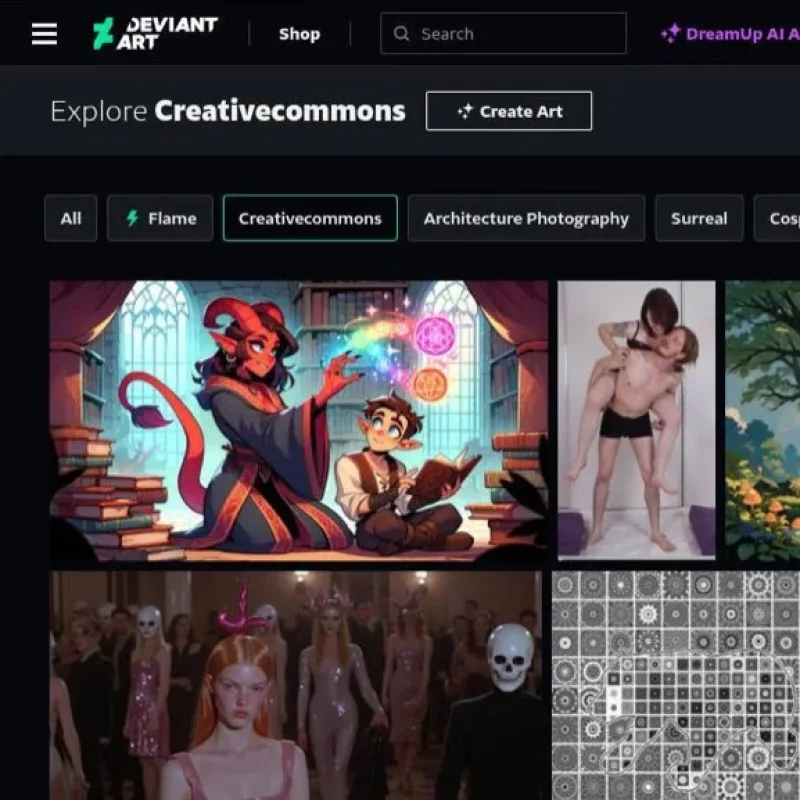
Online Art Community
The 25-year-old art community that launched its own AI generator, DreamUp, in 2022 — igniting an artist revolt and a landmark lawsuit — then declared itself “100% right” to have embraced generative art.
AI Software Engineer
Cognition’s “AI software engineer” — the agent that plans, codes, debugs, and ships tasks end-to-end. Its 2024 debut demo defined the agentic-coding era, drew a viral backlash over inflated claims, and now anchors a company valued in the billions that acquired Windsurf.
Secretary-General of the ITU
First woman to lead the UN’s International Telecommunication Union, host of the “AI for Good” Global Summit, who frames AI as a chance for developing nations to leapfrog — provided the 2.6 billion people still offline aren’t left behind.
Book Publisher
The News Corp-owned Big Five publisher struck a 2024 deal licensing select nonfiction backlist titles to Microsoft for AI training at $5,000 per book, split with authors — the first major trade publisher to sell its catalog to an AI company.
Open-Source Software Foundation
The Firefox maker committed $30 million in 2023 to launch Mozilla.ai, betting that trustworthy, open-source AI — not bans — is the answer to Big Tech’s concentration of the technology.
Writing Nonprofit
The National Novel Writing Month nonprofit declared in 2024 that categorically condemning AI in writing has “classist and ableist undertones” — triggering board resignations and sponsor exits. The 25-year-old organization shut down within a year.
The lab that detonated the AI era. ChatGPT’s 2022 launch became the fastest-adopted consumer product in history, and with GPT models, DALL·E, and Sora, OpenAI sits at the center of nearly every fight in this archive — as inspiration, employer, defendant, and lightning rod.
Social News & Discussion Platform
The internet’s town square turned its two decades of human conversation into an AI asset — signing licensing deals with Google and OpenAI worth tens of millions a year, then suing Anthropic for taking the same data without paying.
AI Video Company
The startup that made AI video real: co-originator of the research behind Stable Diffusion, builder of the Gen video models, host of the AI Film Festival, and Hollywood’s first major AI partner via Lionsgate.
Stock Media Company
The stock-image giant that chose partnership over litigation: it licensed its library to OpenAI for DALL-E training, sells AI-generated images on its platform, and pays contributors through a first-of-its-kind fund.
Programmer Q&A Platform
The programmers’ Q&A site that first banned ChatGPT answers, then bet its future on AI — building OverflowAI and licensing its 15 years of community knowledge to OpenAI, even as AI assistants eroded the traffic that built it.
AI Music Company
The AI music generator that made whole songs from a text prompt — and made the music industry sue. Suno claims tens of millions of users making music “from shower-singers to seasoned artists,” and settled with the major labels on licensing terms in 2025.
Academic Publisher
The academic publishing giant sold Microsoft access to its scholarly content in a $10 million AI deal in 2024 — without consulting the researchers who wrote it — becoming the bellwether for AI licensing of academic research and the backlash it provokes.
Entertainment Conglomerate
Hollywood’s biggest IP holder is “bullish” on AI and uses it gladly — AI-powered park droids with Nvidia, a $1B OpenAI courtship, licensed character generation — while suing any AI company that touches its catalog without paying.
Steward of Wikipedia
Wikipedia’s nonprofit steward adopted a humans-first AI strategy in 2025 — using AI to assist volunteer editors and licensing data to AI firms via Wikimedia Enterprise — while pulling an AI-summaries experiment within days when editors revolted.
Open-Licensing Nonprofit
The nonprofit behind the CC licenses that built the open web has defended text-and-data mining as part of open culture, launching CC Signals in 2025 so creators can express AI-training preferences without abandoning openness.
Digital Rights Organization
The 35-year-old digital-rights group has argued in courts and to the Copyright Office that AI training is fair use — warning that stretching copyright to kill AI tools would hurt creators and researchers more than it helps them.
Labor Federation
America’s largest labor federation — nearly 15 million workers across some 60 unions — fights AI-driven displacement and federal preemption of state AI laws, while cutting a first-of-its-kind partnership with Microsoft to give workers a voice in AI development.
AI Policy Research Institute
The NYU-born policy institute, led by Amba Kak and Sarah Myers West, argues that AI is above all a concentration of Big Tech power — its annual landscape reports have shaped the antitrust-flavored critique of the AI industry.
Musicians’ Advocacy Organization
Artist-led advocacy nonprofit that organized the April 2024 “Stop Devaluing Music” open letter — signed by more than 200 acts from Billie Eilish to Stevie Wonder — demanding AI developers stop using artists’ work without permission.
Anti-AI Art Platform
The artist portfolio and social platform founded by photographer Zhang Jingna that bans AI-generated imagery outright. When Meta began training AI on Instagram posts in June 2024, Cara exploded from 40,000 to more than 650,000 users in a week.
AI Safety Nonprofit
The nonprofit behind the May 2023 one-sentence extinction warning — signed by Hinton, Bengio, Altman, and hundreds of researchers — and a co-sponsor of California’s SB 1047, making it the organizational hub of the AI-risk movement.
Entertainment Artists’ Nonprofit
Nonprofit for the concept artists behind films and games that became visual artists’ vehicle in the AI fight — crowdfunding a Washington lobbyist in 2022 and co-sponsoring California’s AI training-data transparency legislation.
Directors’ Union
The film and television directors’ union whose June 2023 contract established — before either Hollywood strike ended — that generative AI “is not a person” and cannot replace the duties performed by its members.
Youth AI Policy Organization
The youth-led AI-policy group founded by Sneha Revanur co-sponsored California’s SB 1047 and SB 53 and filed an amicus brief — backed by Geoffrey Hinton — opposing OpenAI’s for-profit conversion.
European Writers’ Federation
Brussels-based federation of over 50 European writers’ and translators’ unions that fought for transparency, consent, and remuneration in the EU AI Act, declaring that every generative AI model was trained “in full opacity” on protected work.
The nonprofit behind the March 2023 “Pause Giant AI Experiments” letter — signed by more than 30,000 people including Elon Musk, Steve Wozniak, and Yoshua Bengio — which turned existential AI risk into front-page news.
Visual Media Company
The world’s best-known stock photo agency, which sued Stability AI in the US and UK over the scraping of more than 12 million images — while simultaneously launching its own fully licensed AI image generator.
Creative-Industry Coalition
Coalition of 200+ creative-industry organizations — unions, labels, publishers, and guilds from music to acting — launched at SXSW 2023 around seven principles for AI, chief among them: no copyright for machines, and no training without consent.
Entertainment Crew Union
The 170,000-member union of Hollywood crews and stage employees negotiated AI guardrails into its 2024 Basic Agreement — no member can be required to write prompts that displace a fellow worker — though dissenting locals called the protections too weak.
Indie Game Marketplace
The scrappy indie-game marketplace became one of the first storefronts to force generative-AI disclosure: since November 2024, untagged AI-made assets are de-indexed from its browse pages, citing “legal ambiguity” around AI content rights.
Crowdfunding Platform
The crowdfunding platform that suspended the Unstable Diffusion AI-image campaign in 2022 and imposed a mandatory AI-disclosure policy in 2023, requiring projects to prove consent for training data on pain of suspension.
Youth Tech-Resistance Group
The Brooklyn-born club of teenagers who swapped smartphones for flip phones and renounced algorithmic tech. Founded by Logan Lane, it grew into a nonprofit with chapters across the US and a touchstone of the new Luddite movement in the AI era.
AI Risk Research Institute
The original AI-alignment research group pivoted in 2024 from technical research to open advocacy for halting frontier AI development — culminating in its founders’ 2025 bestseller “If Anyone Builds It, Everyone Dies.”
Voice Actors’ Advocacy Organization
Nonprofit advocacy group founded in 2022 that fights unauthorized AI voice cloning — championing Tennessee’s first-in-the-nation ELVIS Act and arming voice actors with contract riders against synthetic-voice clauses.
Media Conglomerate
The Comcast-owned studio behind Universal Pictures and DreamWorks joined Disney as co-plaintiff in Hollywood’s first major AI copyright suit, calling Midjourney a “bottomless pit of plagiarism” over Minions and Shrek outputs — then sued MiniMax months later.
News Publishers’ Trade Association
Trade association for more than 2,000 US publishers whose 2023 white paper argued that training generative AI on news content is copyright infringement, not fair use — and which ran the nationwide “Support Responsible AI” ad campaign.
Video Game Company
The maker of Mario and Zelda told shareholders in 2024 that it is not using generative AI in its games, citing intellectual-property concerns and pledging to keep delivering value “unique to Nintendo” through human craft.
AI Protest Movement
Global grassroots protest network founded in 2023 by Dutch entrepreneur Joep Meindertsma, demanding an international treaty to pause the training of frontier AI systems until they can be proven safe — the street-protest wing of AI safety.
The world’s largest trade publisher amended the copyright page of all its books in 2024 to expressly prohibit their use for AI training — the first Big Five publisher to hard-code an anti-training reservation into every title.
Performers’ Union
The 160,000-member union of screen actors and media performers. Its 118-day 2023 strike was fought largely over AI digital replicas, and it has since struck the video game industry over voice cloning and forced OpenAI to tighten Sora 2’s likeness rules.
UK Writers’ Union
The UK’s largest writers’ union, founded in 1884, demanding consent, credit, and payment for AI training — its 2024 survey documented members already losing work to AI, and it led protests against Meta’s use of pirated books.
Protest Movement
San Francisco protest movement with a single demand: every major AI lab CEO must publicly commit to pausing frontier-model development if every other major lab credibly does the same. What drew about 20 people two years ago brought hundreds to the doors of OpenAI, Anthropic, and Google DeepMind in July 2026.
Animation Workers’ Union
IATSE Local 839, the union of more than 5,000 Hollywood animation workers. It made generative AI the centerpiece of its 2024 contract fight, staging the largest animation labor rally in history — and ratified a deal many members felt fell short.
Writers’ Advocacy Organization
America’s oldest and largest professional writers’ organization, leading the landmark class-action copyright suit against OpenAI on behalf of George R.R. Martin, John Grisham, and thousands of authors whose books trained AI without consent.
Awards Ceremony
An annual indie-focused awards show produced by the team behind Six One Indie. It enforces a blanket ban on generative AI — a policy that, at its December 2025 ceremony, led it to strip Clair Obscur: Expedition 33 of its Game of the Year win hours after handing it out.
Newspaper
America’s newspaper of record, whose December 2023 copyright suit against OpenAI and Microsoft is the defining media-versus-AI court case — even as the Times signs its own AI licensing deals, starting with Amazon.
Music Company
The world’s largest music company, which fired the industry’s first legal shots at AI — suing Anthropic over lyrics and joining the label suits against Suno and Udio — before pivoting to licensed AI platforms of its own.
The studio behind Superman and Batman filed its own copyright lawsuit against Midjourney in September 2025 — the third Hollywood major to do so — over AI images of its DC and Looney Tunes characters, calling the infringement “systematic” and “willful.”
Photojournalism Foundation
The world’s premier photojournalism competition banned AI-generated and AI-assisted imagery from all contest categories in November 2023, reversing a brief plan to allow it after fierce backlash from photographers.
Screenwriters’ Union
The screenwriters’ union whose 148-day 2023 strike won Hollywood’s first major contractual AI protections: AI cannot write or rewrite literary material, AI output is not source material, and no writer can be forced to use it.